

A backpack sprayer carries a liquid tank, pump, hose and lance on a harness. This guide identifies the equipment and checks to make before use. It is not a mixing recipe or a substitute for the exact chemical label and sprayer manual.
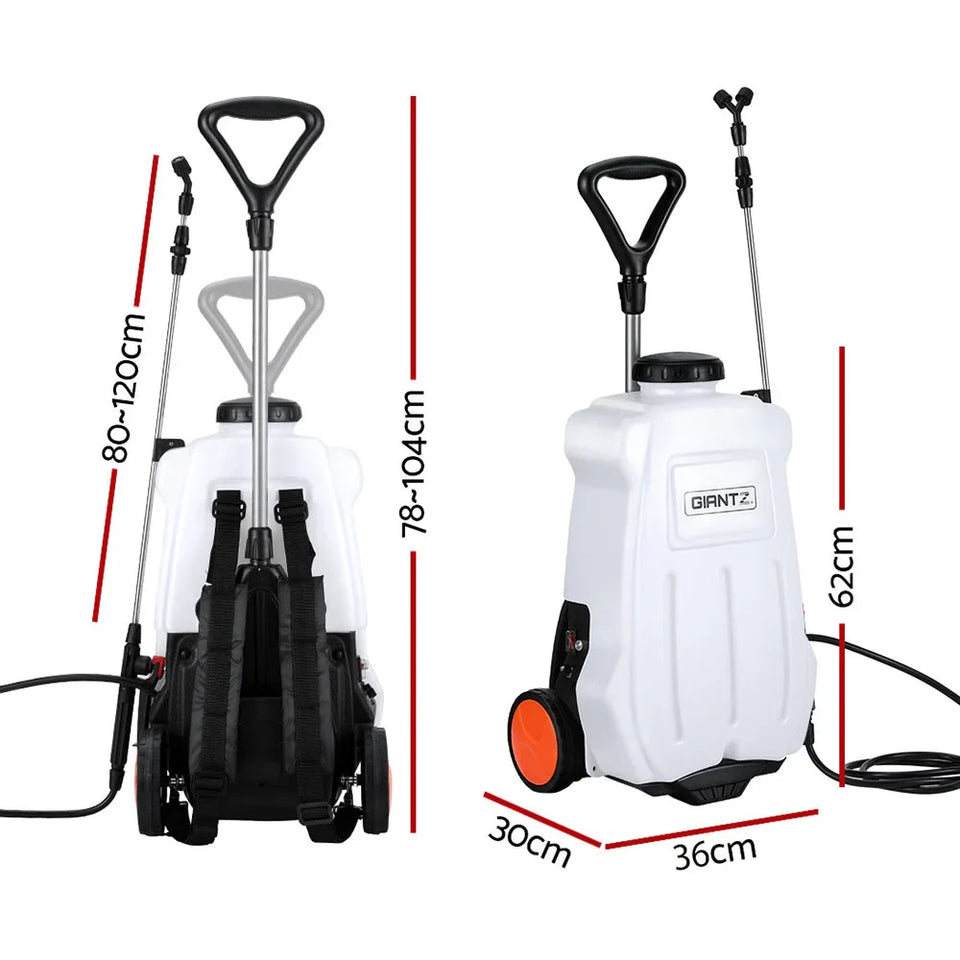
Identify how the pump works
A hand-pumped model uses operator effort; a battery model uses an electric pump. The liquid may be pressurised in a pump chamber or line rather than throughout the tank. Find the manufacturer's diagram and permitted pressure settings for the exact model.
Check the nozzle reference, seals, hose, trigger and harness. Stop if a component is leaking, damaged or incompatible with the intended liquid. Do not clear a nozzle by mouth or inspect a pressurised leak with your hand.
Read the chemical instructions before filling
Confirm the formulation, intended plant or pest, application site and permitted equipment. Use the label's mixing order, rate and protection requirements; there is no universal half-tank-first recipe or optional generic mask that suits every product.
Do not derive the dose from tank capacity alone. If the label uses an area-based rate, its calibration instructions matter. Obtain competent advice when the units or procedure are unclear.
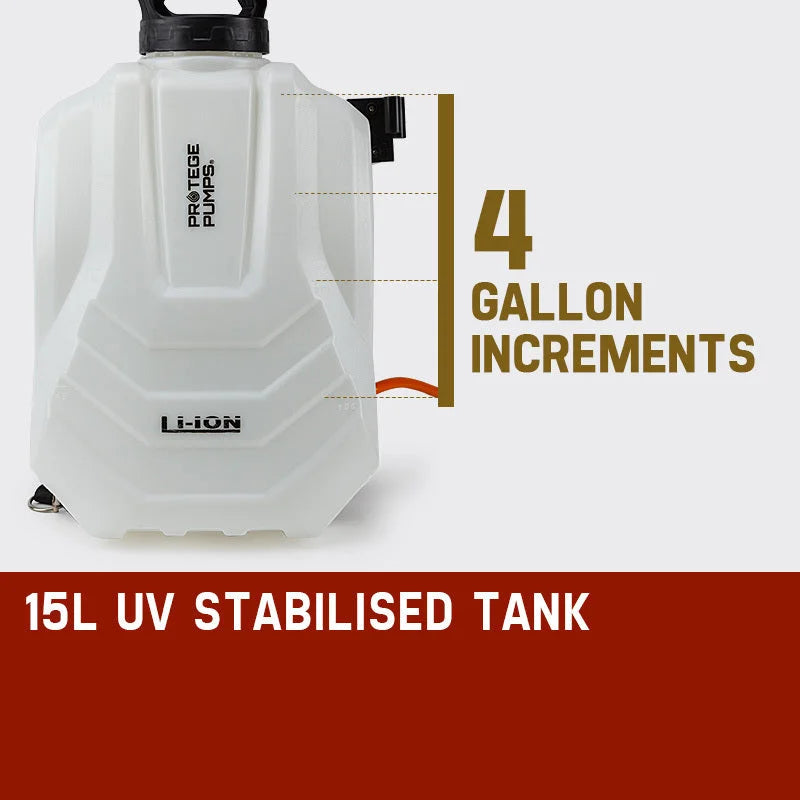
Check the filled load and application setup
Include the equipment and liquid in the carrying weight. As a water-only illustration, 15L of water adds about 15 kg before the sprayer; other mixtures can differ. Follow fill limits and choose a load you can handle when lifting, wearing and removing the equipment.
Nozzle height, walking speed, pressure and overlap must match the specified application and calibration. The earlier universal 50–60 cm nozzle height is not appropriate for every nozzle or chemical. Do not choose a fine mist or increase pressure simply to reach farther.
Plan cleaning and waste handling
Follow the chemical label and equipment manual for isolation, cleaning agents, flushing and storage. Plan how unused product and rinsate will be handled before starting. Do not release chemical waste into drains or an arbitrary part of the garden.
Keep the exact nozzle and replacement-part references with the instructions so worn components can be replaced correctly.


