
Post Hole Diggers & Earth Augers
Prepare holes for fencing, planting and outdoor projects with petrol and electric augers, manual post hole diggers and replacement bits. Choose the hole and ground requirements first, then the machine and compatible equipment to make it.
Shop the collection
-
Post Hole Digger 63CC Petrol Motor Drill Borer with Fence Extension Auger Bits
Regular price $276.90 AUDRegular priceUnit price per$582.99 AUDSale price $276.90 AUDSale -
Petrol Post Hole Digger Drill Borer 65CC Fence Extension Auger Bits
Regular price $247.90 AUDRegular priceUnit price per$382.99 AUDSale price $247.90 AUDSale -
Post Hole Digger 63CC Petrol with 300mm Drill Extension Auger Bits
Regular price $207.90 AUDRegular priceUnit price per$332.99 AUDSale price $207.90 AUDSale -
Post Hole Digger Petrol 65CC Motor Only Earth Auger
Regular price $96.90 AUDRegular priceUnit price per$332.99 AUDSale price $96.90 AUDSale -
Post Hole Digger Petrol 65CC Drill Borer Fence Extension Auger Bits
Regular price $251.90 AUDRegular priceUnit price per$466.99 AUDSale price $251.90 AUDSale -
Petrol Post Hole Digger 65CC Drill Borer Fence Extension Auger Bits
Regular price $295.90 AUDRegular priceUnit price per$566.99 AUDSale price $295.90 AUDSale -
Post Hole Digger 63CC Motor Only Engine Petrol - Red
Regular price $148.90 AUDRegular priceUnit price per$316.99 AUDSale price $148.90 AUDSale -
Petrol Post Hole Digger 65CC Drill Borer Fence Extension Auger Bits
Regular price $227.90 AUDRegular priceUnit price per$382.99 AUDSale price $227.90 AUDSale -
Post Hole Digger 63CC Petrol with 200mm Drill Extension Auger Bits
Regular price $197.90 AUDRegular priceUnit price per$332.99 AUDSale price $197.90 AUDSale -
Post Hole Digger 88CC Posthole Earth Auger Fence Borer Petrol Drill Bit BAUMR-AG
Regular price $570.90 AUDRegular priceUnit price per -
Petrol Post Hole Digger, 65CC, Drill Borer, Fence Auger Bits
Regular price $193.90 AUDRegular priceUnit price per$349.99 AUDSale price $193.90 AUDSale -
POWERBLADE PD950 52cc 2-Stroke Petrol Post Hole Digger, w/ 3 Auger bits, 600mm Extension Shaft
Regular price $518.90 AUDRegular priceUnit price per -
Post Hole Digger, Heavy Duty Post Hole Digger with Fiberglass Handle, Manual Hole Digger with Scale Markings and Metal Blade, Post Hole Digger Tool for Digging Gardening and Outdoors, 1460 mm
Regular price $121.90 AUDRegular priceUnit price per$112.90 AUDSale price $121.90 AUD -
Baumr-AG 1500W Electric Post Hole Auger Digger
Regular price $310.90 AUDRegular priceUnit price per -
Giantz 65CC Post Hole Digger Petrol Motor Drill Extension Auger Bits Kits
Regular price $295.90 AUDRegular priceUnit price per$466.99 AUDSale price $295.90 AUDSale -
Giantz 63CC Post Hole Digger Petrol Motor Drill Extension Auger Bits Kits
Regular price $257.90 AUDRegular priceUnit price per$449.99 AUDSale price $257.90 AUDSale -
BAUMR-AG BPX-1400 38cc 4-Stroke Petrol Post Hole Digger, 150mm Auger w/ 600mm Extension Shaft
Regular price $361.90 AUDRegular priceUnit price per -
POWERBLADE PD750 52cc 2-Stroke Petrol Post Hole Digger, 200mm Auger w/ 600mm Extension Shaft
Regular price $271.90 AUDRegular priceUnit price per -
Post Hole Digger 63CC 200MM Petrol Drill Auger with Extension Bits
Regular price $177.90 AUDRegular priceUnit price per$349.99 AUDSale price $177.90 AUDSale -
Post Hole Digger 63CC 300MM Petrol Drill Auger with Extension Bits
Regular price $173.90 AUDRegular priceUnit price per$366.99 AUDSale price $173.90 AUDSale -
Post Hole Digger 65CC 200MM Petrol Drill Auger with Extension Bits
Regular price $207.90 AUDRegular priceUnit price per$316.99 AUDSale price $207.90 AUDSale -
Post Hole Digger 65CC 300MM Petrol Drill Auger with Extension Bits
Regular price $227.90 AUDRegular priceUnit price per$366.99 AUDSale price $227.90 AUDSale -
Post Hole Digger Motor 63CC Petrol Engine - Yellow
Regular price $115.90 AUDRegular priceUnit price per$299.99 AUDSale price $115.90 AUDSale -
Post Hole Digger Motor 65CC Petrol Engine - Red
Regular price $177.90 AUDRegular priceUnit price per$232.99 AUDSale price $177.90 AUDSale




Related reading


Which type suits the work?
A manual post hole digger can make sense for a small number of accessible holes and for removing loose spoil. A powered earth auger reduces the repeated hand excavation involved in a run of holes. It still needs a capable operator, suitable ground and space to handle the machine.
The range includes two-stroke and four-stroke petrol models, an electric auger and separate bits. Petrol offers freedom from a power lead; an electric model needs a suitable supply and cable arrangement. Neither power source makes an ordinary earth bit a rock drill.
Are you buying a complete kit or a powerhead?
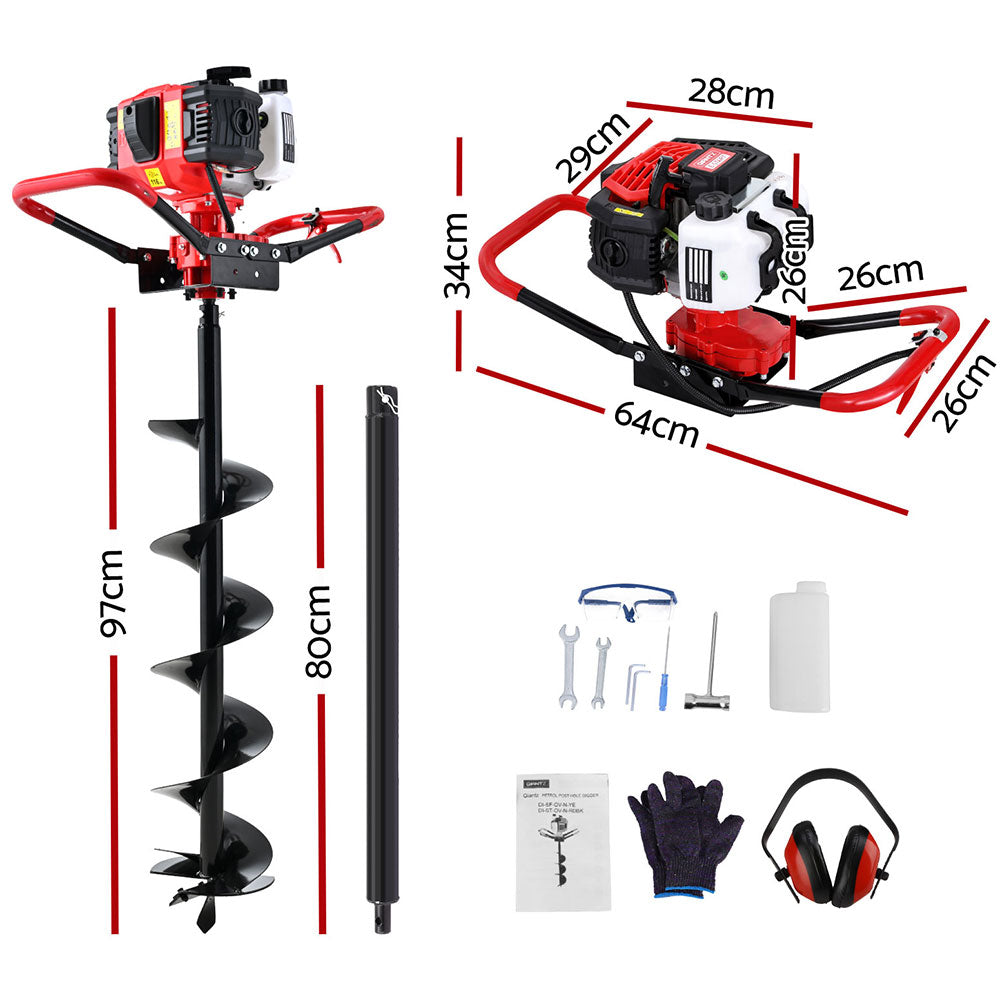
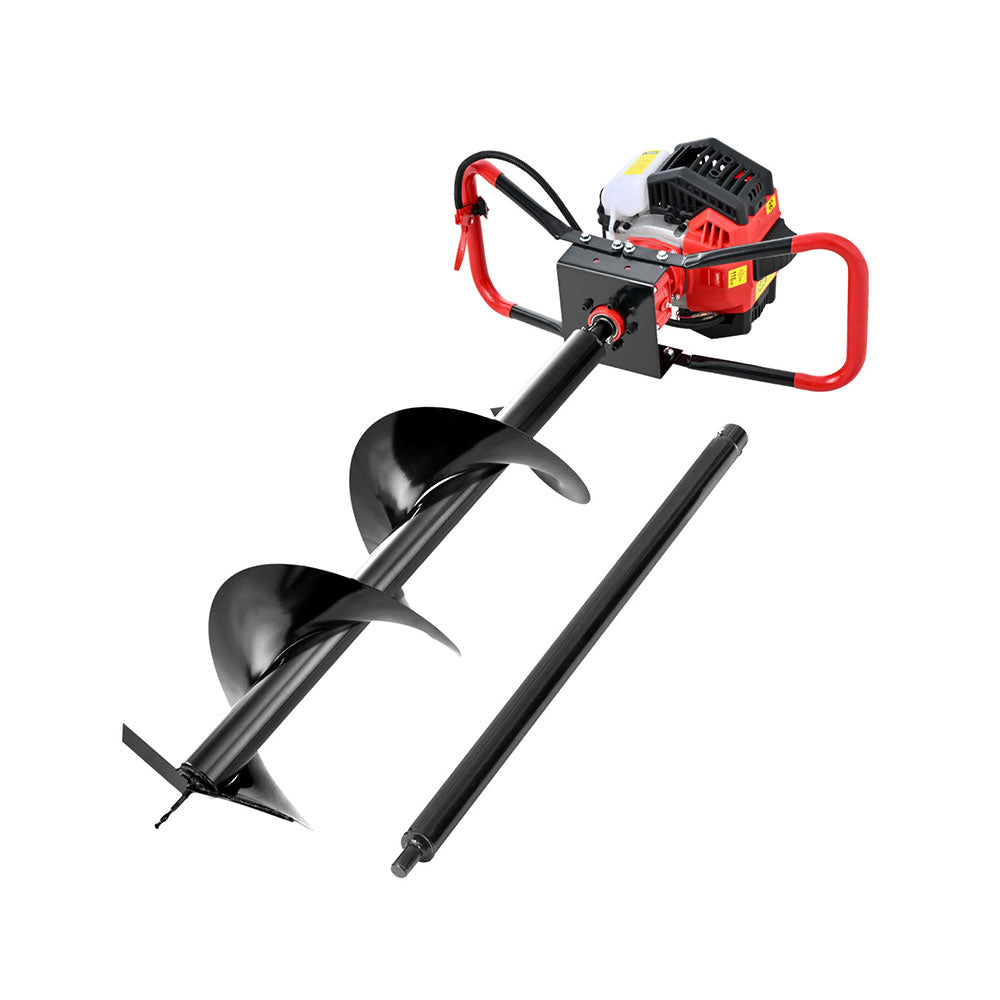
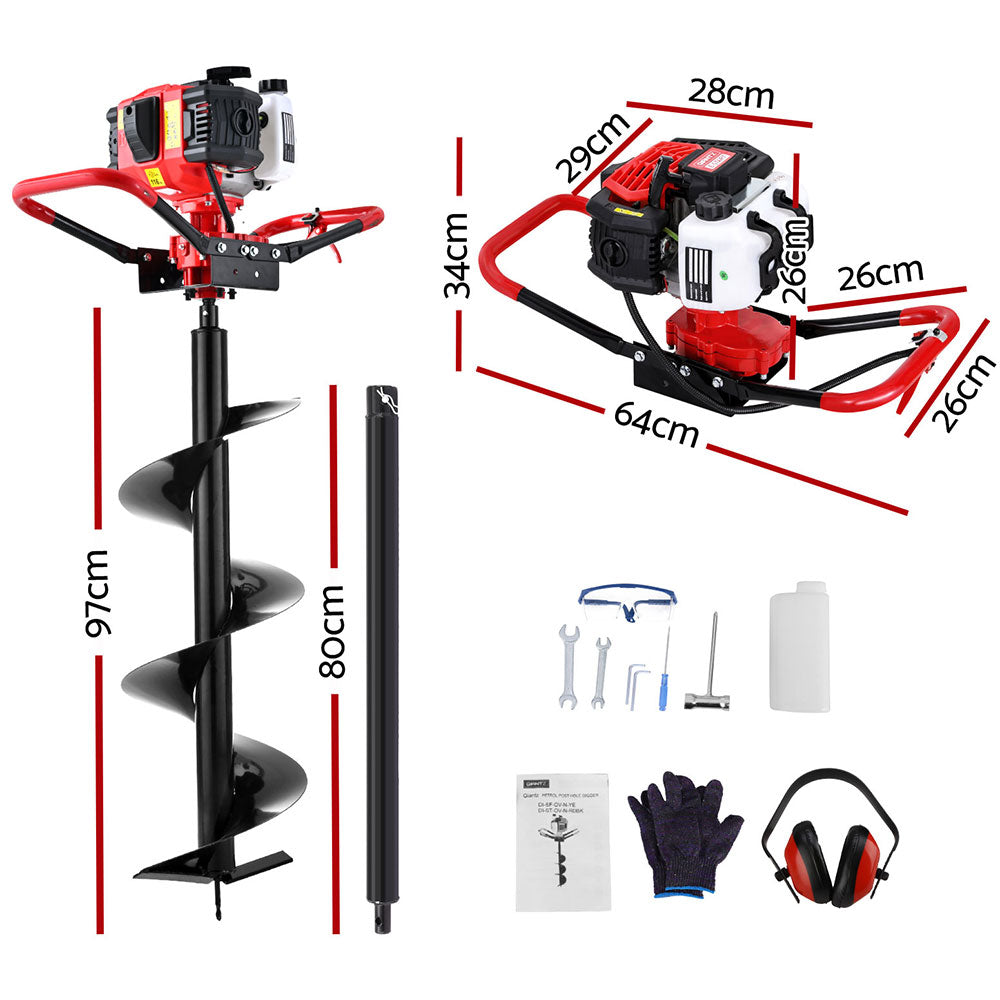
Some listings supply the motor unit only; others include one or more auger bits. A kit with 100, 200 and 300 mm bits gives several hole widths, but it is only useful if those widths match your project. For a replacement bit, shaft connection, locking arrangement and the machine’s permitted bit size must all match.
Engine capacity in cc describes the engine, not the hole diameter, achievable depth or suitability for your soil. Compare the complete machine-and-bit combination rather than choosing the largest cc number.
How do you choose the hole size?
Use the fence, footing or planting requirements to establish diameter and depth before buying a bit. A wider hole removes more soil and may require substantially more backfill or concrete. For the same depth, increasing diameter from 200 mm to 300 mm creates 2.25 times the excavation volume.
That calculation is not a structural sizing recommendation. Fence height, loads, ground conditions and the specified footing determine what your project needs. An extension changes reach; it does not approve a deeper hole or overcome unsuitable ground.
What matters before the first hole?
Roots, buried stone and hard clay can stop an earth auger or cause it to catch. Establish the ground conditions and the manufacturer’s operating limits before committing to a machine. If the site needs specialist excavation, a larger small-engine auger may still be the wrong tool.
Plan the digging location through Before You Dig Australia, then follow the asset owners’ locating and protection requirements. An apparently clear patch of lawn can still contain buried services.
Useful answers
Post Hole Diggers & Earth Augers: your questions
Is a post hole auger the same as a post driver?
No. An auger removes soil to make a hole. A post driver drives a suitable post into the ground. They are different tools and are not interchangeable merely because both appear in fencing searches.
Can any auger bit fit any petrol digger?
No. The drive connection and retaining system must match, and the machine must be rated for the bit diameter and type. Similar-looking bits can have different shafts or locking pins.
Will an earth auger drill through rock?
Do not assume so. Ordinary earth bits are designed for soil. Rock, large roots or buried rubble may need different equipment or specialist excavation; more engine capacity does not change the bit’s intended material.