
Rabbit Hutches & Small Animal Housing
Find a sheltered resting place for your rabbit and a practical way to connect it to a larger living area.
Shop the collection
-
Rabbit Cage Hutch Indoor Outdoor Hamster Enclosure Pet Metal Carrier 122CM Length
Regular price $78.90 AUDRegular priceUnit price per$142.99 AUDSale price $78.90 AUDSale -
Wooden Rabbit Hutch 2 Storey
Regular price $140.90 AUDRegular priceUnit price per$192.99 AUDSale price $140.90 AUDSale -
Rabbit Hutch Chicken Coop
Regular price $134.90 AUDRegular priceUnit price per$192.99 AUDSale price $134.90 AUDSale -
Rabbit Cage Hutch Indoor Outdoor Hamster Enclosure Pet Metal Carrier 162CM
Regular price $122.90 AUDRegular priceUnit price per$192.99 AUDSale price $122.90 AUDSale -
Rabbit Hutch Large Metal Run Wooden Cage Chicken Coop Guinea Pig House
Regular price $190.90 AUDRegular priceUnit price per$309.99 AUDSale price $190.90 AUDSale -
Rabbit Hutch Hutches Large Metal Run Wooden Cage Outdoor Pet House Chicken Coop Guinea Pig Ferret Chinchilla Hamster 165cm x 52cm x 86cm
Regular price $169.90 AUDRegular priceUnit price per$254.99 AUDSale price $169.90 AUDSale -
Rabbit Hutch Hutches Large Metal Run Wooden Cage Outdoor Pet House Chicken Coop Guinea Pig Ferret Chinchilla Hamster 91.5cm x 46cm x 116.5cm
Regular price $157.90 AUDRegular priceUnit price per$266.99 AUDSale price $157.90 AUDSale -
Wooden Pet Coop 138cm Wide
Regular price $153.90 AUDRegular priceUnit price per$232.99 AUDSale price $153.90 AUDSale -
Wooden Rabbit Hutch Chicken Coop Run Cage Habitat House - Large Outdoor
Regular price $147.90 AUDRegular priceUnit price per$204.99 AUDSale price $147.90 AUDSale -
Rabbit Cage 4 Level Pet Hutch Bird Ferret Parrot Aviary Cat Hamster Castor 142cm
Regular price $131.90 AUDRegular priceUnit price per$199.99 AUDSale price $131.90 AUDSale -
Rabbit Cage Indoor Guinea Pig Ferret 100cm Hutch 3 Level
Regular price $73.90 AUDRegular priceUnit price per$132.99 AUDSale price $73.90 AUDSale -
Rabbit Hutch Large Wooden House Run Cage 98x45x92cm Chicken Coop Bunny Guinea Pig
Regular price $167.90 AUDRegular priceUnit price per$266.99 AUDSale price $167.90 AUDSale -
Wooden Rabbit Hutch Chicken Coop Ferret Cage Habitat House - Large Outdoor
Regular price $113.90 AUDRegular priceUnit price per$209.99 AUDSale price $113.90 AUDSale -
Rabbit Hutch Double Storey Large Guinea Pig Ferret Cage with Pull-Out Tray on Wheels
Regular price $220.90 AUDRegular priceUnit price per$350.00 AUDSale price $220.90 AUDSale -
Small Animal Fence Mini Pet Guinea Pig Hamster Enclosure Playpen
Regular price $25.90 AUDRegular priceUnit price per$50.00 AUDSale price $25.90 AUDSale -
Rabbit/Guinea Pig Home 100cm
Regular price $128.90 AUDRegular priceUnit price per$192.99 AUDSale price $128.90 AUDSale -
Wooden Pet Coop 93cm Tall
Regular price $118.90 AUDRegular priceUnit price per$177.99 AUDSale price $118.90 AUDSale -
Samland Stackable Rabbit Cage with Feeder Water Bottle
Regular price $109.90 AUDRegular priceUnit price per$141.10 AUDSale price $109.90 AUDSale -
34" Metal Small Animal Cage 2-Tier Rolling Ferret Cage with Tray A Ramp
Regular price $118.90 AUDRegular priceUnit price per$109.90 AUDSale price $118.90 AUD -
69" Metal Small Animal Cage 4-Tier Rolling Ferret Cage with Tray 3 Ramps
Regular price $296.90 AUDRegular priceUnit price per$274.90 AUDSale price $296.90 AUD -
Rabbit Cage Hutch Indoor Hamster Enclosure Carrier - Blue
Regular price $85.90 AUDRegular priceUnit price per$166.99 AUDSale price $85.90 AUDSale -
Pawz 16 Panels Guinea Pig Pet Playpen Small Pets Fence
Regular price $92.70 AUDRegular priceUnit price per$137.70 AUDSale price $92.70 AUDSale -
Pawz Guinea Pig Playpen Rabbit Cage Small Animal Fence
Regular price $154.70 AUDRegular priceUnit price per$232.70 AUDSale price $154.70 AUDSale -
Pawz Guinea Pig Playpen Small Animal Cage DIY Fence
Regular price $136.70 AUDRegular priceUnit price per$205.70 AUDSale price $136.70 AUDSale




Related reading


Find a sheltered resting place for your rabbit and a practical way to connect it to a larger living area. Browse wooden hutches, indoor enclosures and small-animal pens, with layouts ranging from single-level shelters to houses with attached runs. Choose for the animal using it, rather than the number of levels on the label.
Is the hutch the whole home or one part of it?
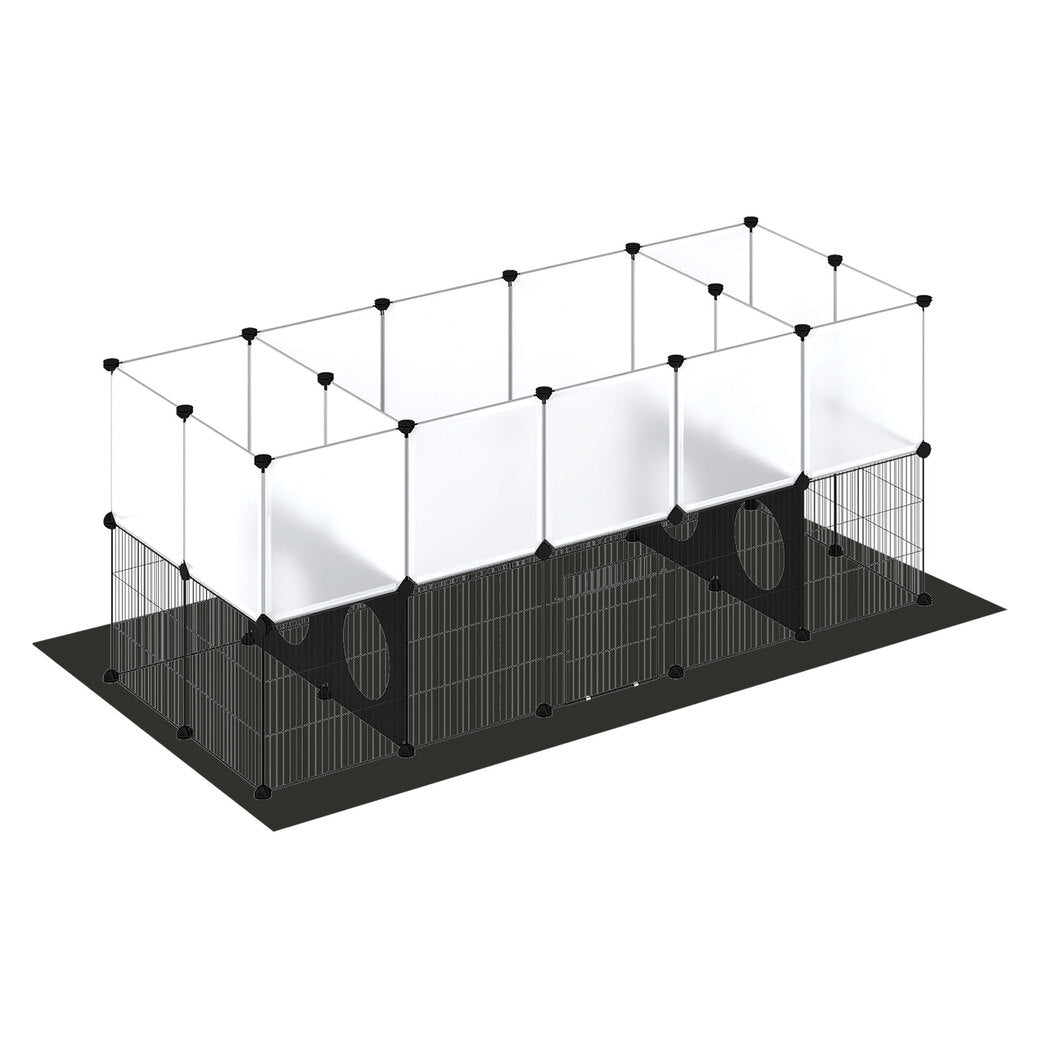
A rabbit hutch works best as a sheltered base within a much larger safe space. Rabbits need room to run, stretch out, stand upright and move around food, water and a litter tray. A small cage does not become a complete home because the product title says “large”.
For an indoor setup, plan a rabbit-proofed pen or room around the resting area. Outdoors, connect the hutch to a secure run and provide shade and weather protection. An attached run is useful, but its clear floor area still matters: a house, ramp and feeding station can occupy much of a compact enclosure.
Single storey or two storeys: what changes?
| Layout | Useful advantage | Important trade-off |
|---|---|---|
| Single-level hutch | No ramp between essential areas; straightforward access for rabbits with limited mobility. | Needs enough ground-level room and a connection to exercise space. |
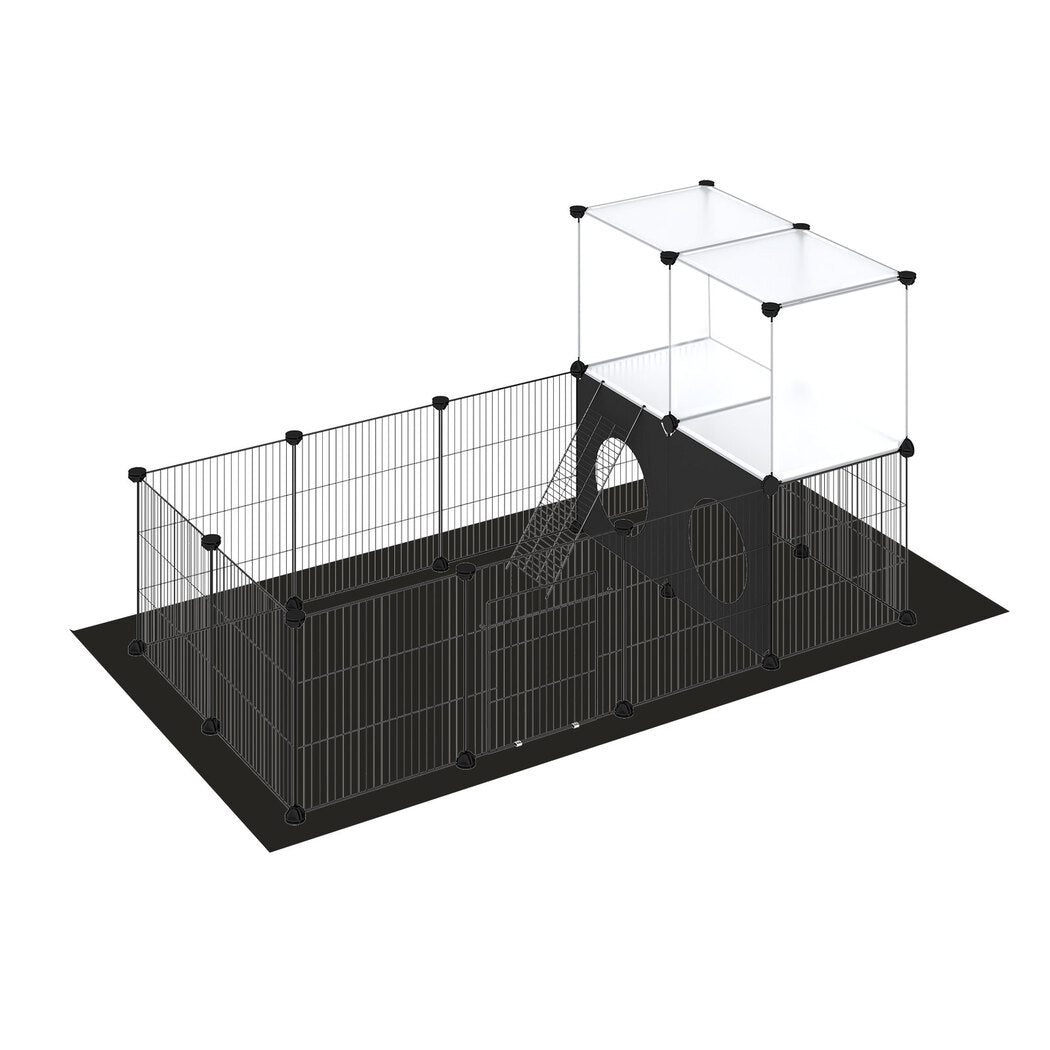
| Two-storey hutch | Can separate a sheltered compartment from a lower area. | A steep ramp or small landing may be difficult to use; height does not replace clear floor space. |
| Open indoor pen | Flexible floor layout around a hide, hay and litter tray. | The room, floor surface and escape routes still need rabbit-proofing. |
For a bonded pair, allow both rabbits to retreat without one blocking the other’s only route. Keep essential resources accessible on a level each rabbit can comfortably reach. Ferret-style climbing cages in the wider small-animal range should not be treated as interchangeable with rabbit housing.
Will the floor be comfortable and the tray easy to clean?
Look at the surface the animal stands on, not just the pull-out tray underneath it. Rabbits need comfortable resting surfaces; exposed wire flooring is not recommended. A removable tray catches waste but does not necessarily provide a solid floor above it.
Think through a bedding change before choosing the location. Can the tray slide all the way out? Can you reach the back corners and remove a damp sleeping mat? A wide access door can be more useful than an extra level that is difficult to clean.
Plastic cage liners are cleaning accessories, not a replacement for appropriate flooring or bedding. Keep any material a rabbit can chew or swallow out of reach unless it is suitable for that use.
What does an outdoor hutch need that an indoor pen does not?
Outdoor housing needs protection from predators, biting insects and weather extremes. A roof alone does not stop afternoon sun or rain entering through open sides. Choose a sheltered position with ventilation and enough clearance to inspect the perimeter.
Indoors, concentrate on a non-slip surface, protected cables, escape routes and a quiet hiding place. A lightweight fabric playpen can be useful for supervised time, but it is a different proposition from a secure permanent outdoor enclosure.
For poultry housing instead, go to chicken coops and runs. Species-specific needs matter more than the list of animals in a supplier’s product name.
Useful answers
Rabbit Hutches & Small Animal Housing: your questions
Can my rabbit stay in a hutch all day?
A compact hutch is not enough for a rabbit’s full living and exercise needs. Plan a much larger safe enclosure or rabbit-proofed room where the rabbit can move freely, with the hutch or hide providing a sheltered retreat.
Are tall multi-level cages suitable for every small animal?
No. Ferrets, rabbits and guinea pigs use space differently. Tall climbing cages can have narrow platforms or ramps that are unsuitable for the intended animal. Choose the actual floor layout and access routes for that species rather than relying on a multi-species title.
Can rabbits and guinea pigs share the same hutch?
They should be housed separately. Their social behaviour, dietary needs and health risks differ. A hutch described as suitable for either species does not mean they should live together.
Do wheels make a hutch safe to move with the animals inside?
Do not assume so. A wheeled base makes the empty enclosure easier to reposition, but movement can shift trays, ramps or doors. Follow the model’s instructions and keep the animals secure while relocating their housing.