
Fitness & Sports
A corner for your morning stretch, a compact strength setup or a place for games outside: start with the way you want to move.
Shop the collection
-
Weight Bench, Multi‑Station, Fitness Home Gym, Red
Regular price $99.90 AUDRegular priceUnit price per$166.99 AUDSale price $99.90 AUDSale -
Adjustable Sit Up Bench Press Weight Gym Home Exercise Fitness Decline
Regular price $73.90 AUDRegular priceUnit price per$116.99 AUDSale price $73.90 AUDSale -
Power Tower 4‑in‑1 Multi‑Function Station, Fitness Gym Equipment
Regular price $146.90 AUDRegular priceUnit price per$256.99 AUDSale price $146.90 AUDSale -
Portable Basketball Stand Hoop System 2.1M - Adjustable Rim Black
Regular price $78.90 AUDRegular priceUnit price per$149.99 AUDSale price $78.90 AUDSale -
Rowing Machine Rower - Exercise Resistance Home Gym
Regular price $187.90 AUDRegular priceUnit price per$282.99 AUDSale price $187.90 AUDSale -
Inversion Table Gravity Stretcher Inverter Foldable Home Fitness Gym
Regular price $125.90 AUDRegular priceUnit price per$234.99 AUDSale price $125.90 AUDSale -
Weight Bench 10-in-1 Bench Press Home Gym Station 330KG Capacity
Regular price $186.90 AUDRegular priceUnit price per$316.99 AUDSale price $186.90 AUDSale -
Adjustable FID Weight Bench Fitness Flat Incline Gym Home Steel Frame
Regular price $89.90 AUDRegular priceUnit price per$149.99 AUDSale price $89.90 AUDSale -
Metal Detector Pinpointer Deep Sensitive Searching Treasure Gold Hunt Digger 160MM
Regular price $78.90 AUDRegular priceUnit price per$166.99 AUDSale price $78.90 AUDSale -
Power Tower 8‑in‑1 Weight Bench, Multi‑Function Station
Regular price $161.90 AUDRegular priceUnit price per$272.99 AUDSale price $161.90 AUDSale -
Treadmill, Home Gym Exercise Running Machine
Regular price $229.90 AUDRegular priceUnit price per$599.99 AUDSale price $229.90 AUDSale -
Weight Bench Adjustable FID Bench Press Home Gym 330kg Capacity
Regular price $125.90 AUDRegular priceUnit price per$232.99 AUDSale price $125.90 AUDSale -
Weight Bench Adjustable Roman Chair 10-in-1 Home Gym Fitness 200kg
Regular price $118.90 AUDRegular priceUnit price per$182.99 AUDSale price $118.90 AUDSale -
Rowing Machine Hydraulic Resistance Fitness Gym Cardio Exercise Rower
Regular price $135.90 AUDRegular priceUnit price per$199.99 AUDSale price $135.90 AUDSale -
Elliptical Cross Trainer 4in1 Exercise Bike Home Gym Fitness Machine
Regular price $194.90 AUDRegular priceUnit price per$316.99 AUDSale price $194.90 AUDSale -
Soccer Rebounder Net Portable Volley Training Football Goal Pass Trainer
Regular price $74.90 AUDRegular priceUnit price per$99.99 AUDSale price $74.90 AUDSale -
Elliptical Cross Trainer 5-in-1 Exercise Bike Home Gym Fitness Machine
Regular price $175.90 AUDRegular priceUnit price per$349.99 AUDSale price $175.90 AUDSale -
Elliptical Cross Trainer 6in1 Exercise Bike Home Gym Fitness Machine
Regular price $214.90 AUDRegular priceUnit price per$432.99 AUDSale price $214.90 AUDSale -
Deep Sensitive Metal Detector Searching Gold Digger Treasure Hunter LCD Shovel Sand Scoop
Regular price $98.90 AUDRegular priceUnit price per$266.99 AUDSale price $98.90 AUDSale -
Metal Detector Pinpointer Deep Sensitive Searching Gold Digger Hunter Digger 180MM
Regular price $59.90 AUDRegular priceUnit price per$149.99 AUDSale price $59.90 AUDSale -
Everfit Weight Bench 14in1 Press Multi-Station Fitness Home Gym Equipment
Regular price $201.90 AUDRegular priceUnit price per$374.99 AUDSale price $201.90 AUDSale -
Rowing Machine Rower Elastic Rope Resistance Fitness Home Cardio - Black
Regular price $163.90 AUDRegular priceUnit price per$277.99 AUDSale price $163.90 AUDSale -
Rowing Exercise Machine 4-Level
Regular price $202.90 AUDRegular priceUnit price per$292.99 AUDSale price $202.90 AUDSale -
Gravity Inversion Table Foldable Stretcher Inverter Home Gym Fitness
Regular price $131.90 AUDRegular priceUnit price per$247.99 AUDSale price $131.90 AUDSale




Related reading


A corner for your morning stretch, a compact strength setup or a place for games outside: start with the way you want to move. This Fitness & Sports hub brings together home training equipment, boxing, cycling and outdoor activities, with practical routes through the choices. Build a setup that fits the people using it and the room available when it is actually in use.
Start with a routine, then choose the equipment
A treadmill and a bench can occupy a similar-looking rectangle in a room, but they ask very different things of the surrounding space. Cardio equipment needs access, ventilation and an unobstructed operating area. Strength work needs room for arms, bars and loading plates. Floor exercises need a clear mat-sized area that stays usable when other furniture is in place.
Choose one activity you expect to repeat regularly before filling the space with several machines. That makes it easier to decide which purchase belongs first and which accessories can wait.
Six routes through fitness and sport
- Strength training: weights, benches and machines, chosen around movement, load and compatible fittings.
- Cardio: walking, running, rowing and pedalling, with attention to stride, adjustment and storage.
- Yoga and exercise: floor work, balance, stretching and recovery accessories.
- Boxing: targets and bags, from inflatable play equipment to more substantial training setups.
- Cycling and scooters: riding accessories, storage and maintenance.
- Outdoor sport: hoops, games, waterside activities and outdoor hobbies.
Plan the working space, not just the footprint
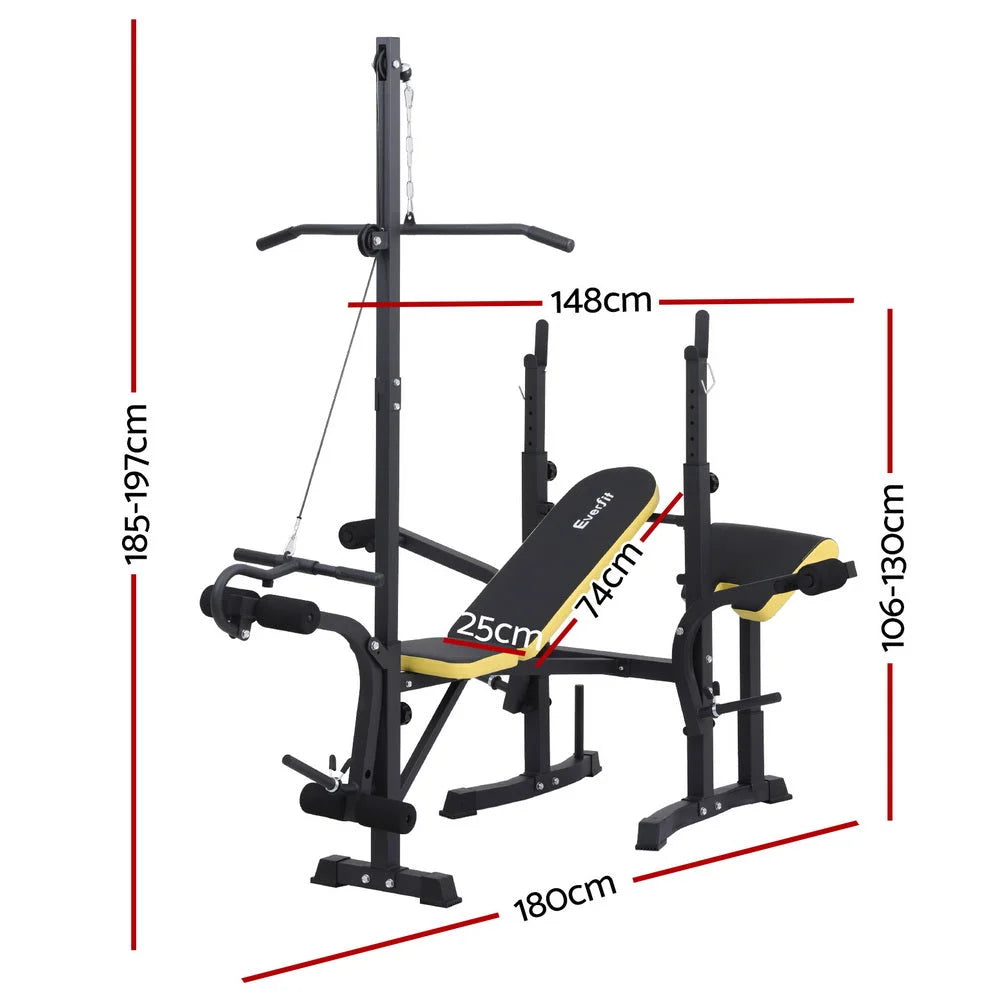
Mark the assembled dimensions on the floor and then add the movement area specified for the product. Open doors and drawers, pull out nearby chairs and imagine where another person would walk. For tall stations, allow for the user above the platform or under a pull-up bar, as well as the height of the frame itself.
Folding helps only when the folded item can be moved to a useful storage position. Check its weight, transport wheels and the route to that position before choosing it for a shared living space.
Make the setup easy to live with
Keep loose plates, resistance bands and attachments in a designated place so the exercise area can be cleared between sessions. A mat may protect the floor, but it does not establish that the floor can carry a heavy machine or eliminate vibration for the room below. Consider the full equipment load, the surface and neighbouring rooms.
Assembly, adjustment and routine inspection are part of owning the equipment. Keep the instructions and give moving components, pins and fasteners the attention specified by the manufacturer.
Guides and product details: Browse Fitness & Sports
Useful answers
Questions about fitness & sports
Where should I start when choosing fitness equipment for a small home?
Choose the activity first, then map its working space. A floor routine, free weights and a cardio machine need different room around the user. Compare operating and stored dimensions separately, and leave a route through the room. A compact purchase is useful only if the complete setup remains practical.
Can I combine strength, cardio and yoga equipment in one room?
Yes, where each setup has its required space when in use. Plan where a bench, moving belt or floor mat will sit, and where loose weights and attachments go between activities. Shared storage should not block controls or clearances. You may need to use the setups at different times.
Which guide should I use for outdoor activities rather than a home gym?
Start with Outdoor Sports for ball games, waterside activities and outdoor hobbies. Cycling & Scooters covers riding equipment and bike accessories, while Boxing focuses on targets and bags. Choosing the activity route first keeps unrelated products out of the comparison and leads to more specific fit and setup advice.