
Make room for sleep, storage and daily routines
Bedroom Furniture
A bedroom works best when the bed, clothing storage and getting-ready area leave one another enough space. Start with the mattress footprint, then plan how drawers, wardrobe doors and a dressing-table stool will open. Choose the pieces around the way you use the room, whether you need a complete suite or one practical addition.

Choose a bedroom furniture type


Build the room around the bed
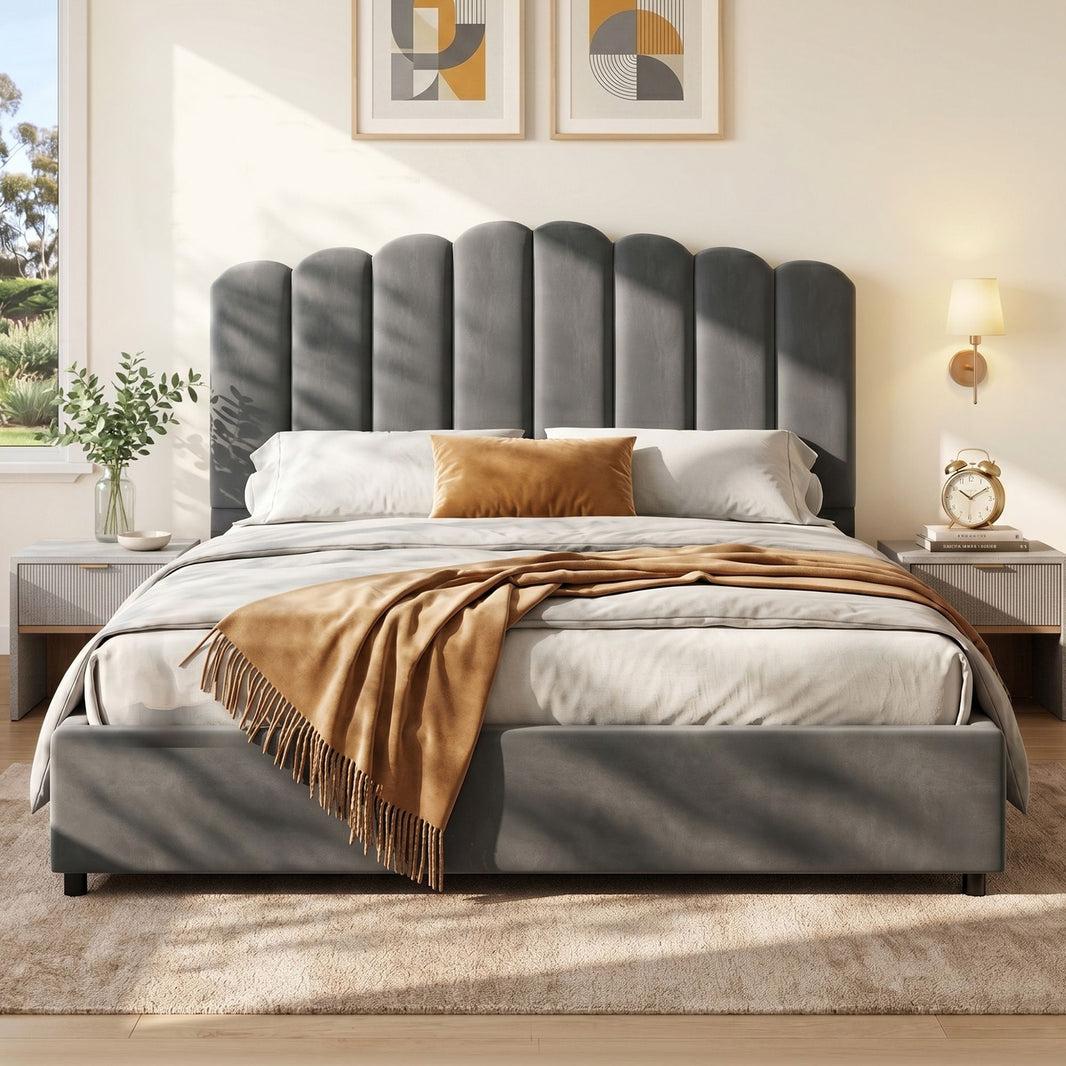
Mark out the full bed frame, including its headboard and footboard, rather than only the mattress. An upholstered frame can occupy more floor space than its sleeping surface suggests. Keep the route to the door and wardrobe usable when bedside drawers are open. Storage under the bed is most useful when its opening direction suits that route.
Give different belongings different storage
Hanging space protects the shape of longer clothing; drawers organise folded items; a dressing table keeps small grooming items close to a mirror. Count these needs separately before choosing a matching suite. A broad dresser may solve folded-clothing storage while leaving less room for a chair than a narrow chest would.
Coordinate height as well as colour
Compare bedside-table height with the top of your actual mattress, and the dressing-table seat with its knee opening. These relationships determine daily reach and comfort. Matching finishes are optional; compatible proportions matter every time you get in and out of bed. Plan suitable furniture anchoring as part of the layout.
Further reading: ACCC guide to preventing furniture tip-overs
Shop the collection
-
Bedding Folding Mattress Foldable Portable Bed Floor Mat Camping Pad
Regular price $86.90 AUDRegular priceUnit price per$152.99 AUDSale price $86.90 AUDSale -
Chest of Drawers 6 Cabinet Dresser Table Tallboy Lowboy Storage Wood
Regular price $153.90 AUDRegular priceUnit price per$222.99 AUDSale price $153.90 AUDSale -
Chest of Drawers 6 Cabinet Dresser Tallboy Storage Bedroom - LEIF White
Regular price $150.90 AUDRegular priceUnit price per$244.99 AUDSale price $150.90 AUDSale -
Folding Foam Mattress Bedding Portable
Regular price $89.90 AUDRegular priceUnit price per$127.99 AUDSale price $89.90 AUDSale -
Bed Frame Queen, Fabric, Charcoal
Regular price $178.90 AUDRegular priceUnit price per$332.99 AUDSale price $178.90 AUDSale -
Chest of Drawers 6 Cabinet Dresser Tallboy Lowboy Storage Bedroom - White
Regular price $151.90 AUDRegular priceUnit price per$266.99 AUDSale price $151.90 AUDSale -
Tallboy Dresser 6-Drawer Cabinet, White Bedroom Storage
Regular price $166.90 AUDRegular priceUnit price per$254.99 AUDSale price $166.90 AUDSale -
Tallboy Storage Cabinet 6-Drawer, Walnut
Regular price $152.90 AUDRegular priceUnit price per$254.99 AUDSale price $152.90 AUDSale -
Chest of Drawers 6 Cabinet Dresser Tallboy Storage Bedroom - White
Regular price $132.90 AUDRegular priceUnit price per$276.99 AUDSale price $132.90 AUDSale -
LED Bed Frame Queen Size Fabric Gas Lift Storage - Grey
Regular price $271.90 AUDRegular priceUnit price per$566.99 AUDSale price $271.90 AUDSale -
Dressing Table Vanity Desk LED 10-Bulb Makeup Mirror Stool Set - White
Regular price $208.90 AUDRegular priceUnit price per$309.99 AUDSale price $208.90 AUDSale -
Bedside Tables Side Table Drawers RGB LED High Gloss Nightstand - White
Regular price $82.90 AUDRegular priceUnit price per$132.99 AUDSale price $82.90 AUDSale -
Portable Mattress Folding Foldable Foam Floor Bed Tri-Fold 180cm
Regular price $78.90 AUDRegular priceUnit price per$149.99 AUDSale price $78.90 AUDSale -
Bed Head Headboard Queen Size Bed Fabric Frame Base CAPPI Charcoal
Regular price $142.90 AUDRegular priceUnit price per$247.99 AUDSale price $142.90 AUDSale -
Chest of Drawers Tallboy Dresser Table Storage Cabinet Oak Bedroom 6
Regular price $151.90 AUDRegular priceUnit price per$292.99 AUDSale price $151.90 AUDSale -
Bed Frame Queen, Fabric, Grey
Regular price $168.90 AUDRegular priceUnit price per$332.99 AUDSale price $168.90 AUDSale -
Chest of Drawers 5 Tallboy Dresser Table Bedroom Storage Cabinet
Regular price $170.90 AUDRegular priceUnit price per$261.99 AUDSale price $170.90 AUDSale -
Artiss Wardrobe Clothes Closet Storage Organizer with 2 Doors White
Regular price $238.90 AUDRegular priceUnit price per$482.99 AUDSale price $238.90 AUDSale -
Artiss 2x Bedside Table 3 Drawers Vintage - THYME Blue
Regular price $162.90 AUDRegular priceUnit price per$257.99 AUDSale price $162.90 AUDSale -
Artiss 2x Bedside Table 2 Drawers - PEPE Black
Regular price $102.90 AUDRegular priceUnit price per$199.99 AUDSale price $102.90 AUDSale -
Artiss Bed Frame Queen Size Velvet Grey FION
Regular price $267.90 AUDRegular priceUnit price per$532.99 AUDSale price $267.90 AUDSale -
Single Gas Lift Bed Mechanism with Frame – Storage Platform & Sofa Bed Kit
Regular price $232.90 AUDRegular priceUnit price per -
Artiss 6 Chest of Drawers Dresser Table Pine
Regular price $200.90 AUDRegular priceUnit price per$416.99 AUDSale price $200.90 AUDSale -
Chest of Drawers 6-Drawer - VEDA Black
Regular price $148.90 AUDRegular priceUnit price per$261.99 AUDSale price $148.90 AUDSale




Related reading

Useful answers
Bedroom Furniture questions, answered
Which bedroom furniture should I choose first?
Start with the bed and the storage your clothes actually need. Mark the full frame on the floor, then reserve space for wardrobe doors, drawers and a dressing-table seat. This reveals whether a coordinated suite will work or whether separate pieces will make better use of the room.
Can I combine furniture from different bedroom ranges?
Yes. Compare practical relationships before matching finishes: the bedside top against the mattress, the chair against the dressing-table opening, and drawer fronts against the walking route. Repeating a colour or handle finish can connect different pieces without forcing an oversized matching chest into the room.
How can I add storage without making the bedroom harder to use?
Group the items that have nowhere to go. Hanging clothes need a rail; folded clothing needs accessible drawers; spare bedding can use less frequently opened storage. Test the opening movement of the proposed unit beside your existing bed. Extra capacity is of little use if another piece has to move whenever you need it.
Does bedroom furniture need to be secured to a wall?
Freestanding storage can topple. Plan suitable anchoring before filling it, following the furniture instructions and advice for your wall construction. The ACCC recommends securing furniture to the wall or floor. Wedging a chest between other pieces does not provide the same protection.