On this page
Compare suppliers through the information they provide
A useful outdoor-storage listing identifies the exact model, internal and external dimensions, intended environment, package contents and installation requirements. Use those details to compare options instead of treating one material or brand as automatically best.
Match construction to the job
Resin, metal and timber boxes can each suit particular uses, but their performance depends on the complete design and care requirements. Check the lid, joints, base and stated exposure limits. A flat or overlapping lid alone does not determine a waterproof rating, and a metal body does not establish theft resistance.
Plan a family-friendly layout
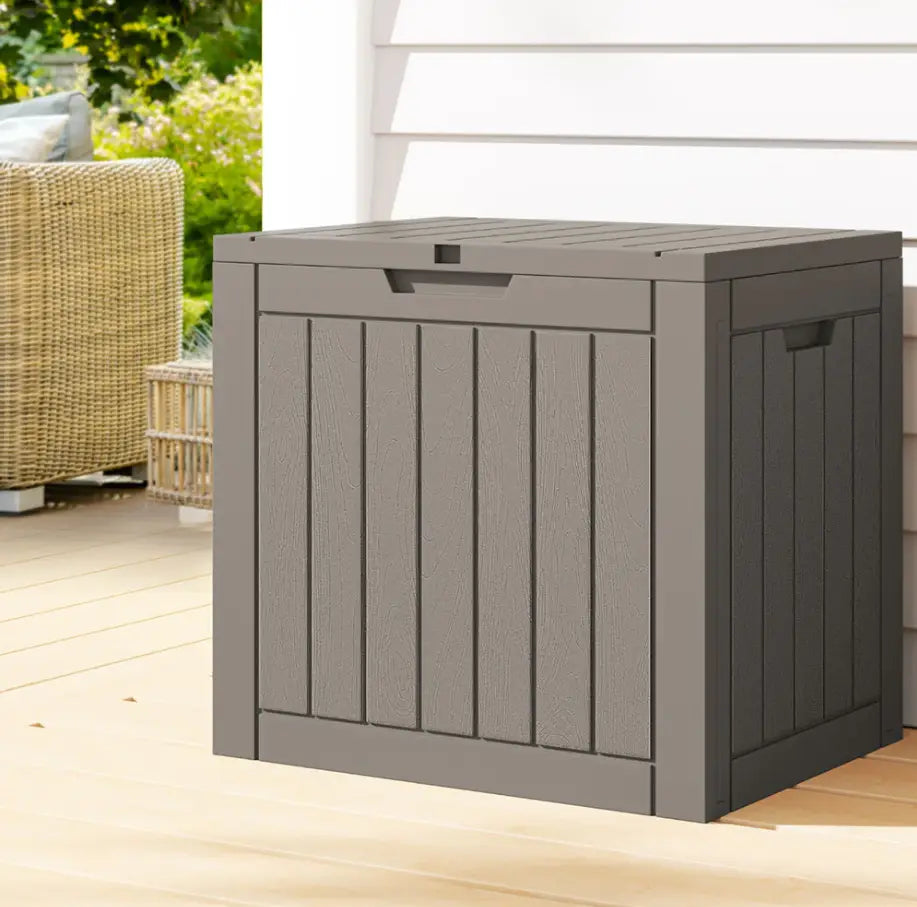
Check lid operation and the space required to access contents. Do not plan for children to climb on or inside a box. Use a storage box as a bench only when seating is explicitly permitted and the appropriate load limit is supplied. Rounded edges or a strong-looking lid are not a childproof certification.
Measure before choosing capacity
Compare the longest item and the internal opening, then mark the box and open lid in the intended location. A larger volume can be useful, but always sizing up may block circulation or make access awkward. Confirm supplied hardware and any separately required base or lock. Choose the box that meets those documented needs and follow its own maintenance schedule rather than a universal annual treatment recipe.