

Protecting an outdoor cabinet starts with correct placement, assembly and maintenance. Use this checklist to investigate damp, look after surfaces and decide when a repair needs the manufacturer’s advice. Adding more sealant is not always the answer.
On this page
Check the cabinet’s intended use first
Start with the exact model and its assembly/care instructions. A cupboard intended for a sheltered patio is not automatically suitable for exposed rain, and an indoor cabinet does not become outdoor-rated because a sealant is added. Identify the material, finish, required base and any anchoring instructions before changing anything.
If you are still comparing products, use our guide to choosing an outdoor storage cabinet. This page is about caring for a cabinet you already have, including when to ask the supplier about a repair instead of making a permanent alteration.
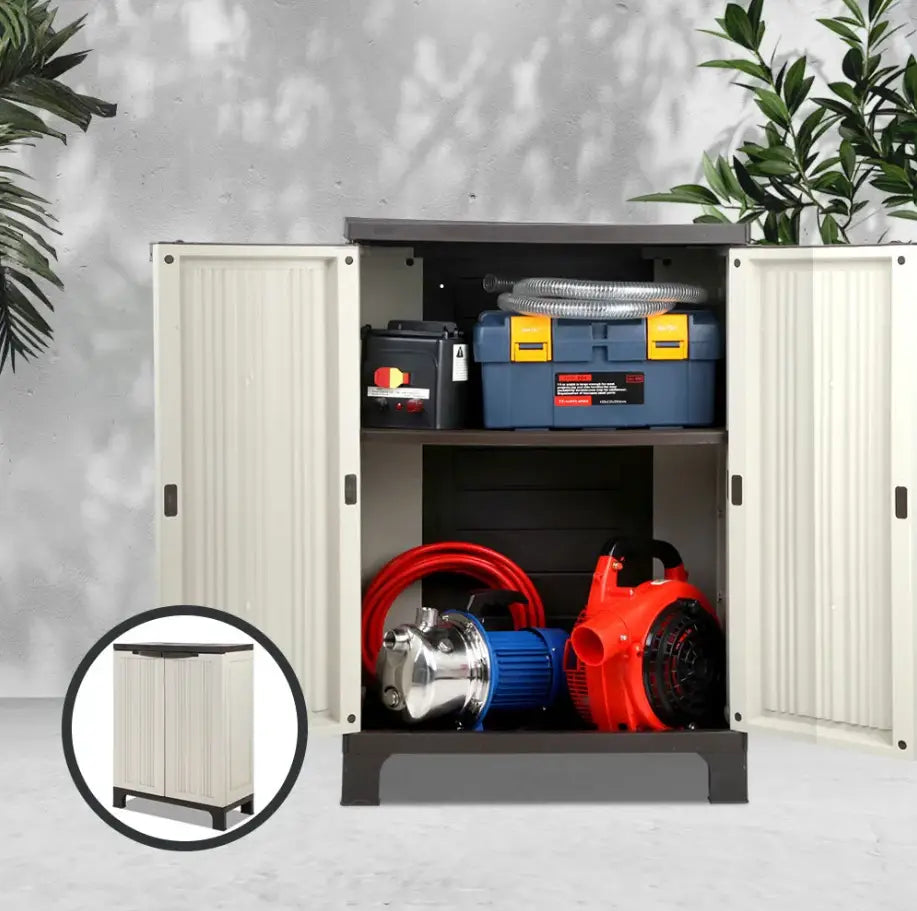
Trace moisture before adding a seal
When contents become damp, empty and dry the cabinet, then inspect it safely after rain. Note whether moisture appears below a door, at a panel joint, near the base or more generally on the inside surfaces. Rain entering a gap and condensation can call for different remedies; a wet interior alone does not identify the cause.
- Check that panels, hinges and doors are assembled and aligned as the manual shows.
- Remove leaves and debris from existing drainage paths without modifying them.
- Check whether runoff from a roof, gutter or nearby surface is directed at the cabinet.
- Take photographs of damaged parts or repeated leaks and give the supplier the model and part numbers.
Do not routinely seal every gap, drill new vents or fill screw holes. Some openings provide drainage or ventilation, and an added gasket can interfere with the door. Confirm any change with the manufacturer before applying silicone, adhesives or a surface treatment.
Keep the base supported and the cabinet stable
Follow the specified base and levelling instructions. Do not deliberately tilt a cabinet to make rain run off, or balance it on loose bricks. If the site pools with water, address the site drainage or choose a suitable location while keeping the cabinet supported as its design requires. Built-in feet are not proof that a unit is safe in floodwater.
Check the anchoring requirements as well as the weather exposure. For example, the 173 cm Gardeon cabinet requires securing with an anchor device and lists a 6 kg maximum per shelf. Keep to the stated shelf loads; a cabinet's external size is not a load rating.
Choose treatment by the exact material and finish
| Material or part | Routine check | Before a treatment or repair |
|---|---|---|
| Finished timber | Look for damaged finish, open joints and persistent damp. | Ask which coating and preparation method suit the existing finish; use the model’s care schedule rather than an assumed yearly interval. |
| Coated metal | Look for chipped coating, corrosion and loose hardware. | Confirm the compatible repair system and replacement parts. Do not coat hinges, vents or moving parts indiscriminately. |
| Resin or plastic | Look for cracks, distortion and dirt around doors or drainage. | Check cleaner compatibility. Do not assume paint, UV spray, solvents or silicone are suitable for that plastic. |
| Hinges, locks and seals | Check alignment, wear and smooth operation. | Use the specified lubricant or part, if any. A different metal fixing is not automatically an appropriate replacement. |
Manufacturer guidance is more useful than a universal weatherproofing recipe. For example, Keter’s product-care FAQ makes outdoor suitability model-specific and advises following the relevant cleaning and positioning instructions. It does not certify a different brand's cabinet or justify modifying one.
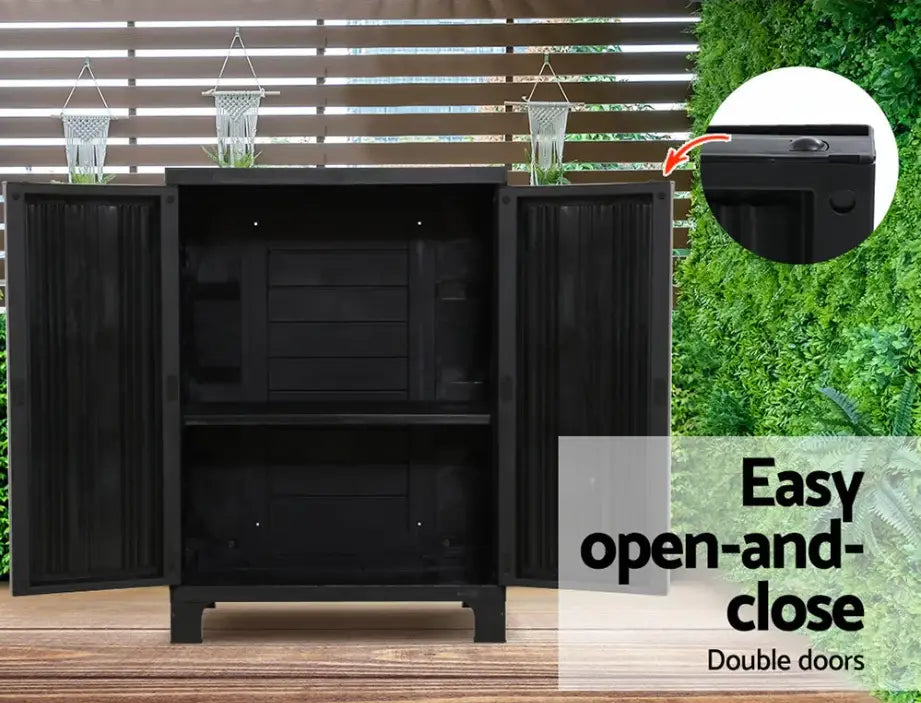
Reduce exposure without trapping damp
A suitable sheltered position can reduce direct exposure, provided it also meets the cabinet's clearance and installation requirements. If using a cover, choose one suited to the cabinet and follow its instructions. Let the cabinet and stored items dry before covering or closing them away; a cover cannot fix a leak or repair a damaged panel.
Keep moisture-sensitive items in a suitable dry environment. For ordinary outdoor cushions, follow their own care label and store them dry. IKEA’s cushion-care guidance specifically cautions against closing damp cushions in a storage bag or box. Do not assume a garden cupboard is suitable for LPG cylinders, fuels or other hazardous materials; they need their own storage arrangements.
Use a repeatable inspection checklist
Check the cabinet at the intervals in its instructions and after unusual weather. Keep a short record so that a recurring problem is not hidden by repeated cosmetic repairs.
- Doors: open and close correctly, without forcing a misaligned panel.
- Base: remains stable, supported and clear of standing water.
- Finish and fittings: no new cracks, loose fixings or untreated damage.
- Inside: contents are dry, shelves are not overloaded and ventilation/drainage remains clear.
- Repair: manufacturer-approved parts or treatment have been identified before work starts.
If the cabinet is no longer suitable for its location or its contents, compare outdoor storage cabinets or storage boxes by the protection and usable space actually specified. See the outdoor storage measuring checklist before changing size or style.
Common cabinet-care questions
Can sealant make any outdoor cabinet waterproof?
No. A sealant does not establish a tested waterproof rating or change the intended use of the whole cabinet. Use only treatments and modifications permitted for the exact product.
Should I replace every screw with stainless steel?
Do not choose replacements only by the metal name. The thread, size, fit and compatibility with adjoining parts also matter. Ask the manufacturer for the correct part where the manual does not specify it.
Is a weather-resistant cabinet safe for wet cushions?
Do not pack wet cushions away. Dry them as their care instructions require, and check that the chosen storage is suitable for keeping them dry.


