
Piggy Banks & Money Boxes
A money box gives pocket money a place to collect.
Shop the collection
-
Pink Children's Mini Safe Piggy Bank with Fingerprint and Password Lock
Regular price $37.90 AUDRegular priceUnit price per$72.00 AUDSale price $37.90 AUDSale -
Silver Children's Mini Safe Piggy Bank with Fingerprint and Password Lock
Regular price $37.90 AUDRegular priceUnit price per$72.00 AUDSale price $37.90 AUDSale -
Red Children's Mini Safe Piggy Bank with Fingerprint and Password Lock
Regular price $37.90 AUDRegular priceUnit price per$72.00 AUDSale price $37.90 AUDSale -
Piggy Bank Safe Cash Register Box Small Household Money Storage Safe
Regular price $44.90 AUDRegular priceUnit price per$54.77 AUDSale price $44.90 AUDSale -
Kids Electronic ATM Savings Bank - Digital Piggy Bank with Password, Auto Roll-in Banknotes & Coin Slot for Financial Learning Fun(pink)
Regular price $46.90 AUDRegular priceUnit price per$90.00 AUDSale price $46.90 AUDSale -
Kids Electronic ATM Savings Bank - Digital Piggy Bank with Password, Auto Roll-in Banknotes & Coin Slot for Financial Learning Fun(black)
Regular price $46.90 AUDRegular priceUnit price per$90.00 AUDSale price $46.90 AUDSale -
Kids ATM Savings Bank - Electronic Piggy Bank with Debit Card, PIN(Pink)
Regular price $54.90 AUDRegular priceUnit price per$104.00 AUDSale price $54.90 AUDSale -
Kids ATM Savings Bank - Electronic Piggy Bank with Debit Card, PIN(Gold)
Regular price $57.90 AUDRegular priceUnit price per$110.00 AUDSale price $57.90 AUDSale -
Kids ATM Savings Bank - Electronic Piggy Bank with Debit Card, PIN(Blue)
Regular price $54.90 AUDRegular priceUnit price per$104.00 AUDSale price $54.90 AUDSale -
Kids ATM Savings Bank - Electronic Piggy Bank with Debit Card, PIN(black)
Regular price $54.90 AUDRegular priceUnit price per$104.00 AUDSale price $54.90 AUDSale -
Interactive Kids' Piggy Bank Safe with Music, Stories & Password Lock(Yellow)
Regular price $42.90 AUDRegular priceUnit price per$82.00 AUDSale price $42.90 AUDSale -
Interactive Kids' Piggy Bank Safe with Music, Stories & Password Lock(Pink)
Regular price $42.90 AUDRegular priceUnit price per$82.00 AUDSale price $42.90 AUDSale -
Interactive Kids' Piggy Bank Safe with Music, Stories & Password Lock(Cyan)
Regular price $42.90 AUDRegular priceUnit price per$82.00 AUDSale price $42.90 AUDSale -
Interactive Kids' Piggy Bank Safe with Music, Stories & Password Lock(blue)
Regular price $42.90 AUDRegular priceUnit price per$82.00 AUDSale price $42.90 AUDSale -
Gold Children's Mini Safe Piggy Bank with Fingerprint and Password Lock
Regular price $37.90 AUDRegular priceUnit price per$72.00 AUDSale price $37.90 AUDSale -
Electronic Piggy Bank Safe Box for Kids - Automatic Bill & Coin Bank with Password Protection, Music & Lights(black)
Regular price $36.90 AUDRegular priceUnit price per$70.00 AUDSale price $36.90 AUDSale -
Dark Blue Children's Mini Safe Piggy Bank with Fingerprint and Password Lock
Regular price $37.90 AUDRegular priceUnit price per$72.00 AUDSale price $37.90 AUDSale -
Blue Children's Mini Safe Piggy Bank with Fingerprint and Password Lock
Regular price $37.90 AUDRegular priceUnit price per$72.00 AUDSale price $37.90 AUDSale -
Black Children's Mini Safe Piggy Bank with Fingerprint and Password Lock
Regular price $37.90 AUDRegular priceUnit price per$72.00 AUDSale price $37.90 AUDSale -
Adorable Cat Stealing Coin Piggy Bank - Automatic Money Saving Box for Kids & Adults(Strawberry white cat)
Regular price $30.90 AUDRegular priceUnit price per$58.00 AUDSale price $30.90 AUDSale -
Adorable Cat Stealing Coin Piggy Bank - Automatic Money Saving Box for Kids & Adults(Orange and white cat)
Regular price $30.90 AUDRegular priceUnit price per$58.00 AUDSale price $30.90 AUDSale


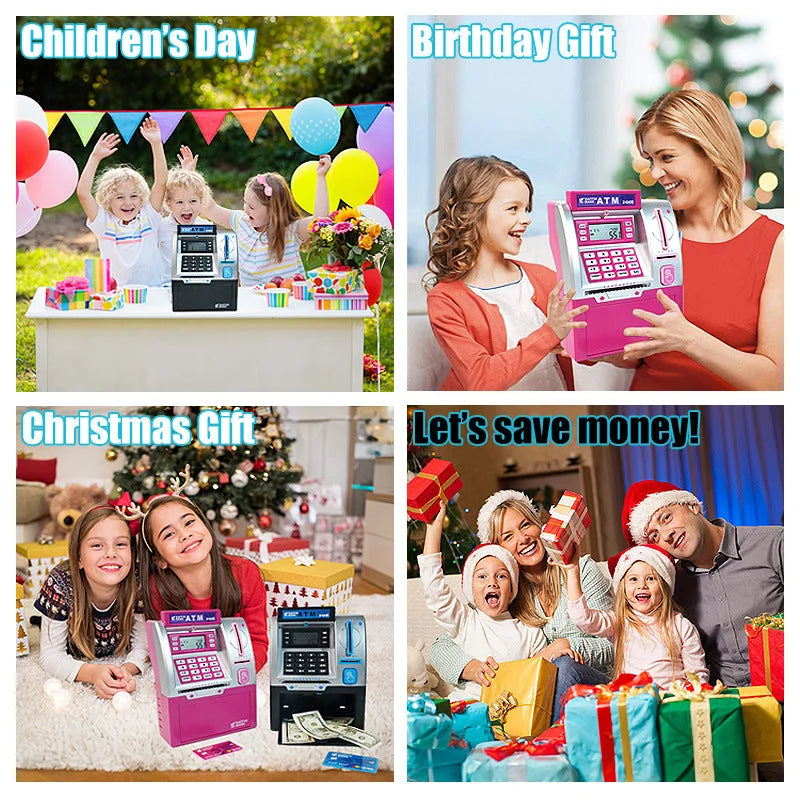


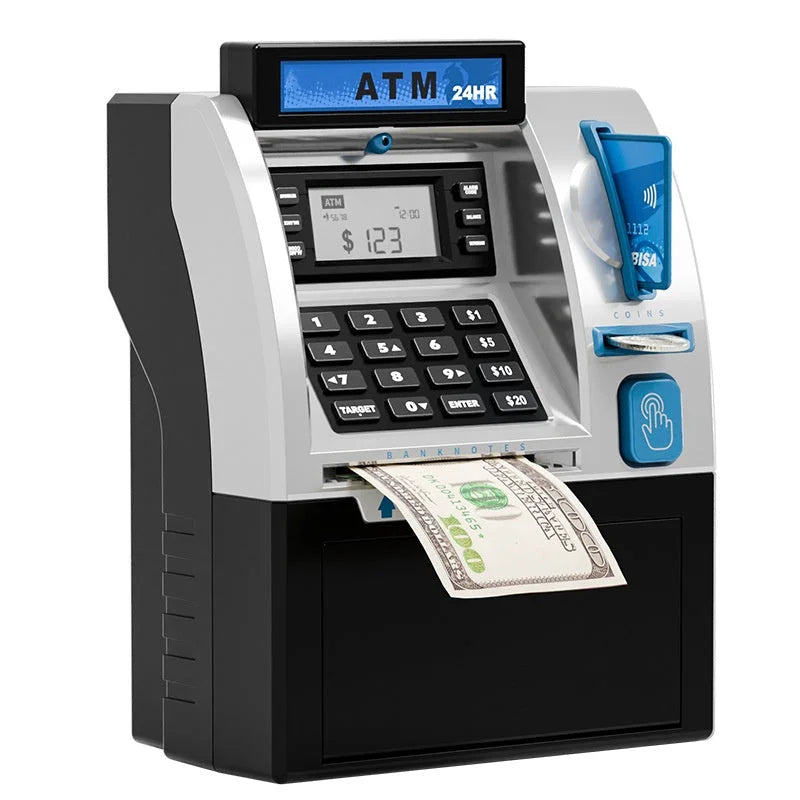


A money box gives pocket money a place to collect. Choose a simple box for easy deposits, an animated design for a playful coin-saving routine, or a toy ATM for practising deposits and withdrawals. The right choice depends on how the child will use it, not how much it resembles a real safe.
Three ways to save pocket money
| Money-box type | What it changes | Useful to know |
|---|---|---|
| Simple box or chest | Deposits and counting stay hands-on, without an electronic balance. | Plan how it opens and where a key will be kept. A decorative lock is not secure storage for valuables. |
| Animated coin bank | A moving character makes depositing each coin part of the activity. | The mechanism needs power and space to move. A coin being collected does not mean its value is counted. |
| Toy ATM or electronic box | A keypad, card or note feeder adds pretend banking to the routine. | Balance entry, supported currency and reset methods differ. A display is not proof of automatic Australian coin recognition. |
Depositing is not the same as counting
A motorised slot can pull a banknote inside without knowing its value. The electronic ATM models with a target-setting function in this range require the banknote amount to be entered manually. If a deposit or withdrawal is recorded incorrectly, the displayed balance can differ from the cash inside.
Count the saved money together periodically and use the display as part of the activity, rather than assuming it is an independently checked total. Australian coin-recognition capability has not been established across this range.
Keep access simple
Think about how the money will come out as well as how it goes in. An underside opening, key, keypad or toy card changes how independently a child can use the box. Keep reset instructions and any spare key somewhere an adult can find them.
Some products use simulated fingerprint or facial-recognition features for play. A toy safe’s appearance, password or electronic sound does not establish a security rating. Use these products for pocket-money activities, not for protecting high-value items.
Build a small saving routine
Pick a specific goal together and write down its cost. After each deposit, count or record the new total and work out what remains. For example, a $20 goal with $5 already saved leaves $15 to collect. This makes progress visible without needing an automatic counter.
Coins, keys and batteries are small objects. Keep them away from babies and toddlers, follow the product’s age guidance and have an adult manage battery changes. A money box marketed to children is not automatically suitable for every age.
Choose features before colours
Several listings are colour versions of the same design. First choose whether you want a simple box, a coin-collecting character or a toy ATM; then compare the colour, the way it opens and its documented power requirements. A new colour does not necessarily add a new saving function.
Continue through Toys & Play for other hands-on activities or Parties & Gifts for gift ideas.
Further reading: Moneysmart: teaching kids about money · ACCC: kids’ toys guide
Useful answers
Money-box and toy ATM questions
Will an electronic piggy bank automatically count Australian money?
That capability is not established across this range. A note feeder can pull a banknote inside without recognising its value, and the target-setting ATM models require manual note entry. Check the currency and counting method for the exact model, then periodically compare its display with the cash inside.
Is a toy ATM or fingerprint money box a secure safe?
No security rating is established for these play products. A keypad, toy card or simulated recognition feature adds to the activity, but should not be relied on to protect valuables. Keep the reset instructions available to an adult and use the box for small pocket-money amounts.
How can a simple money box help a child practise saving?
Choose one small goal together, write down its cost and count each deposit. For a $20 goal with $5 already saved, the child has $15 left to collect. This gives the activity a visible purpose without needing a digital display or automatic counter.
What should I consider before giving a money box to a young child?
Look at the age guidance and how the box opens, then consider access to coins, keys and batteries. Coins and small parts should be kept away from babies and toddlers. An adult should handle battery changes and retain any spare key or reset instructions needed to retrieve the money.