On this page
Plan what goes inside
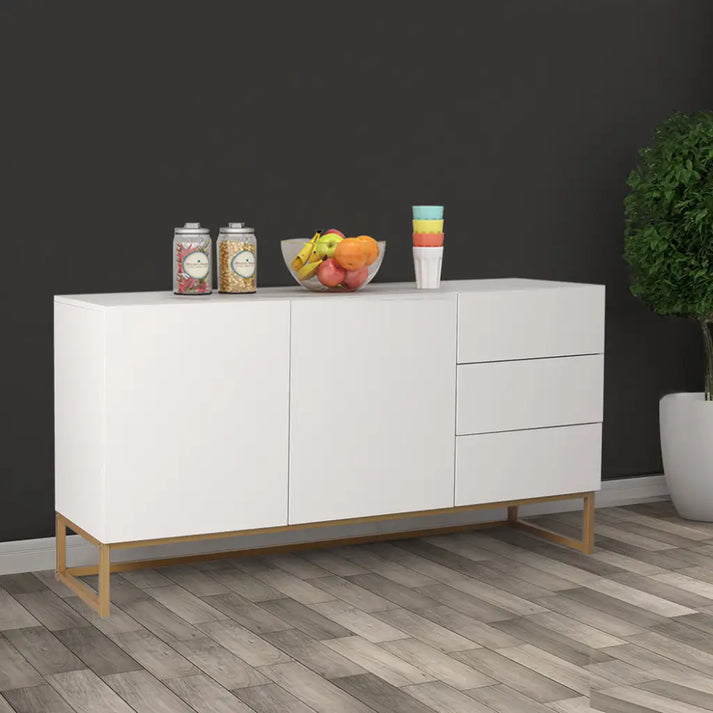
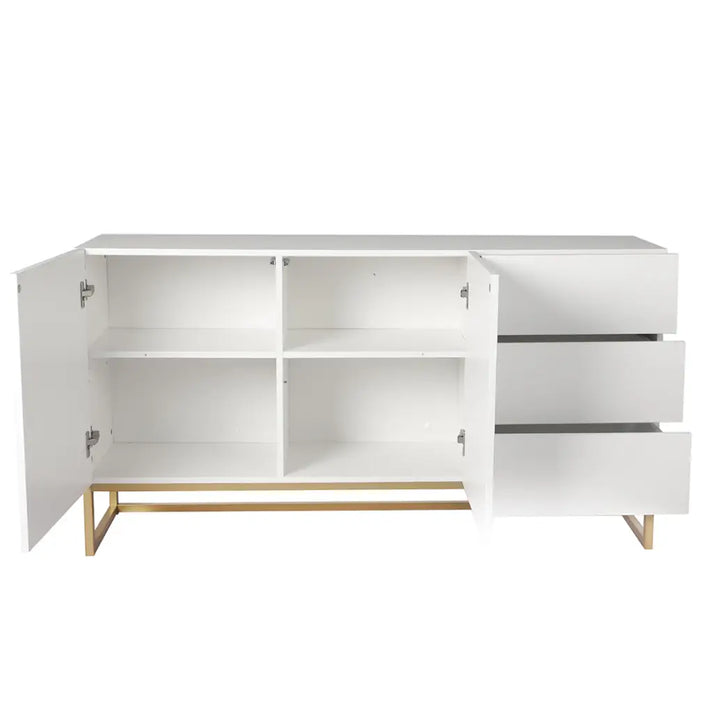
A sideboard's usefulness depends on the internal compartments. Measure stacks of plates, serving platters, glasses and baskets, then compare shelf depth and clear height. Adjustable shelves help only if their available positions suit those objects.
Measure the open footprint
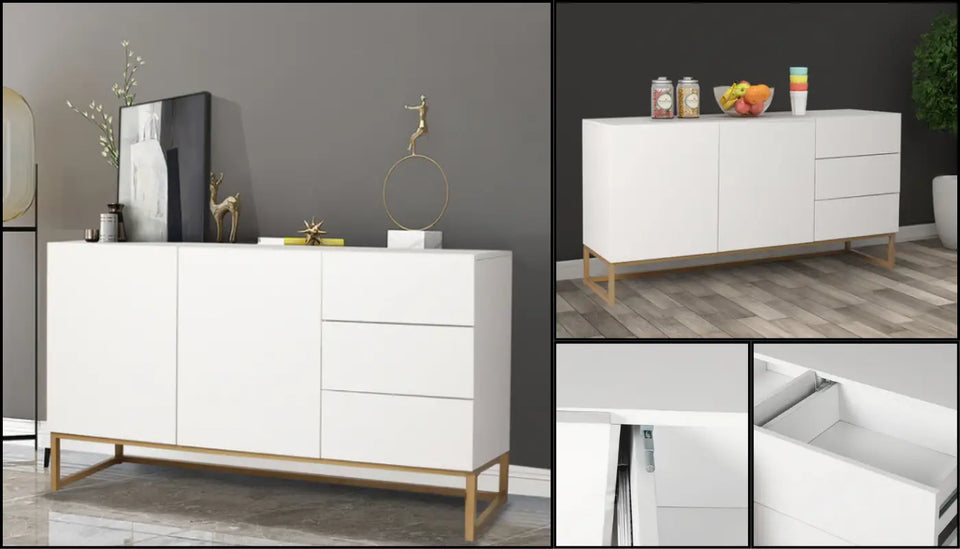
Allow for hinged doors and drawers at full travel, including handles. Test the space needed to stand in front and remove the largest item. In a dining area, check the relationship with pulled-out chairs rather than judging the cabinet with every door closed.
Read construction and mechanisms
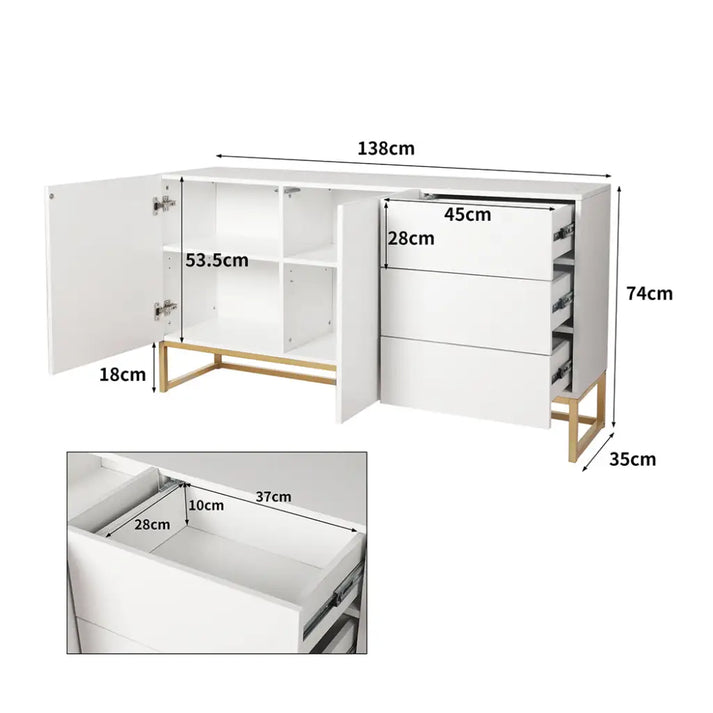
Check the materials of the top, frame and doors separately. A timber-look finish is not a solid-wood specification. Confirm the actual drawer runners, hinges and opening system instead of inferring soft-close or push-to-open functions from photographs.
Set up and care for the unit
Follow the assembly, loading and anchoring instructions. Choose cleaning products suited to the specified finish and deal with spills as directed. No general sideboard description can guarantee that a unit will never wobble, warp or show wear; documented construction and a suitable layout are the useful comparisons.