

When you're on the go or off the Australian grid, having access to reliable electricity is essential. Whether you're powering tools on a campsite, charging devices in your car, or setting up a small solar energy system at home, a power inverter is a must-have tool.
On this page
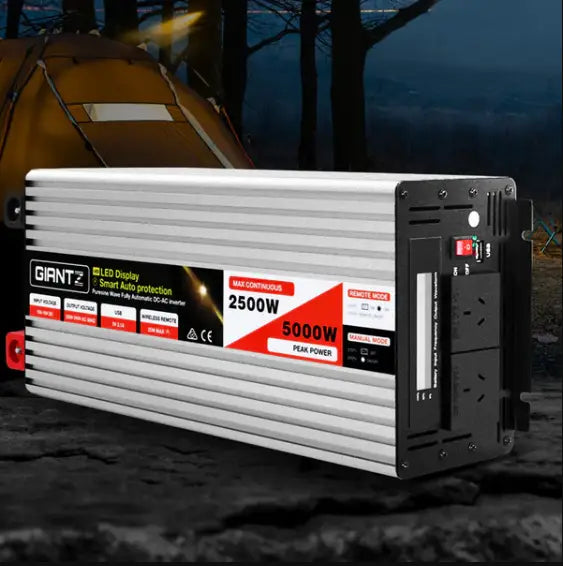
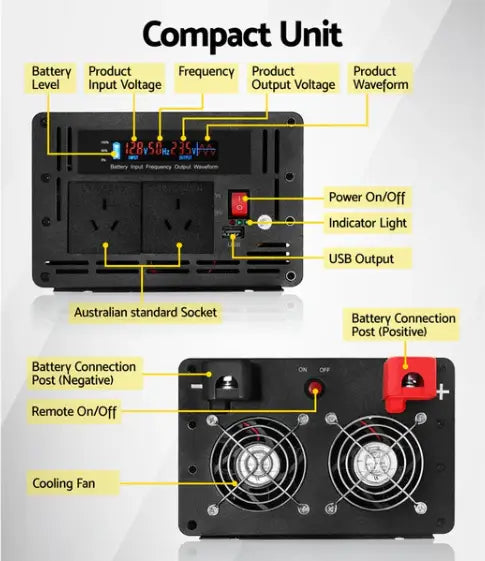
Compare an inverter by battery input, AC output, continuous and surge limits, device requirements and installation. A headline wattage does not establish that the complete power system is suitable. See Giantz Power Inverter 12V to 240V 2500W/5000W - Pure Sine Wave Camping Car Boat.
What Is a Power Inverter and Why Do You Need One?
A power inverter converts DC (direct current) power from a battery into AC (alternating current) electricity, which is what most household appliances use. This is incredibly useful for:
Caravan trips or camping
Emergency home backup
Using solar panel setups
Powering electronics in a car or boat
Whether you're using a power inverter car battery setup or a power inverter solar system, it enables freedom and flexibility when traditional power sources aren’t available.
What Makes a Pure Sine Wave Inverter Superior?
A pure sine wave output is one compatibility feature to check. Each appliance also has voltage, frequency, continuous-load and starting requirements that must match the inverter and power supply.
Medical equipment: use only a power arrangement explicitly approved by the equipment manufacturer; do not infer suitability from the waveform.
Laptops and computers
TVs and sound systems
Kitchen appliances
Check the listed inverter against the appliance instructions and complete installation requirements. Pure sine wave output is not a guarantee that it suits all electronics.
Choosing the Right Inverter Wattage
Add the loads that will run together and check their starting requirements against the inverter’s documented continuous and surge limits. The battery, cables, protection and connections must also support the arrangement.
The featured product title distinguishes 2500 W and 5000 W figures. Confirm which is continuous, which is surge, and the surge duration and conditions in the current manual before selecting appliances.
Best Uses for a Power Inverter in Cars & Camping
Vehicle installations require a suitable battery system and the connection specified for the inverter. Do not assume a vehicle accessory socket or starter battery can power high-load appliances.
Compare energy use and required runtime as well as wattage. Heating and cooking loads can place substantial demands on a battery system.
Going Off-Grid with Solar Power Inverters
A solar system also needs suitable charging control, battery storage and protection. An inverter converts DC to AC; it is not automatically a charger or a reversible 240 V-to-12 V converter. Have the complete arrangement assessed before installation.
Where to Find the Best Power Inverter for Sale?
When looking for a power inverter best buy or power inverter on sale, always check for specs like continuous and peak wattage, wave type, and durability.
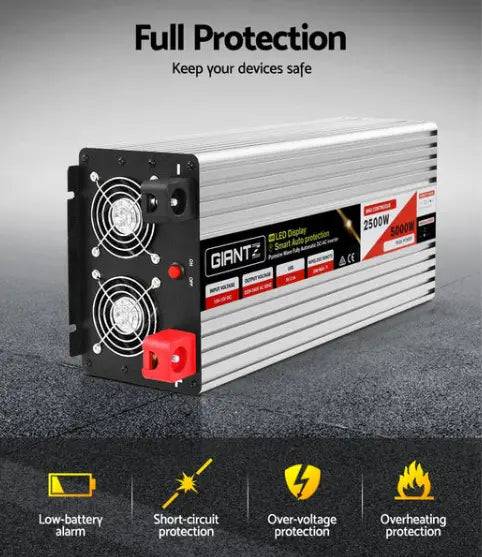
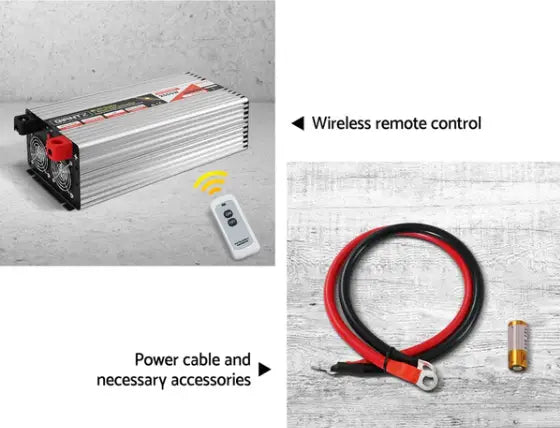
The Giantz Power Inverter 12V to 240V 2500W/5000W stands out for:
Pure sine wave output
Heavy-duty cooling fan
Multiple safety features
Lightweight, portable design
A portable inverter must not be assumed suitable for connection to household wiring. Confirm the intended installation and electrical requirements with an appropriately qualified professional.
Final Thoughts
Check the input, output, loads and installation together before selecting an inverter. Rated output alone cannot guarantee backup runtime or uninterrupted power.
Start your power journey today because smart energy solutions begin with the right gear.