

Automatic gates are one of those things you don’t really think about until you see them in action. You pull into someone’s driveway, the gates swing or slide open with a quiet hum, and you instantly think, That’s convenient. If you’re considering one yourself, you’ve probably started searching questions like how an auto gate works, how an automatic gate opener works, how do electric gate openers work, or even whether automatic gate openers are worth it?
On this page
The good news is, they’re not as complicated as they seem. Let’s walk through how an automatic gate opener works, the difference between swing and sliding systems, whether heavy-duty models can handle big gates, and whether swing gates can open outwards.
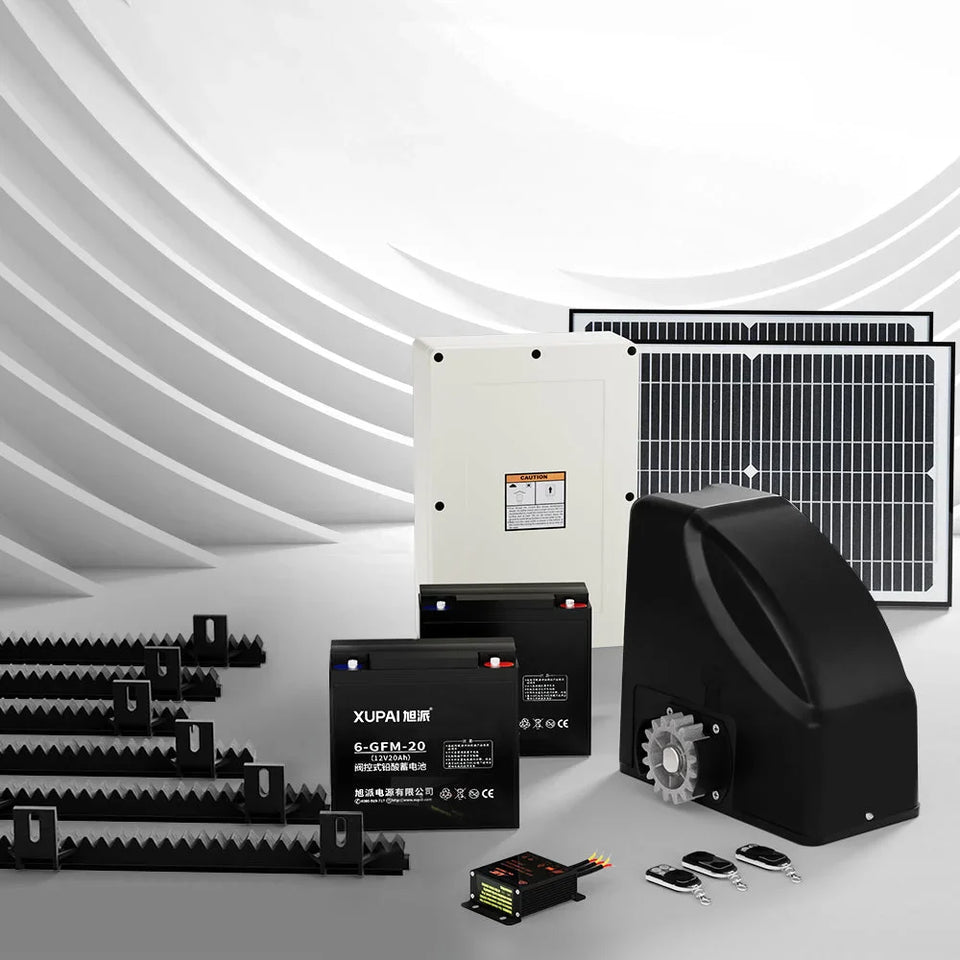
At its core, an automatic gate is designed to do one simple thing: take the work out of opening and closing your gate on Australian properties. Instead of you getting out of the car, unlocking, and dragging the gate open, a small motor handles it.
Here’s the everyday process:
-
You press a button on a remote, punch in a code on a keypad, or use a smartphone app.
-
A control unit receives the signal.
-
The motor kicks in, moving arms, gears, or chains attached to the gate.
-
The gate swings open or slides across smoothly.
-
The specified safety devices provide inputs to the controller. Their coverage and operation depend on the complete installation.
The controller, drive and gate work together to turn a valid command into movement.
How Does an Automatic Gate Opener Work Step by Step?
To understand how an automatic gate opener works, it helps to break it down into parts:
-
Triggering the system: This could be from a remote, your phone, or even a vehicle sensor embedded in the driveway.
-
The control board: This is the brain of the operation. It interprets the signal and decides whether to open, close, or stop.
-
The motor: This provides the push or pull needed to move the gate. For swing gates, the motor usually drives an arm; for sliding gates, it powers a chain or rack.
-
Safety devices: beams, safety edges or other measures must suit the gate and its hazards. A sensor does not guarantee detection of every person, animal or obstruction.
-
Power supply: Most systems run on mains electricity, but solar-powered options are available too.
The controller follows its configured inputs and operating logic. The installer must assess and test the complete system rather than treating a working remote as proof of safe operation.
The answer changes slightly depending on the gate style.
-
Swing gates: The opener has one or two arms that push the gate open like a door. These are common for residential driveways
-
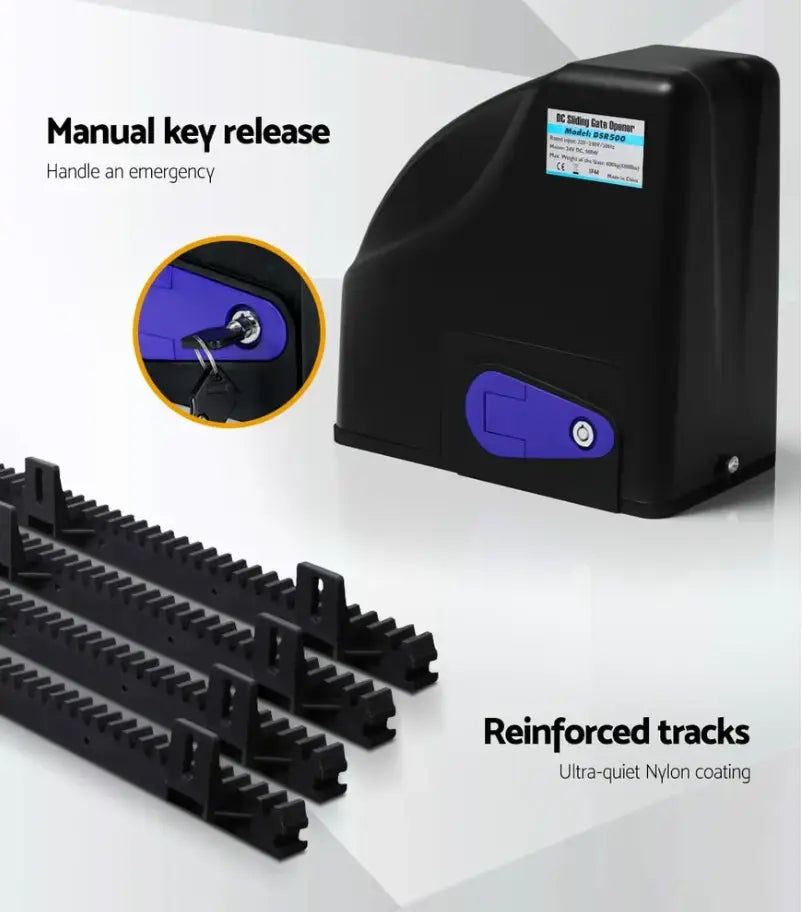
Sliding gates: a compatible drive moves the gate sideways using the mechanism specified for that design. The available travel, support and site conditions determine whether that arrangement is suitable.
So, how do electric gate openers work? Both types rely on the same principle, a motor converting electricity into motion,but the mechanics differ.
Safety Features You’ll Find in Modern Systems
Safety arrangements vary by model and site. Ask the installer to identify the functions included, their limitations and the checks required during use:
-
Obstacle detection: confirm the coverage, response and testing procedure for the specified devices; do not assume a sensor detects everything.
-
Manual release: use only the documented procedure and conditions. Have the installer explain how the gate is controlled during release.
-
Soft start and stop: check whether the selected drive supports these settings and how they are commissioned.
-
Auto-close: if this feature is provided, its use must be assessed with the access route and safety arrangements. It is not a substitute for obstruction protection.
The combination of gate design, guarding, control and detection measures needs assessment and ongoing maintenance. Feature names alone do not establish the safety of a completed installation.
Can Automatic Gates Handle Heavy Loads?
Larger or frequently used gates need a drive and complete system specified for that duty.
Check the permitted gate dimensions, weight, wind conditions and operating frequency for the exact model. A maximum weight figure alone is not a complete selection method.
Have the installer confirm that the gate, drive, supply and safety arrangements work together under the site's actual conditions.
Can Swing Gates Open Outwards?
Another common question is: Can swing gates open outwards instead of inwards?
An outward-opening arrangement may be possible only where the gate hardware, site boundaries, clearances and applicable requirements permit it. A sloping driveway does not make outward opening the only option.
Things to keep in mind:
-
Local requirements: have the proposed movement assessed against the current rules for the property and adjacent public areas.
-
Space clearance: You’ll need enough room outside the gate for it to fully open.
-
Installation setup: Motors and hinges need to be configured differently for outward swings.
Confirm opening direction as part of the site design before ordering the opener.
Are Automatic Gate Openers Worth It?
This brings us to the big question: Is an automatic gate opener worth it? Or, phrased another way, are automatic gate openers worth it for the average homeowner?
Let’s look at the benefits:
-
Convenience: Imagine arriving home in the rain and opening the gate with just a click. No umbrella, no wet clothes.
-
Access control: compare the controls and any intercom or camera integration needed for the intended entrance routine.
-
Children and pets: an automated vehicle gate is not a substitute for supervision or an appropriate containment arrangement. Keep the moving gate area clear.
-
Appearance: consider how the equipment and gate suit the property without relying on a promised resale-value increase.
Compare those practical benefits with the complete installation, servicing and running costs for the site.
Everyday Scenarios Where Auto Gates Shine
To really picture the value, let’s walk through a few everyday scenarios:
-
Bad weather: You stay dry in your car while the gate opens automatically.
-
Busy mornings: Instead of struggling with keys and latches, you leave the driveway in seconds.
-
Pedestrian access: plan a suitable route separately from the moving vehicle gate.
-
Hosting guests: Share a keypad code or buzz them in without leaving your chair.
These moments add up. That’s why so many people find the investment worth it.
Final Thoughts
An automatic opener receives a control signal and drives a compatible gate mechanism. The complete installation also needs appropriate safety measures, commissioning and maintenance.
If you’ve been wondering how an automatic gate opener works, or how electric gate openers work, the details vary by swing or sliding design, but the principle is the same: electric motors doing what you used to do by hand.
For a large gate or an outward-opening design, establish suitability from the complete site specification rather than from a general capability claim.
The value of automation depends on the entrance routine, compatible installation and ownership costs. Compare those needs before selecting additional controls or features.
Choose the documented system and installation first, then the convenience features.
For another part of your auto gate openers comparison, read Automatic Gate Opener Costs: Equipment and Installation.


