On this page
Measure footwear and usable compartments
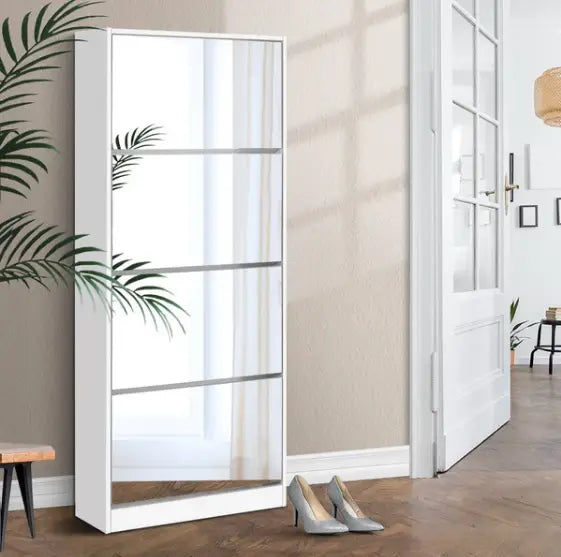
A mirrored shoe cabinet should fit the shoes you actually own. Compare the internal depth and shelf height with trainers, heels and boots. An advertised pair count is an estimate based on a particular footwear size and arrangement, not a guarantee for every collection.
Allow doors to open
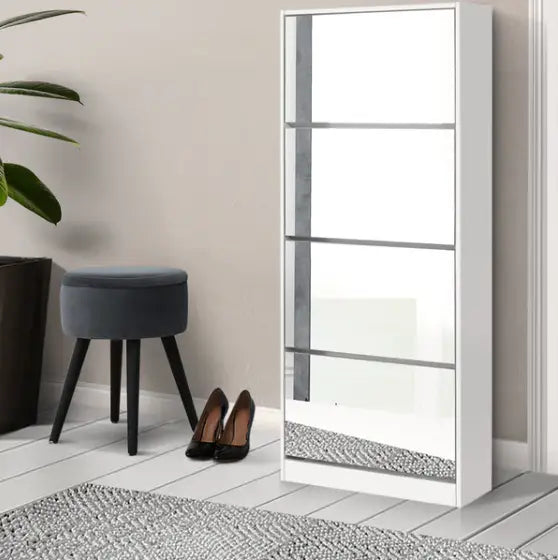
Check the full cabinet footprint and the mirror or door's travel. Leave room in front to remove shoes without blocking the entrance. Compare handle projections and the relationship with nearby doors, switches and skirting.
Plan stability and mirror care
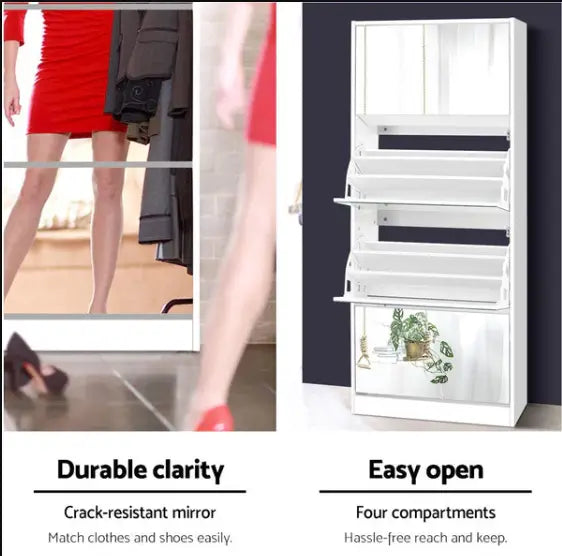
Follow the cabinet's anchoring and assembly instructions, using fixings suited to the supporting surface. A mirror adds a useful view but does not make the cabinet stable or safe to lean on. Use the specified cleaning method and avoid placing the unit where passing bags or doors can strike the glass.
Choose the storage layout
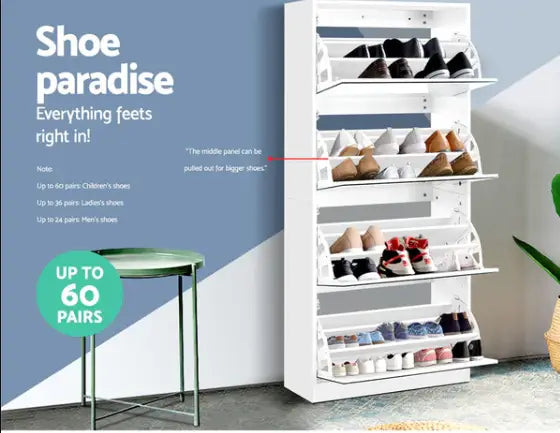
Check whether shelves adjust, which compartments accept boots and what hardware is included. Measure the route and carton sizes before ordering. A cabinet is useful when it keeps frequently worn shoes accessible; a high pair count or a sale message should not replace the fit checks.