On this page
Measure the objects before the capacity
An outdoor storage box needs to accommodate the longest cushion, tool or accessory you plan to keep inside. Compare the internal length, width and depth with those objects. An advertised litre capacity does not tell you whether a particular seat cushion will pass through the opening.
Allow for the lid and your approach
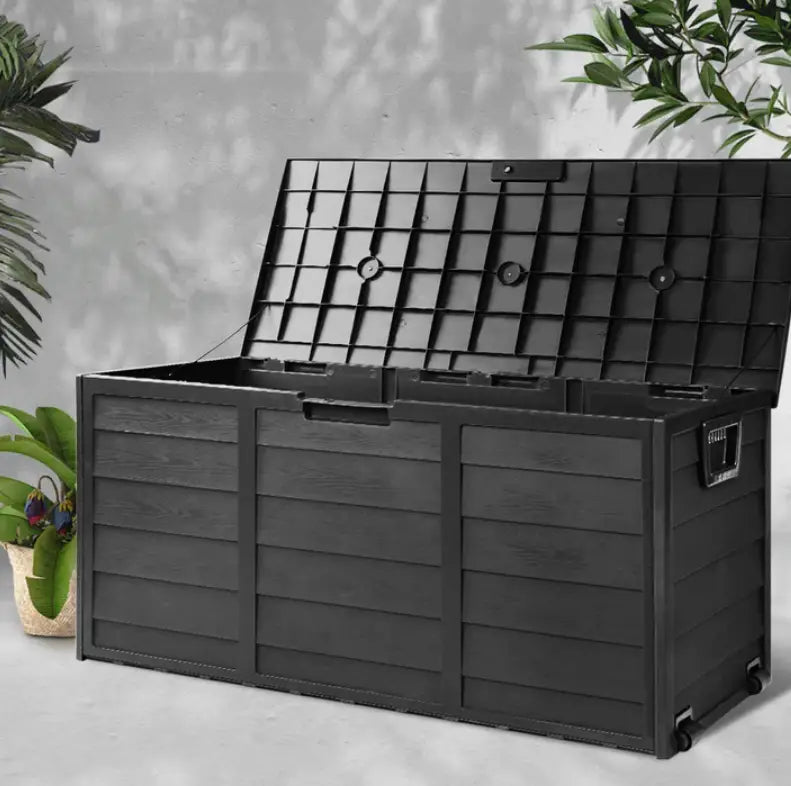
Measure the full footprint, including projecting handles or feet, and check the space needed above and behind the open lid. Leave room to lift bulky contents without blocking a path. Look at the specified hinge or support mechanism and how the box is assembled and positioned.
Match the material to the exposure
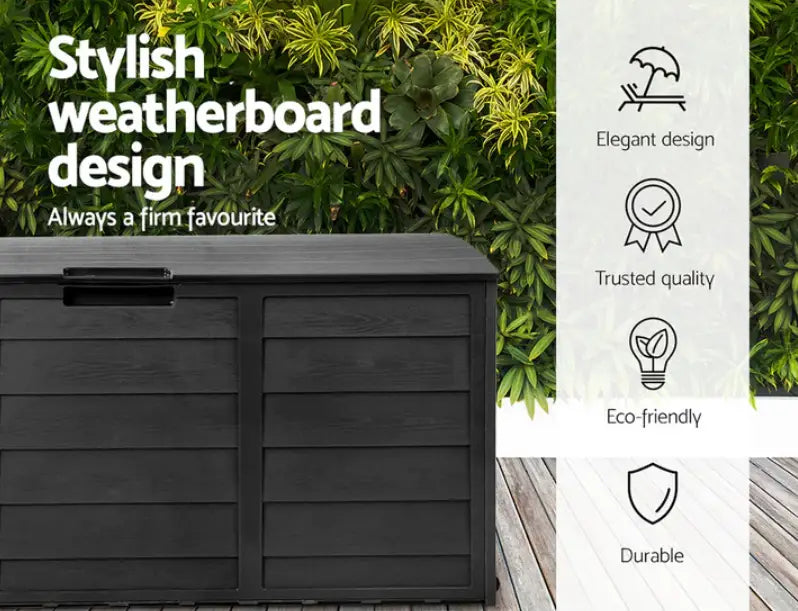
Read the exact model's outdoor-use and care instructions. A resin, timber or metal label alone does not establish waterproofing, UV resistance or a secure seal. Store belongings dry and use a suitable dry location for moisture-sensitive textiles when the protection offered is unclear.
Check seating and locks separately
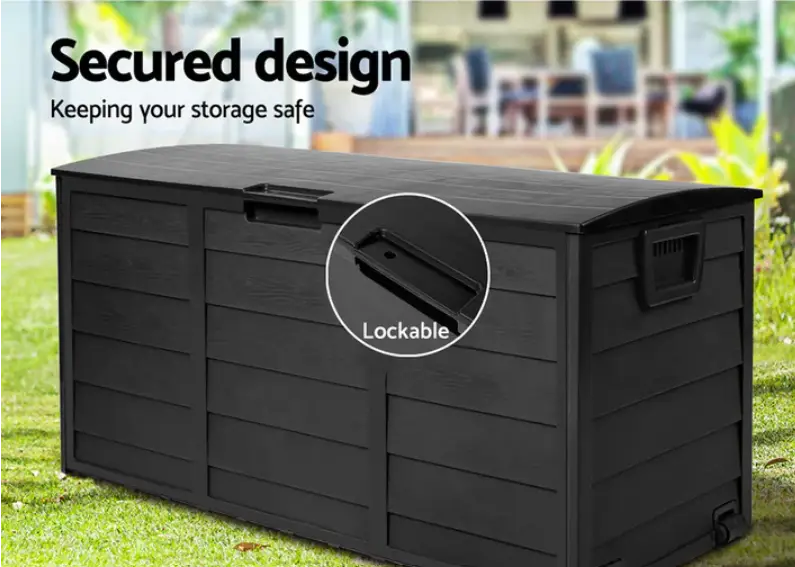
Only use a storage box as seating when that use and the relevant load limit are explicitly specified. A padlock slot restricts access but does not establish a theft-resistance or childproof rating. Confirm whether the lock is included and whether the base requires particular support or anchoring. Choose from usable space and documented functions, then compare the finish.