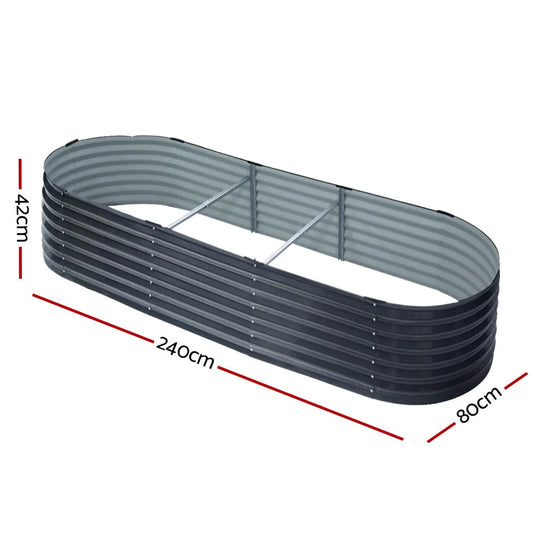
Collection: Raised Garden Beds: Galvanised Steel, Wooden, on Wheels & Legs

Garden beds help organise your outdoor garden and create a better environment for growing vegetables, herbs, and flowers. Different materials and designs suit different gardening needs.

  • Metal Raised Garden Beds: Made with galvanised steel. Rust-resistant and long-lasting. Ideal for outdoor vegetable gardens.
  • Wooden Planter Box: Durability with natural beauty and an aesthetic addition to your garden and home.
  • Raised Bed on Wheels: Wheels make it easy to move the garden bed to the ideal position.

Best For: Growing vegetables in small spaces, or growing flowers to add beauty to your home.


Frequently Asked Questions

Raised beds can be better because they:
Drain water faster
Warm up quicker in spring
Reduce soil compaction
Improve root growth
Reduce bending while gardening

A good mix includes:
40% garden soil
40% compost
20% organic material (mulch, manure, coco coir)


This mix improves fertility and drainage.

Typical depths:
20–30 cm – herbs and flowers
30–45 cm – vegetables
45+ cm – deep root crops like carrots

The ideal width is 90–120 cm (3–4 feet). This allows gardeners to reach the middle from both sides without stepping into the soil.

Usually no. Garden beds placed on soil do not need a base because roots can grow deeper into the soil. However, a weed mat or mesh may be used to prevent weeds.

Yes. High-quality galvanised steel beds are safe for growing vegetables because the zinc coating prevents rust and does not contaminate soil.

Good quality galvanised steel beds resist rust for many years. Our garden beds are rustproof.

Typical lifespan:
Wood beds: 5–10 years
Galvanised steel beds: 20+ years

Watering depends on the weather:
Summer: every 1–2 days
Mild weather: 2–3 times per week
Raised beds dry faster than ground soil.

Yes. Mulch helps to:
Retain soil moisture
Reduce weeds
Improve soil health
Regulate temperature

Leave 60–90 cm (2–3 feet) between beds so you can walk, maintain plants, and move tools easily.

Most vegetables require 6–8 hours of sunlight daily. Some plants like lettuce and herbs can grow in partial shade.

Yes, in some cases. Well-designed garden beds can:
Improve landscape appearance
Increase curb appeal
Make the property more attractive to buyers

Galvanised and steel raised garden beds are considered the best due to their durability, low maintenance, and long lifespan.

Raised Garden Beds

Garden beds create a controlled space for growing vegetables, herbs, and flowers. By placing soil inside a garden box or planter, they improve drainage, soil quality, and plant spacing compared to planting directly in the ground.

Common Types of Garden Beds

Raised Garden Beds

  • Placed above ground and filled with soil
  • Ideal for areas with poor native soil
  • Helps improve drainage and plant growth

Metal & Galvanised Steel Garden Beds

  • Strong, durable, and weather-resistant
  • Galvanised coating helps prevent rust
  • Suitable for large outdoor vegetable gardens
  • Long lifespan with minimal maintenance

Tall or Elevated Garden Beds with Legs

  • Raised higher for easier access
  • Good for patios, balconies, and small outdoor spaces
  • Comfortable gardening with less bending


How do I calculate how much soil I need for a raised garden bed?

To calculate the soil needed for a raised garden bed, you need to measure the length, width, and height of the bed. Once you enter these dimensions, you can work out the total soil volume required to fill it. To make it quick and accurate, use our Raised Bed Soil Calculator. It helps you instantly estimate how much soil your raised bed needs, so you can avoid buying too much or too little.