
Stainless Steel Kitchen Benches
A stainless-steel kitchen bench can combine different materials in its top, legs and lower shelf.
Shop the collection
-
Commercial Stainless Steel Kitchen Bench 610x1524mm
Regular price $184.90 AUDRegular priceUnit price per$309.99 AUDSale price $184.90 AUDSale -
Commercial Stainless Steel Kitchen Bench 610x1829mm
Regular price $206.90 AUDRegular priceUnit price per$366.99 AUDSale price $206.90 AUDSale -
Kitchen Bench Commercial Stainless Steel 1829 x 762mm
Regular price $233.90 AUDRegular priceUnit price per$416.99 AUDSale price $233.90 AUDSale -
Stainless Steel Kitchen Benches Work Bench Food Prep Table with Wheels 430 1524MM x 610MM
Regular price $222.90 AUDRegular priceUnit price per$366.99 AUDSale price $222.90 AUDSale -
Commercial Kitchen Bench Stainless Steel 610 x 1219mm
Regular price $147.90 AUDRegular priceUnit price per$292.99 AUDSale price $147.90 AUDSale -
Kitchen Benches Stainless Steel 430 Work Bench Food Prep Table with Wheels 1219MM x 610MM
Regular price $186.90 AUDRegular priceUnit price per$349.99 AUDSale price $186.90 AUDSale -
Stainless Steel Kitchen Benches Work Bench Food Prep Table with Wheels 430 1829MM x 610MM
Regular price $245.90 AUDRegular priceUnit price per$426.99 AUDSale price $245.90 AUDSale -
Commercial Stainless Steel Sink Bench 100x60cm
Regular price $424.90 AUDRegular priceUnit price per$699.99 AUDSale price $424.90 AUDSale -
Commercial Stainless Steel Kitchen Bench 1524x610mm
Regular price $197.90 AUDRegular priceUnit price per$399.99 AUDSale price $197.90 AUDSale -
Stainless Steel Kitchen Bench Work Table with Wheels 430 Grade 610MM x 610MM
Regular price $142.90 AUDRegular priceUnit price per$276.99 AUDSale price $142.90 AUDSale -
Stainless Steel Kitchen Bench Commercial 610 x 610m
Regular price $98.90 AUDRegular priceUnit price per$199.99 AUDSale price $98.90 AUDSale -
Kitchen Benches Stainless Steel 304 Work Bench Food Prep Table with Wheels 1829MM x 610MM
Regular price $279.90 AUDRegular priceUnit price per$492.99 AUDSale price $279.90 AUDSale -
Cefito Stainless Steel Kitchen Bench Work Table with Sink Splashback 120cm
Regular price $433.90 AUDRegular priceUnit price per$766.99 AUDSale price $433.90 AUDSale -
Stainless Steel Kitchen Benches Work Bench Food Prep Table with Wheels 304 1524MM x 610MM
Regular price $233.90 AUDRegular priceUnit price per$449.99 AUDSale price $233.90 AUDSale -
Stainless Steel Kitchen Benches Work Bench Food Prep Table with Wheels 304 1219MM x 610MM
Regular price $218.90 AUDRegular priceUnit price per$416.99 AUDSale price $218.90 AUDSale -
Kitchen Bench Commercial Stainless Steel 1829 x 762mm with 4pcs Castor Wheels
Regular price $269.90 AUDRegular priceUnit price per$466.99 AUDSale price $269.90 AUDSale -
Commercial Stainless Steel Kitchen Bench 1219x610mm
Regular price $179.90 AUDRegular priceUnit price per$359.99 AUDSale price $179.90 AUDSale -
Commercial Kitchen Bench Stainless Steel 1829 x 610mm
Regular price $247.90 AUDRegular priceUnit price per$482.99 AUDSale price $247.90 AUDSale -
VEVOR 910x610mm Stainless Steel Kitchen Bench Commercial Work Food Prep Table
Regular price $154.90 AUDRegular priceUnit price per$142.90 AUDSale price $154.90 AUD -
Kitchen Bench Commercial Stainless Steel 762 x 762mm with 4pcs Castor Wheels
Regular price $164.90 AUDRegular priceUnit price per$347.99 AUDSale price $164.90 AUDSale -
Cefito Stainless Steel Kitchen Benches Work Bench Wheels 122X61CM 430
Regular price $244.90 AUDRegular priceUnit price per$416.99 AUDSale price $244.90 AUDSale -
Cefito Stainless Steel Kitchen Benches Work Bench 910x610mm 430
Regular price $118.90 AUDRegular priceUnit price per$282.99 AUDSale price $118.90 AUDSale -
Cefito Stainless Steel Kitchen Bench Work Table 610 x760MM 430
Regular price $113.90 AUDRegular priceUnit price per$199.99 AUDSale price $113.90 AUDSale -
2-Tier Commercial Catering Kitchen Prep Work Bench Table Stainless Steel 1207085cm - Premium
Regular price $576.80 AUDRegular priceUnit price per$865.80 AUDSale price $576.80 AUDSale









Related reading


A stainless-steel kitchen bench can combine different materials in its top, legs and lower shelf. Compare those components separately, then choose dimensions and edge treatment for the task. A polished surface alone does not tell you how the whole bench is constructed or how it should be maintained.
The whole bench may not use one steel grade
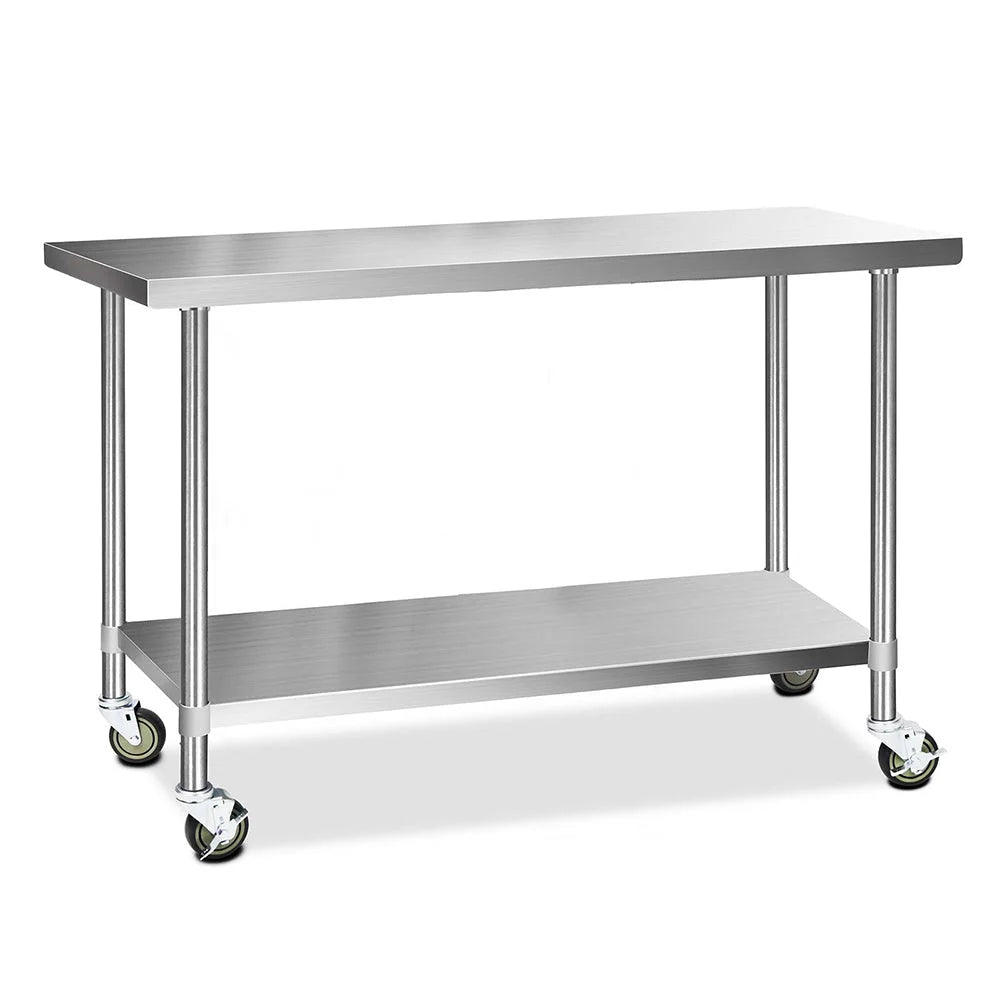
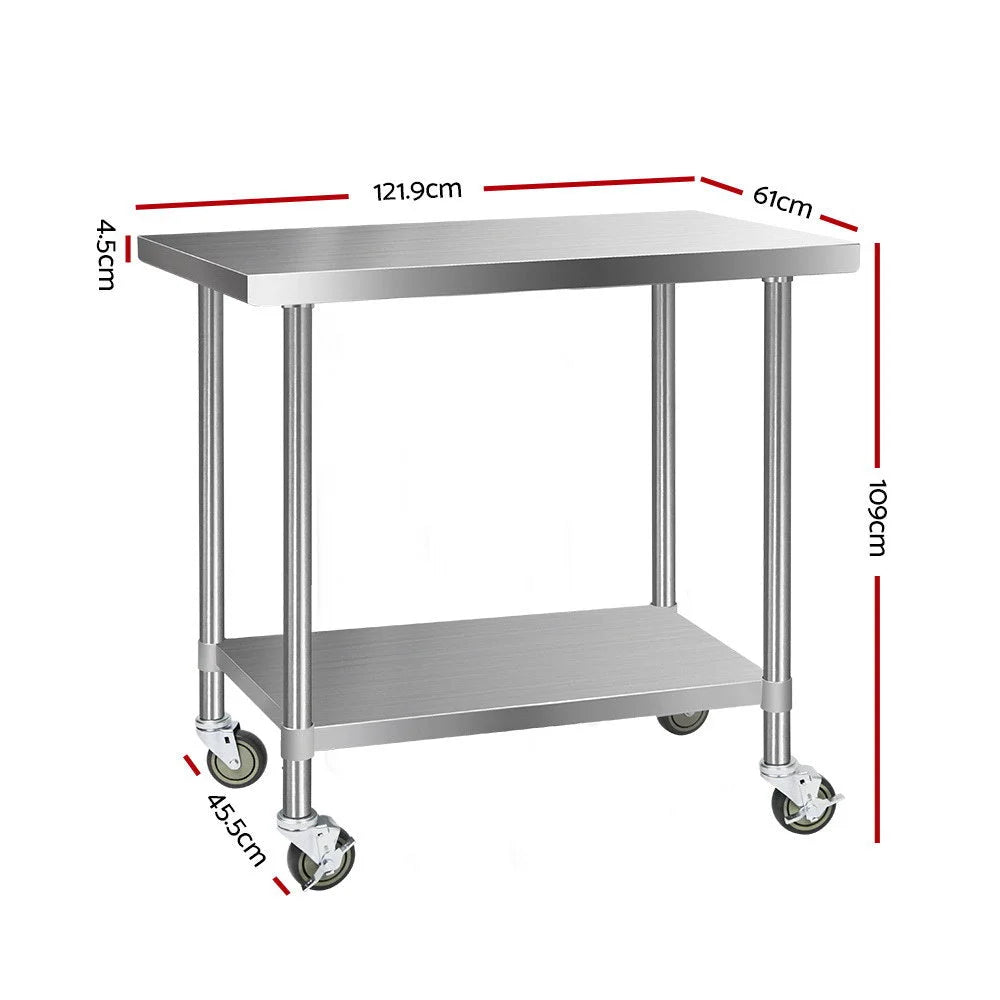
The 1524 × 610mm bench specifies a 430 stainless-steel top with galvanised-steel legs and undershelf. Other models use different arrangements. If material composition matters for your environment, read the component breakdown rather than treating “stainless steel bench” as a description of every part.
Depth affects reach and aisle space
A deep bench can hold larger equipment, but items at the back are harder to reach and the surrounding walkway becomes narrower. Compare the working depth against the appliance or container placed on it. Plan which side is used for preparation and which side remains accessible for cleaning.
Choose an edge and support system for the position
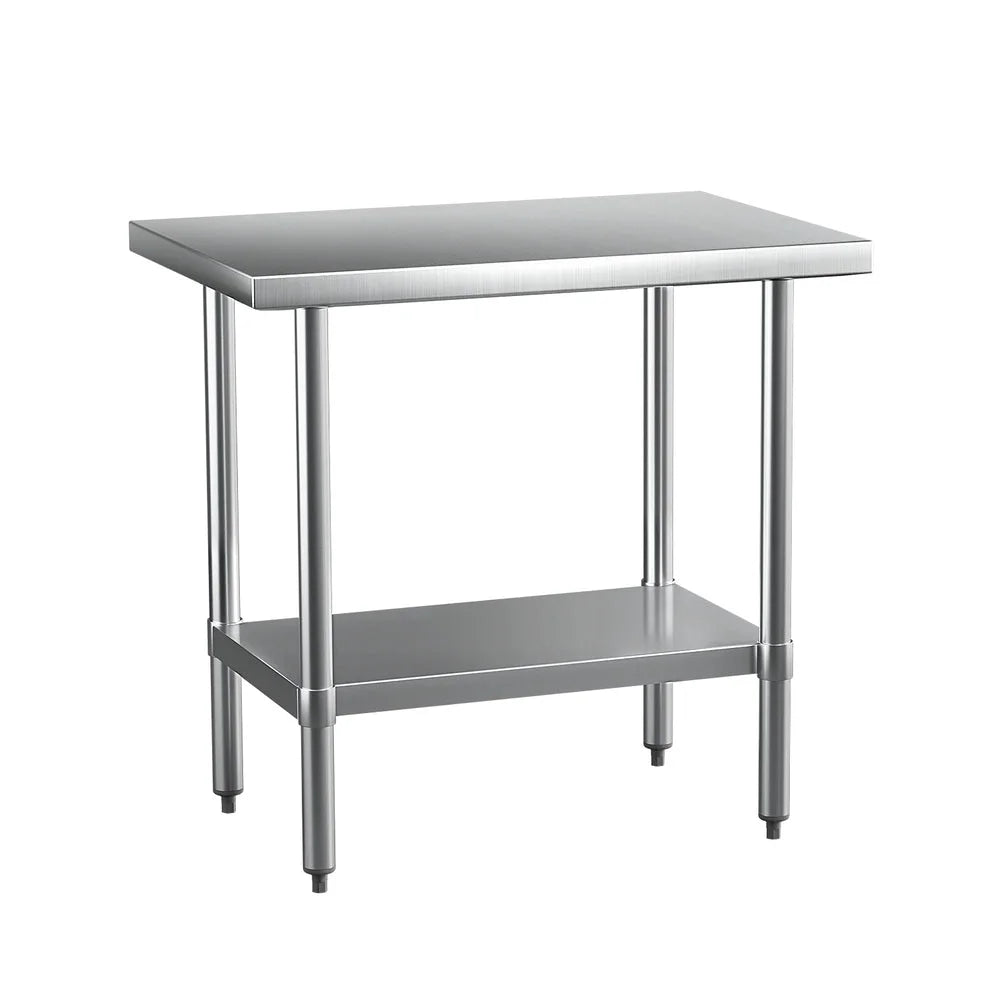
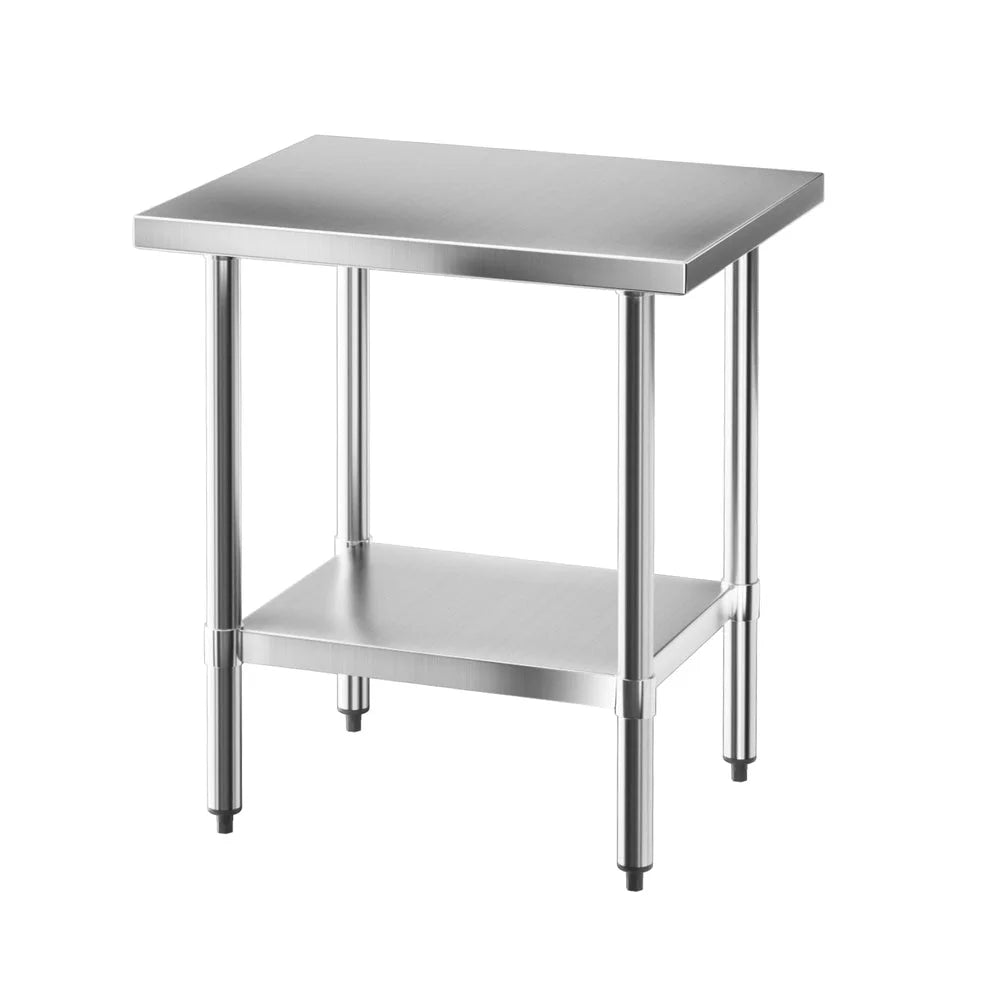
A flat top can suit access from multiple sides; a raised rear edge suits a wall position. Adjustable feet and wheeled options solve different placement needs. Keep the underside and supports accessible so spills can be cleaned, and follow the stated care method for each material.
Further reading: FSANZ: Safe Food Australia
Useful answers
Stainless Steel Kitchen Benches FAQs
Does stainless steel describe every part of a kitchen bench?
Not always. The top, legs, bracing and undershelf can use different materials. One 1524 × 610mm example specifies a 430 stainless-steel top with galvanised-steel legs and shelf. Compare the component breakdown when material matters for your working environment rather than extending the top’s description to the whole frame.
How do I choose between a flat-top and raised-edge stainless bench?
A flat top gives access from more sides and can suit a central workstation. A raised rear edge changes how the bench sits near a wall and can help stop small items reaching the back edge. Compare the actual profile and cleaning access, particularly if equipment needs to overhang or sit close to the rear.
Can I use one cleaning method on the whole metal bench?
Use care instructions that cover each material and finish. A stainless top and galvanised lower parts need not share every cleaning treatment. Make sure you can reach joints, the underside and the floor below; choosing an attractive surface will not make those areas accessible once the bench is tightly surrounded by equipment.