

When my dog got older, I realised something simple: the couch and the car were starting to look like mountains to him. He’d stand there, hesitate, then either jump awkwardly or just give up. That’s when I started asking myself, What can I use for a dog ramp?
It’s funny because before you need an Australian one, you don’t think twice about it. Dogs jump, right? That’s what they do. But once joints get stiff, or you’ve got a small breed with little legs, or even just a pup that shouldn’t be over-jumping, a ramp suddenly makes a lot of sense.
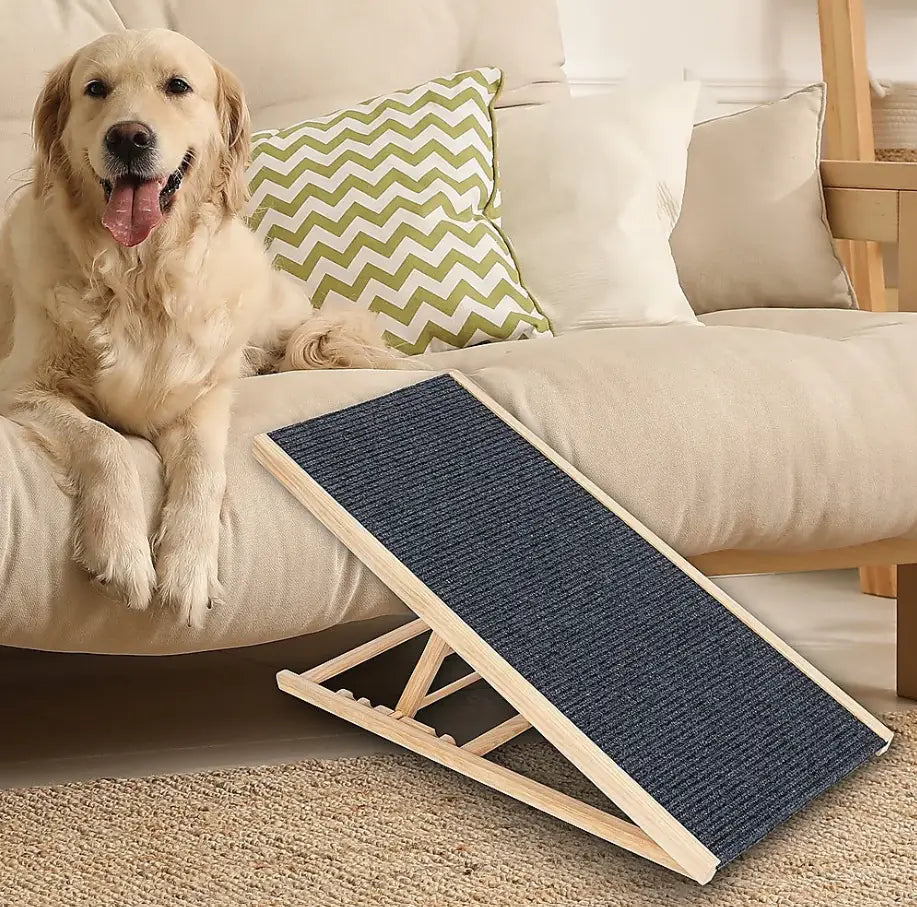
What Can I Use for a Dog Ramp Without Spending a Fortune?
I’ll start with the obvious: yes, you can buy ramps made just for dogs. They’re sturdy, they fold, they’ve got grip, and they look neat. But if you’re like me, you’ve probably also thought, surely I can make something work without splashing too much cash.
Here are things I’ve tried or seen others try:
-
Proper pet ramps, the Easiest option. Usually have carpeted or textured surfaces and a weight rating.
-
A wooden plank. Grab a solid board, throw some carpet or a rubber mat on top, and you’re good to go. Simple and cheap.
-
Carpeted steps. These work great indoors for couches or beds. Small dogs especially like them.
-
Outdoor shed ramps, I’ve seen people repurpose lightweight ramps meant for wheelbarrows. Works fine if you cover them for grip.
-
DIY hacks, Old shelves, leftover plywood, even wide ladder planks can be turned into ramps if you’re careful.
So, really, if you’re wondering what I can use for a dog ramp? The answer is: anything solid, wide enough for your dog, and not slippery. Safety first.
What Can I Use for a Dog Ramp for the Car?
Cars are probably where most people need ramps. Lifting a 30–40 kg dog isn’t fun, and it’s definitely not safe for your back.
What’s worked for me:
-
Folding pet ramps. These are ideal because you can stash them in the boot.
-
Telescoping ramps, Same idea, but they slide shorter for storage.
-
DIY plank with carpet. Good in a pinch, but a pain to carry around.
I’ll be honest: the shop-bought folding one was worth every cent. It was longer (so the slope was gentler), lightweight, and my dog actually trusted it.
What Ramp Angle Is Best for Dogs?
Now here’s the question hardly anyone talks about, but it makes or breaks the whole thing: the angle.
Even if you’ve built the strongest ramp, if it’s too steep, your dog will look at you like, “You go first.” Trust me, I’ve been there.
What Ramp Angle Is Best for Dogs of Different Sizes?
From trial, error, and a bit of reading:
-
Tiny dogs and seniors: Keep it shallow, around 18–20 degrees.
-
Medium or large breeds: Can usually manage 22–25 degrees.
-
Healthy, active dogs: Maybe up to 30 degrees, but anything more feels like a climbing wall.
So, if you want a simple answer to what ramp angle is best for dogs? It’s as gentle as you can make it. Longer ramps always help.
Why Ramp Angle Is Best Kept Low
I learned this lesson fast. I had a short plank into the car, which made the angle way too steep. My Labrador walked up halfway, slipped, and then refused to try again. After I replaced it with a longer ramp, he walked straight up like he’d been doing it for years.
Dogs don’t overthink the math; they just know if something feels safe under their paws.
What Can I Use for a Dog Ramp Indoors?
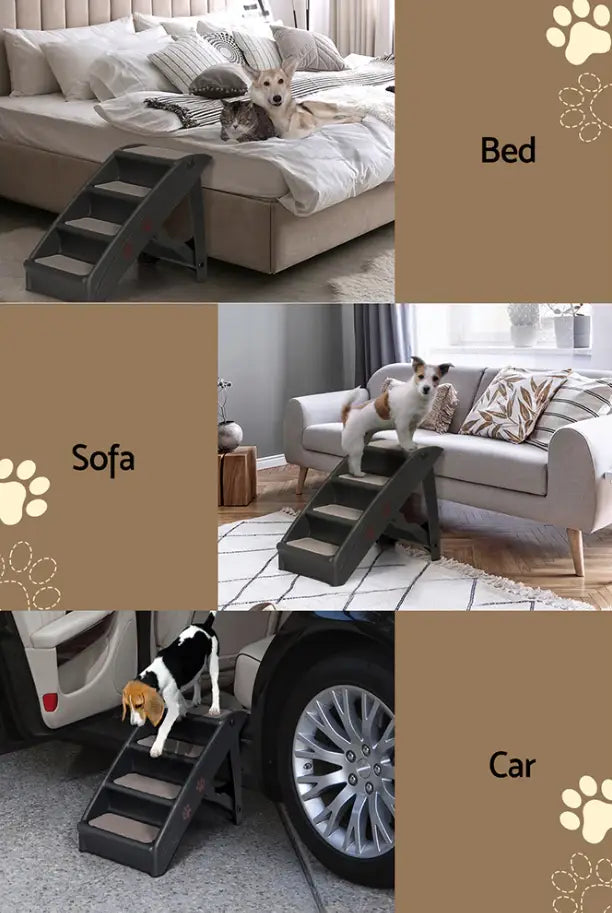
Indoors, ramps make life easier for smaller dogs, puppies, or seniors. Beds, couches, and even low stairs can be a struggle.
Good options:
-
Foam ramps or steps, Lightweight, soft, and easy to move around.
-
A carpeted board. Works perfectly for beds.
-
Modular ramps, some fold flat when not in use, which saves space.
So, if you’re asking, what can I use for a dog ramp inside the house? Look for something light, safe, and comfy under paws.
What Ramp Angle Is Best for Dogs Using Furniture?
Beds and couches are lower than cars, but ramps indoors are also shorter, which makes the angle trickier.
-
Aim for 18–20 degrees if possible.
-
Extend the ramp length if the room allows.
-
Always add a non-slip surface.
Dogs don’t care how stylish it looks; they just want it to feel safe.
Mistakes People Make With Dog Ramps
I’ve made a few of these myself, so let me save you the trouble:
-
Too steep: The number one problem. If your dog refuses, it’s probably the angle.
-
No grip: A smooth ramp is a disaster. Carpet or rubber is non-negotiable.
-
Wobbly ramps: If it shakes once, your dog will never trust it again.
-
Narrow boards: Dogs like space for their paws. Wider ramps feel safer.
My Story With Dog Ramps
When my Labrador got older, I thought I could just grab a bit of wood and make a ramp. It worked okay for the couch, but the car? Nope. Too steep, too slippery. He’d try, then back off.
Eventually, I gave in and bought a folding ramp made for dogs. Longer, lighter, with a textured surface. The first time I set it up, he walked right up like it was no big deal. That’s when I realised the problem wasn’t him, it was my dodgy DIY ramp.
Quick Recap
-
What can I use for a dog ramp? Store-bought pet ramps, wooden planks with carpet, utility ramps, or DIY builds. Just make sure they’re sturdy and non-slip.
-
What ramp angle is best for dogs? Usually 18–25 degrees. Smaller or older dogs need it gentler, bigger dogs can manage a bit more.
Final Thoughts:
A dog ramp might look like an extra, but it’s really about keeping your dog safe and protecting their joints. Whether you buy one or build one doesn’t matter as much as making sure it’s stable, grippy, and not too steep.
So if someone asks you, “What can I use for a dog ramp, and what ramp angle is best for dogs?” you’ll know: use whatever solid material you’ve got, keep the surface paw-friendly, and go for a gentle slope your dog can trust.
And honestly, once you see your dog walk up confidently instead of struggling, you’ll wonder why you didn’t sort it out sooner.