

There’s something special about a porch swing. The slow back-and-forth, the creak of the chains, the way you can just sit and watch the street or garden, it’s simple, but it never gets old. If you’re looking at buying one, though, the first thing you’ll probably ask is: what size porch swing makes sense for my porch?
And from there, the questions multiply: how wide are porch swings, how big are porch swings compared to regular furniture, what’s the average size of a porch swing, and how long are porch swings usually built?
Don’t worry, you’re not the only one wondering. Let’s break it down in plain language.
The Sizes People Actually Buy
Porch swings aren’t one-size-fits-all. They usually fall between 4 feet and 8 feet long, and each size suits a different setup.
-
4-foot swings: Think of these as the cosy option. Perfect for one person or maybe two kids squeezed together. Great if your porch isn’t huge.
-
5-foot swings: This is the “standard.” Big enough for two adults side by side. Most families go with this size.
-
6-foot swings: Roomier. You can fit three people, or just two who don’t want to bump elbows.
-
7–8 foot swings: These are the giants. Fantastic for wide porches, families who want to pile in, or anyone who loves extra space.
So, if you’re asking what size porch swing I should buy, start with a simple question: how many people do you picture sitting on it most of the time?
How Wide Are Porch Swings?
Here’s where it gets interesting. When people ask how wide porch swings are, they’re often thinking about seat depth rather than overall length.
Most swings have:
-
Seat depth: Between 18 and 24 inches. Shallower swings are good if you sit upright. Deeper ones let you sink in with cushions.
-
Back height: Around 18–20 inches. Enough to support most adults without being bulky.
-
Total frame width: Anywhere from 48 inches on small swings up to 96 inches on large ones.
Tip: If you like curling up sideways, the extra depth really makes a difference.
How Big Are Porch Swings Compared to Furniture?
Numbers on paper don’t always help. So, let’s put it another way.
-
A 4-foot porch swing feels like a loveseat.
-
A 5-foot swing is more like a small sofa.
-
A 6-foot swing? Think of your living room couch.
That should give you a better picture of how big porch swings are when you imagine them outside.
Size of a Porch Swing: What Really Matters
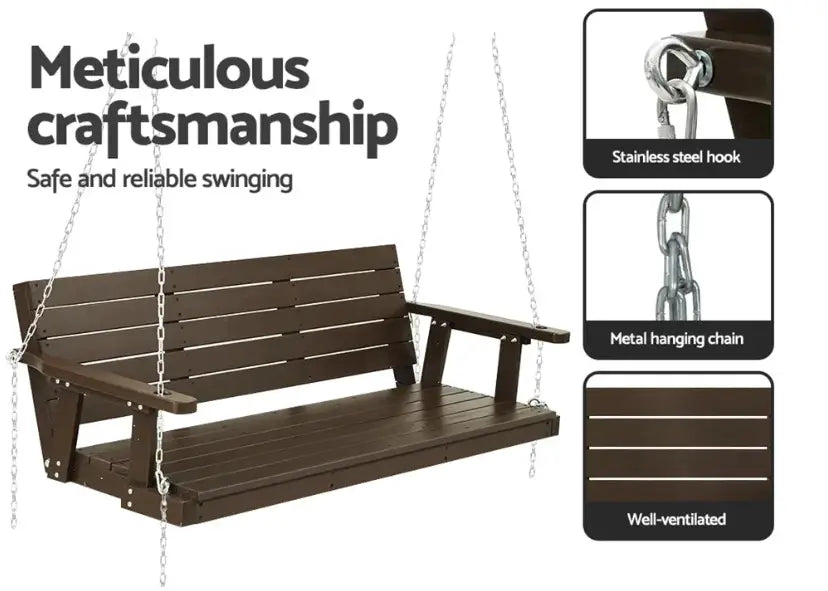
When folks ask about the size of a porch swing, they often mean: will it actually fit on my porch without being a pain? Here’s what to think about:
-
Porch clearance – Swings need space. Leave about 2 feet on the sides and at least 3 feet behind so it can move freely.
-
How it’ll be used – Solo reading nook? Go small. Date-night swing for two? Five feet. Family hangout? Six or bigger.
-
Weight capacity – Most swings can handle 400–800 pounds, but always check. The bigger the swing, the sturdier it needs to be.
-
Mounting strength – A larger swing isn’t just heavy; it pulls harder on chains and hooks. Make sure your beams are up to it.
How Long Are Porch Swings?
Length is the first number most buyers check. So, how long are porch swings typically built?
-
Small: Around 48 inches (that’s 4 feet).
-
Medium: Around 60 inches (5 feet).
-
Large: 72 inches or more (6 feet and up).
The average size of a porch swing is right in the middle at 60 inches, which is why you’ll see so many 5-foot models.
A Quick Size Snapshot
Here’s a simple cheat sheet:
|
Swing Length |
Seats |
Works Best For |
|
4-foot |
1–2 |
Small porches, solo use |
|
5-foot |
2 |
Couples, average porches |
|
6-foot |
3 |
Families, larger porches |
|
7–8 foot |
3–4 |
Wide porches, group seating |
This quick look helps when you’re weighing up the size of a porch swing for your space.
Picking the Right Size Without Regret
Alright, so how do you actually decide? Here are a few tips from homeowners who’ve been there:
-
Measure, then measure again. It’s easy to overestimate how much space you really have.
Leave room to walk. Don’t let the swing hog the porch so much that people can’t pass behind or beside it.