

There’s something about Australian hammock chairs that instantly changes the vibe of a space. They’re not just furniture, they’re a little escape. I remember the first time I sat in one at a friend’s house. It was hanging on their porch, swaying gently in the summer breeze, and within five minutes, I was ready to move in. That’s when I thought: I need one of these.
But wanting an outdoor swing hammock chair is one thing; figuring out how to hang it safely is another. It’s a question that comes up all the time: how to hang a hammock chair outdoors if you’ve got a garden or a porch, and how to hang a hammock chair from the ceiling if you want one indoors. I’ve been through both scenarios, and while it’s not complicated, it’s not something you want to guess at either.
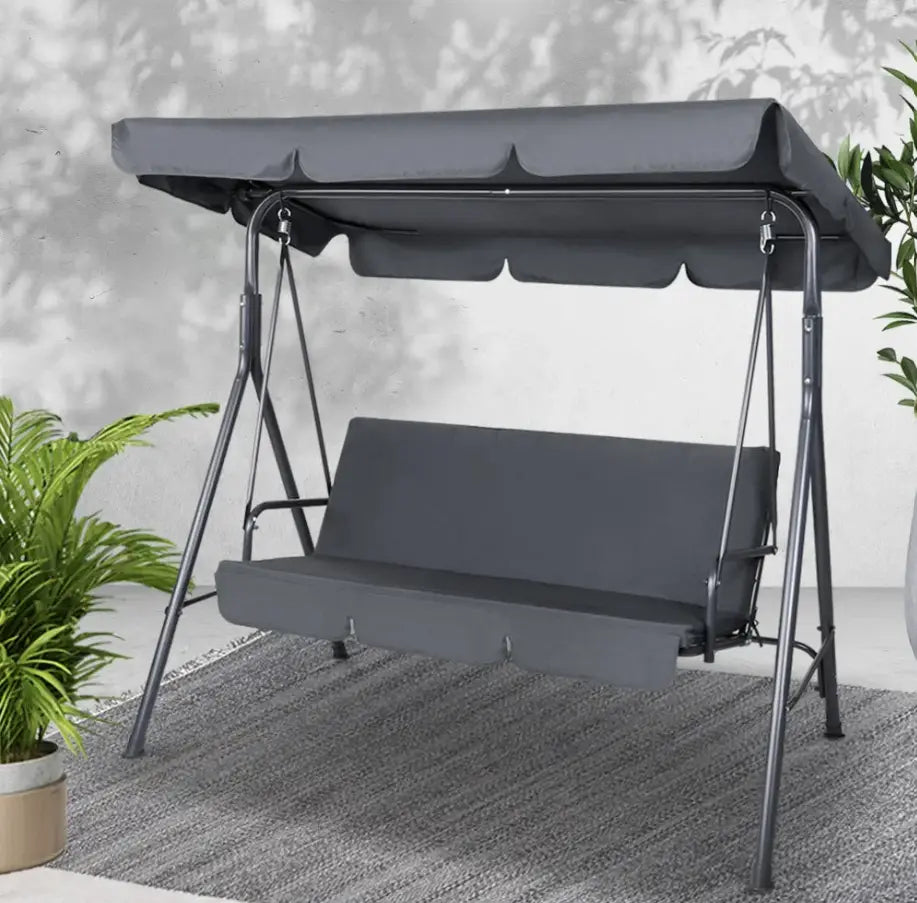
How to Hang a Hammock Chair Outdoors.
If you’re lucky enough to have some outdoor space, hanging a hammock chair there is a no-brainer. Nothing beats sitting outside with a cup of coffee in the morning or winding down at the end of the day with a gentle sway.
Step 1: Find a Solid Spot
The first rule is obvious but worth repeating: you need something sturdy to hang from. Here are some options:
-
A strong tree branch (thick and healthy, not one that looks like it’s barely hanging on).
-
A pergola or porch beam.
-
A balcony ceiling joist.
-
Or the simplest of all, a hammock chair stand.
I tried the tree branch method once, but I learned the hard way that not all branches are equal. More on that later.
Step 2: Give Yourself Swinging Room
A hammock chair moves; that’s the whole point. But it also means you need clearance. Ideally, leave a metre or so in front and behind. Otherwise, you’ll constantly bump into walls, fences, or potted plants.
Step 3: Use the Right Gear.
This is where some people cut corners and regret it later. Don’t use random screws or hooks. You want:
-
A heavy-duty eye bolt or hook.
-
A strong carabiner.
-
Rope or chain rated for weight-bearing.
Step 4: Drill and Secure.
If you’re attaching to a wooden beam, drill a pilot hole and screw in the eye bolt until it’s snug. Don’t rush this step. Once it’s in, give it a few hard pulls. If it moves even slightly, it’s not ready.
Step 5: Attach and Adjust
Clip the hammock chair onto the hook or rope. Adjust the height so that when you sit, your feet just graze the floor. Too high and you’ll feel like you’re climbing; too low and it’ll drag.
How to Hang a Hammock Chair From the Ceiling.
Now, indoors is a different story. A hammock chair indoors can turn a plain corner into a cosy retreat, but you need to get it right.
Step 1: Locate a Ceiling Joist.
This is non-negotiable. You cannot hang a hammock chair from plasterboard or drywall alone. You need to find a ceiling joist, which is the beam that supports the structure. Use a stud finder or the old knock test. Solid thud = beam. Hollow echo = no go.
Step 2: Think About Weight.
It’s not just your weight, it’s your weight plus the chair and the motion of swinging. Most joists can handle it, but if you live in an older house, it’s worth double-checking.
Step 3: Drill the Pilot Hole
Drill into the middle of the joist, not the edge. Screw in a heavy-duty eye bolt straight and tight.
Step 4: Add a Spring or Swivel (Optional).
This isn’t necessary, but I recommend it. A spring adds bounce and reduces strain on the joist. A swivel lets the chair rotate smoothly.
Step 5: Hang the Chair.
Attach your hammock chair with a carabiner or chain. Adjust it so your feet rest lightly on the ground.
Step 6: Tes.t Gently
sit down slowly the first time. If you hear creaking or see movement, stop and check your installation. This isn’t the time for dramatic grand entrances.
Safety Tips People Often Overlook
-
Weight limits matter. Most hammock chairs are rated for 100–150 kg. Check before you sit.
-
Hardware wears out. Ropes fray, chains rust, and hooks loosen over time. Inspect them.
-
Don’t trust weak wood. Old beams or rotten branches aren’t safe. If it looks questionable, it probably is.
-
Children and hammock chairs. If kids are using them, make sure they know it’s a chair, not a swing for circus tricks.
Hammock Chair Stands: The Easy Option.
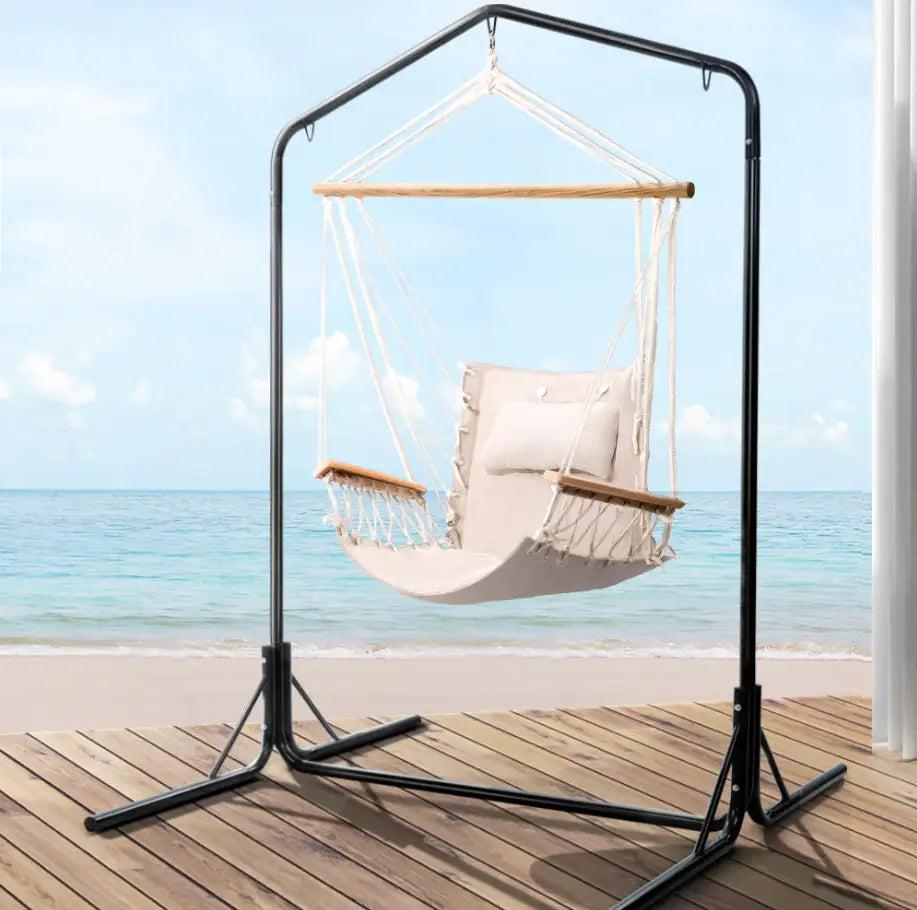
Not everyone wants to drill holes in beams or test the strength of a tree branch. That’s where hammock chair stands come in. They’re sturdy, portable, and work both indoors and outdoors. The downside is they take up more space, but they’re perfect if you rent and don’t want to leave marks behind.
My First Hammock Chair Mistake
Okay, confession time. The very first hammock chair I set up, I tied it to a tree with an old rope I found in the shed. It looked fine, and it worked for a few weeks. Then one afternoon, I sat down, and the rope snapped. Luckily, the fall wasn’t bad, but my pride definitely took a hit.
The second time around, I bought proper hardware, drilled into a pergola beam, and used a carabiner to attach it. That chair lasted years without a single problem. Later, I hung one inside my reading nook using a ceiling joist, and it became the most used seat in the house. The lesson? Don’t cut corners.
Quick Recap
-
How to hang a hammock chair outdoors: Find a solid support like a beam or tree, leave clearance, and use proper hooks and rope.
-
How to hang a hammock chair from the ceiling: Only attach to a joist, drill a secure eye bolt, and use strong hardware.
-
Safety first: Check weight ratings, inspect hardware often, and don’t risk weak beams.
-
Alternative: Use a hammock chair stand if you don’t want permanent installations.
Final Thoughts
Hammock chairs are more than just trendy décor; they’re about comfort and creating a little retreat for yourself. Whether you’re figuring out how to hang a hammock chair in your backyard or how to hang a hammock chair from the ceiling indoors, the basics are the same: strong support, quality hardware, and a bit of care.
Do it once, do it right, and you’ll have a chair that lasts for years and becomes your favourite place to unwind. And trust me, once you’ve got one set up properly, you’ll wonder why you didn’t do it sooner.