

There’s something about a porch swing that feels timeless. Maybe it reminds you of summers at your grandparents’ house, or maybe it’s just the thought of sitting outside with a cup of tea, letting the day slow down. Whatever the reason, a swing makes a porch feel alive.
But before you start shopping, here’s the first thing you have to ask yourself: Can my porch support a swing?
It’s not the most exciting question, I know. But it’s the one that matters most. A swing doesn’t look heavy, but when you add two adults and the motion of swinging, that “light little bench” can become a serious load on your porch. If your beams aren’t up to it, you could end up with more trouble than relaxation.
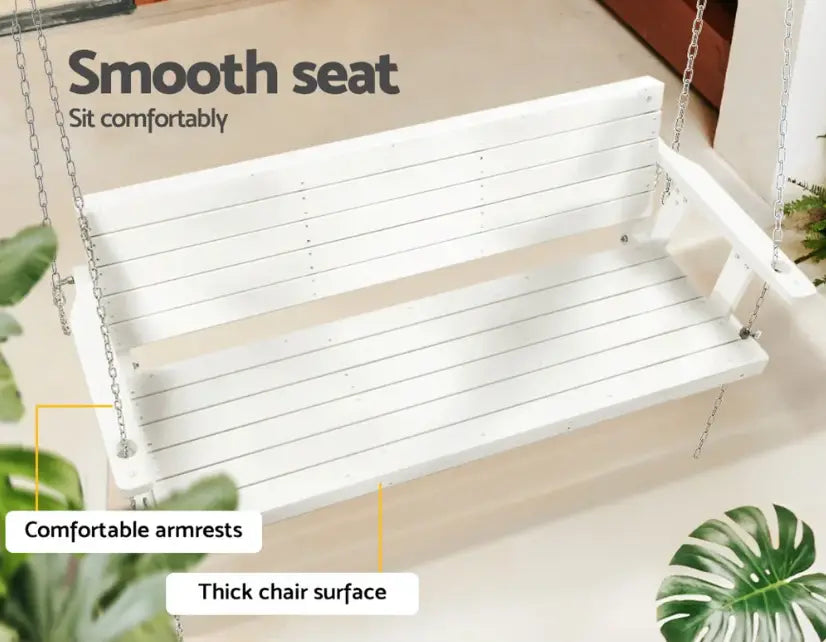
Figuring Out if Your Porch Can Handle It
Most porches can hold a swing, but don’t assume. Take a good look at the structure.
-
Check the beams – Swings need to be anchored into solid ceiling joists, not trim or decorative boards. If your beams are 2×6 or larger, you’re usually in good shape.
-
Look for damage – Cracks, soft spots, or sagging are red flags. Even thick beams won’t work if the wood is weak.
-
See how it’s attached – Joists should be tied directly into the house, not just nailed on.
-
Mind the spacing – You’ll need two hanging points, usually 2–4 feet apart, depending on the swing size.
Still not sure? Get a carpenter to check. It’s a ten-minute job for them, and it’ll give you peace of mind.
How to Use a Porch Swing Without Feeling Awkward
Okay, let’s assume your porch is strong enough. Now, how to porch swing so it feels as good as it looks?
-
Set the seat height right – Around 17–19 inches off the ground is comfortable for most people. Too high and your feet dangle; too low and your heels drag.
-
Tweak the angle – Adjust the chains so the seat leans slightly back. Dead-straight feels stiff; a little recline feels inviting.
-
Don’t skip cushions – Sure, wood looks nice, but you’ll sit longer (and happier) with some padding.
-
Take it slow – Porch swings aren’t about big arcs or speed. The joy is in the gentle sway.
Once you’ve got the setup right, you’ll be surprised how often you find yourself sneaking out there for “just a minute.”
How to Hang a Porch Swing the Safe Way
Installation is where things can go wrong if you’re careless. So, how to hang a porch swing correctly? Here’s a no-nonsense walkthrough:
-
Locate your joists – A stud finder makes this easier, but you can also tap to find solid spots.
-
Drill pilot holes – Keeps the wood from splitting when you drive in hardware.
-
Pick heavy-duty hardware – Eye bolts, lag screws, or swing hangers rated for at least 500 pounds. Anything less isn’t worth the risk.
-
Chains vs. rope – Chains are more durable outdoors; rope looks charming but frays faster.
-
Check the balance – Make sure both sides hang at the same height before you sit.
-
Test gently – Sit down slowly and give it a light swing before trusting it fully.
A correctly hung swing should feel steady from the start, no wobbling, no creaking.
How Far Should a Porch Swing Be From the Wall?
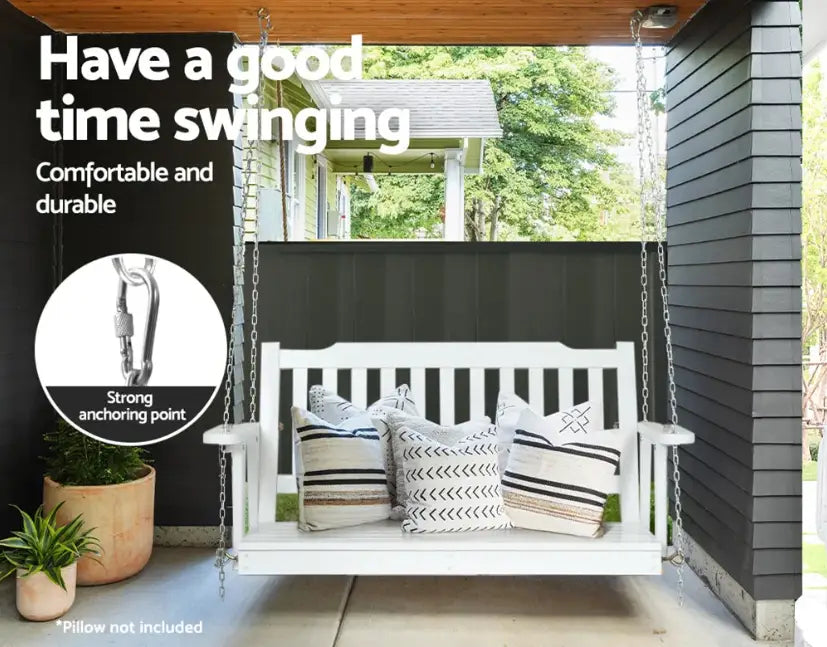
Now, about placement. A lot of people rush to hang their swing only to realise later it smacks into the railing or wall.
So, how far should a porch swing be from the wall? Keep at least 2 feet of space behind it. That’s the minimum for a gentle swing.
On the sides, leave 14–16 inches from any post or wall. That way, your hands won’t bump into things as you swing.
How Much Clearance for Porch Swing Overall?
Think of your swing like it’s in a bubble. It needs space all around. How much clearance for a porch swing is enough?
-
Behind: 2–3 feet minimum.
-
In front: 4–5 feet is best.
-
Above: At least a foot between the beam and your hardware.
This bubble of space keeps the swing safe and lets it move smoothly without accidents.
Tips to Make It Last
Once it’s up, you’ll want it to last for years. A little maintenance goes a long way:
-
Choose galvanised or stainless hardware so rust doesn’t sneak in.
-
Tighten bolts and check chains every season; things loosen over time.
-
Seal or paint wooden swings to protect them from rain and sun.
-
Stick to the weight rating. If your swing says 500 pounds, treat that as the limit.
Mistakes People Regret
I’ve seen homeowners make the same mistakes again and again. Save yourself the headache:
-
Don’t hang from fascia or trim boards. They’re decorative, not structural.
-
Don’t use random hooks or screws you’ve got lying around. They won’t hold.
-
Don’t put the swing right against the wall or railing. You’ll regret it.
-
Don’t ignore signs of weak or rotting wood. That’s asking for trouble.
What If My Porch Isn’t Strong Enough?
If you check everything and your porch just can’t handle a swing, don’t lose hope. You’ve got alternatives:
-
Freestanding frames – Many swings come with their own A-frame, no porch needed.
-
Pergola swings – If you’ve got a pergola, those sturdy posts often work perfectly.
-
Yard swings – A standalone option gives you flexibility on placement.
It may not be under your porch roof, but you’ll still get the same relaxing sway.
Final Thoughts
So, back to that big question: can my porch support a swing? In most cases, yes—but only if you’ve got solid beams, the right hardware, and enough clearance.
Here’s the takeaway:
-
How to porch swing comfortably: chair-height seat, slight tilt, and some cushions.
-
How to hang a porch swing properly: into strong joists, with heavy-duty hardware.
-
How far should the porch swing be from the wall: leave 2 feet behind and space at the sides.
-
How much clearance for porch swing: picture a bubble—2–3 feet behind, 4–5 feet in front, and clear overhead.
Do it right, and a porch swing won’t just be another piece of furniture. It’ll be your favourite spot at home. A place where mornings start slow, evenings wind down easy, and you get to enjoy the simple rhythm of life, one gentle sway at a time.