

I have to confess something. When I first got into indoor plants, I underestimated how quickly they multiply. It starts with one little fern, then a pothos because it looked easy to care for, and before you know it, you’re adopting a fiddle-leaf fig and a bunch of succulents. Suddenly, the house looks less like a home and more like a plant nursery. At first, it feels cozy, but then you realise every surface is taken and the floor is a minefield of pots. That’s when I started searching for indoor plant stands for multiple plants near me, and let me tell you, it changed everything.
The beauty of a multi-plant stand is that it organises what could easily become clutter. Instead of scattering pots everywhere, you group them into one styled corner. It looks intentional, it saves space, and surprisingly, it makes cleaning and watering easier too.
So if you’re like me and you’ve typed that exact phrase into Google, hoping to find a solution, let’s walk through why these stands are worth it, what types you’ll come across, how to style them, and what to keep in mind when choosing the right one for your space.
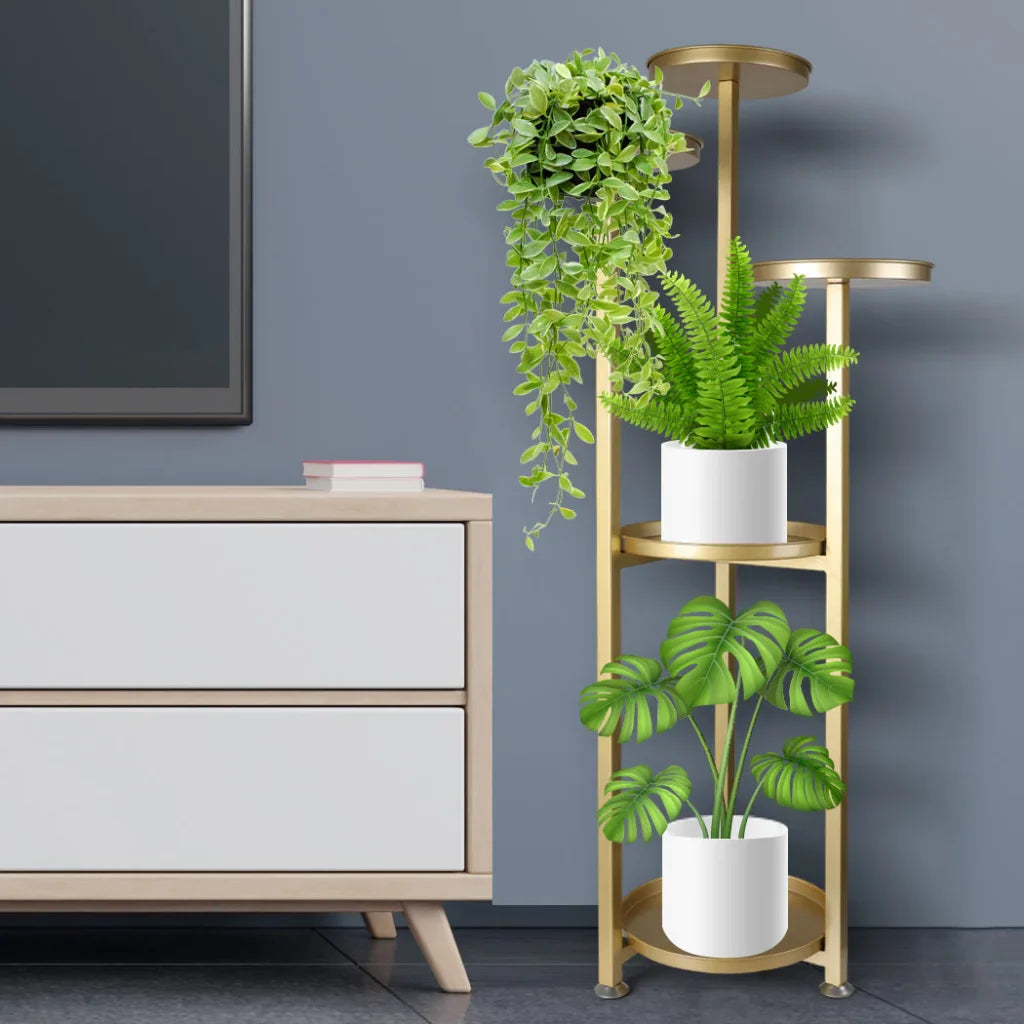
Why Multi-Plant Stands Are Better Than Singles
Don’t get me wrong, single stands are great for statement plants. I’ve got a gorgeous wooden one that holds my monstera, and it looks perfect. But once your collection grows, individual stands scattered everywhere can start to feel busy. A stand that holds several plants in one spot keeps things neat and gives your greenery a proper stage.
They also save space. Apartments especially benefit from this, because not everyone has the floor area for ten separate pots. Multi-plant stands go vertical. Instead of spreading out, you stack up, which means more plants in less room.
Another bonus is light. Plants on different tiers can each get their fair share of sunlight. Without a stand, the taller plants hog all the brightness while the little guys sulk in the shadows. And of course, the style factor is undeniable. A tiered plant stand instantly looks curated, like you planned it that way, instead of just plonking pots wherever they fit.
The Different Types of Multi-Plant Stands
There are plenty of options out there, which is good because it means you can find something that suits your plants and your home. One of the most popular choices is the tiered shelf stand. Picture a mini bookshelf, but instead of novels, you have ferns and succulents. Each level creates a different height, so no plant is hidden.
Then you’ve got ladder stands. These are shaped like a little A-frame ladder with steps or shelves. They fit beautifully into corners and look charming without taking up too much space.
Corner stands are another clever design. They’re made specifically to slot into those empty corners that never seem useful. Suddenly, that awkward space becomes a lush green feature.
Rolling plant carts are practical if you like to rearrange things. They come with wheels so you can move your entire collection closer to the sun in the morning and roll it back later. Cleaning is easier too because you can just shift the whole stand in one go.
Some stands even combine shelves with hooks for hanging plants. These are amazing if you want vines cascading down while shorter plants sit below. They create layers without you having to drill holes into your ceiling.
How to Choose the Right Stand
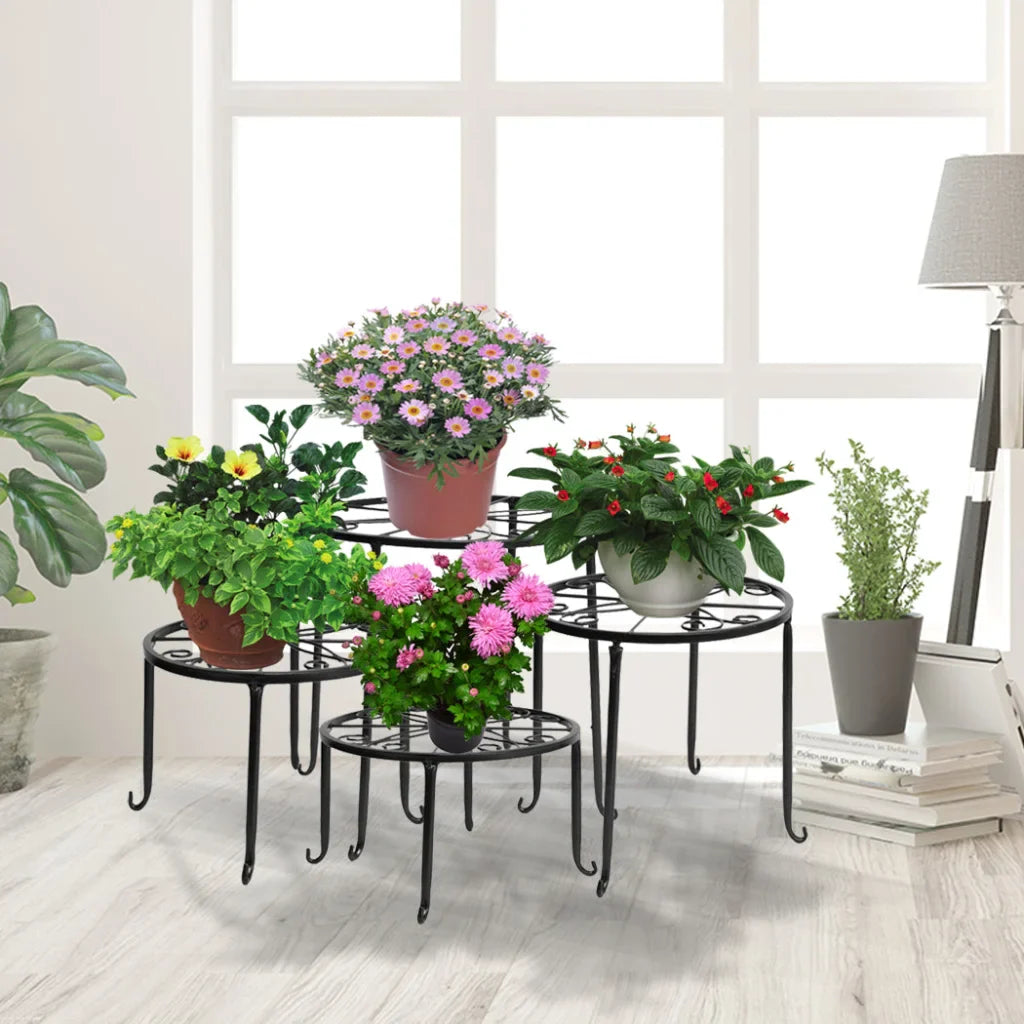 Before you grab the first stand you see, it’s worth pausing to think about a few things. The size of your collection is the first. Do you need space for three plants or ten? Buying too small will just send you shopping again in a few months.
Weight capacity is another important factor. I’ve learned this the hard way. A flimsy stand might look stylish, but the moment you put a heavy ceramic pot on it, disaster strikes. Always check how much it can actually hold.
Style matters too. A wooden stand adds warmth and looks natural. A sleek black or gold metal frame suits modern interiors. Woven or rattan designs give a more relaxed, coastal vibe. Choose what fits the rest of your room.
Think about your space as well. In small flats or apartments, a slim ladder-style stand makes more sense. If you’ve got a bigger living room or sunroom, you can afford to go with a wider tiered display. And if you’re someone who likes rearranging, rolling carts or adjustable shelving stands are worth considering.
Styling Your Plant Stand
This is where you can really have fun. The way you arrange your plants on the stand changes the whole vibe. I like mixing heights and textures. A tall snake plant next to a bushy fern, with a trailing pothos spilling down the side, creates contrast and depth.
Pot choice makes a huge difference, too. You can go for a clean, minimal look by keeping all your pots in the same colour, say, white or terracotta. Or you can mix patterns and textures for a more eclectic style.
The top tier is usually the best place for trailing plants. String of pearls, ivy, or pothos look incredible when they cascade down from above. The middle tiers are great for medium plants like calatheas, while the bottom can handle heavier pots or broad-leafed plants that don’t need as much attention.
Placement in your home matters too. A stand by a window makes sense for light-hungry plants. A corner stand in the hallway instantly makes the space more welcoming. Even kitchens and bathrooms benefit. Imagine a little multi-plant stand in the kitchen filled with fresh herbs, or a bathroom corner with ferns that love the humidity.
Everyday Benefits You’ll Notice
After switching to multi-plant stands, I realised they’re not just about looks. My living room feels less cluttered now. Watering takes half the time because all the plants are grouped together. Cleaning is easier because I’m not tripping over random pots.
There’s also the pet factor. My cats used to knock over smaller pots when they were on the ground. Once I lifted them onto a stand, the problem stopped. Out of reach, out of mind.
Guests notice too. People always ask where I got my tiered stand and comment on how it makes the space feel styled. It’s funny because the plants themselves haven’t changed, but the way they’re displayed makes a world of difference.
Caring for Your Stand
Plant stands don’t demand much, but a little attention keeps them looking good. Wipe the surfaces every so often to stop dust and water marks. Use saucers under pots to catch drips. If it’s wood, avoid leaving it in damp areas too long. If it’s metal, touch up scratches so rust doesn’t start. Check the screws or joints once in a while, especially if it’s holding a lot of weight.
These small habits keep your stand sturdy and stylish for years.
Where to Look When Searching Near Me
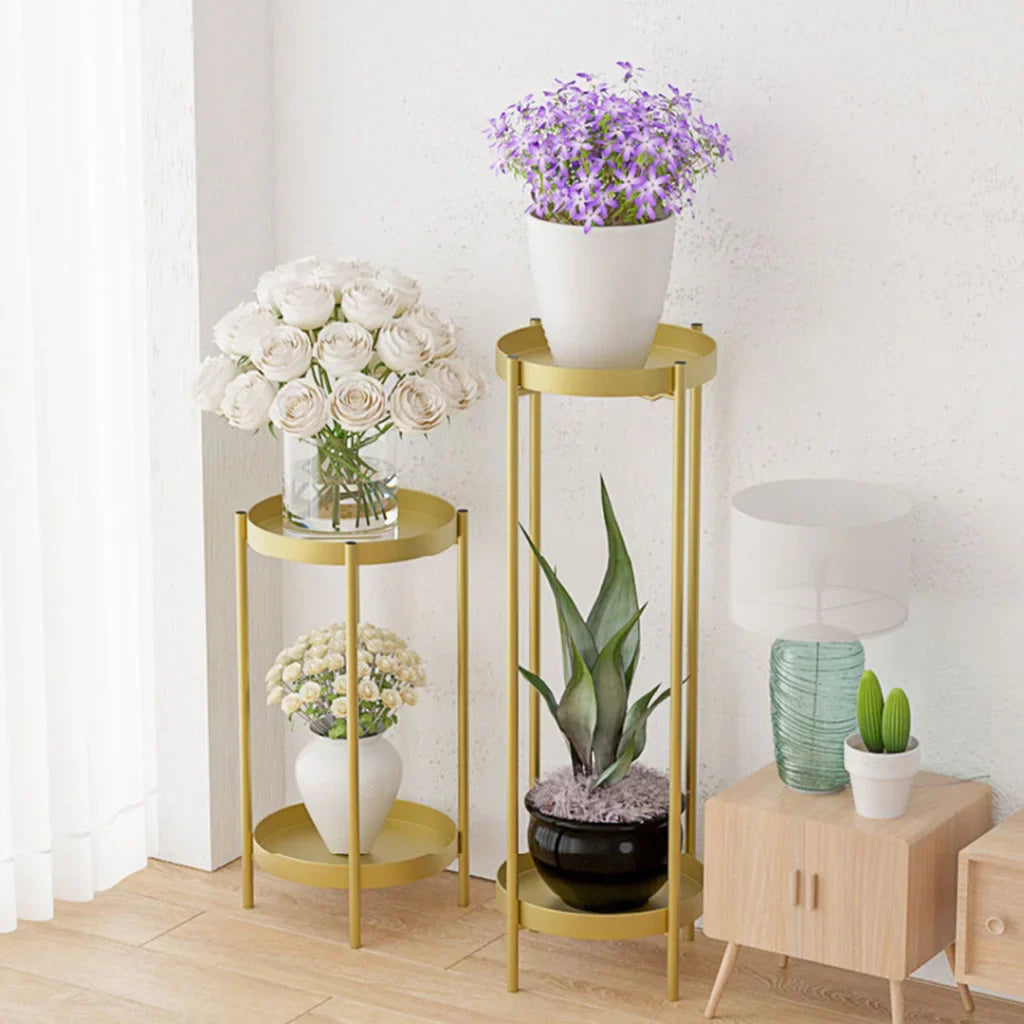 When I first searched for indoor plant stands for multiple plants near me, I was overwhelmed. There were local furniture shops, big-name retailers, and endless online listings. The tricky part was finding something that balanced durability with price and style.
That’s when I came across HomeMyGarden. Their range really stood out because they weren’t just about looks. The stands felt strong, able to handle heavier pots, but still stylish enough to fit into different interiors. They had everything from sleek metal designs to cozy wooden and woven options.
For me, the best part was that they were designed for everyday homes. Not just staged catalogue photos, but real living rooms, kitchens, and hallways where plants get watered, moved, and fussed over. And the prices didn’t make me wince either, which was a relief.
Final Thoughts
An indoor plant stands for multiple plants, which are more than furniture. They’re organisers, space savers, and little style boosters all rolled into one. They help your greenery look intentional instead of scattered. They make watering and cleaning simpler. They give every plant its moment in the spotlight.
If you’ve been wondering whether it’s worth it, trust me, it is. Start with one stand and see how much better your space feels. And if you’re still on the hunt for the right one, check out the selection at HomeMyGarden. They’ve got sturdy, stylish options for every type of plant lover. Because at the end of the day, plants aren’t just décor. They’re part of your home, and they deserve a stage where they can shine together.