
I don’t know about you, but whenever I use my sandwich maker, I end up with a crime scene of melted cheese and crumbs stuck to the plates. The first few times, I just shut the lid, pushed it back into the cupboard, and told myself I’d deal with it “later.” You can guess what happened. The next time I opened it, the thing smelled like burnt pizza crust, and I practically needed a chisel to scrape off the gunk.
That’s when I started wondering, like a lot of people do: how do you actually clean one of these things? Is the sandwich maker washable, or am I stuck wiping it forever?
Turns out, there’s a right way to do it, and a few wrong ones that can kill your machine faster than you’d think.

Is a Sandwich Maker Washable?
Here’s the straight answer: no, the whole unit is not washable in Australia. These gadgets have heating elements and wires inside. Dip it in the sink, and you’re basically asking for a small kitchen disaster.
But don’t panic, that doesn’t mean you’re doomed to a greasy, smelly appliance forever.
-
If you have one of the basic models with fixed plates, you’ll need to wipe it clean in place.
-
If you’ve got one with removable plates, life’s a lot easier. Those can usually be washed in the sink like a frying pan. Some even go in the dishwasher, though I’d always check the manual before tossing them in.
So next time someone asks you, “Is the sandwich maker washable?” you’ll know the answer: not the whole thing, only the removable bits if your model has them.
How to Clean a Sandwich Maker with Fixed Plates
Alright, let’s talk about the more common type, the ones where the plates don’t come out. It sounds like a headache, but once you’ve done it a few times, it’s just part of the routine.
Step 1: Let It Cool (But Not Too Much)
Unplug it and wait a few minutes. You don’t want to burn yourself, but don’t let it get stone cold either. Warm plates are easier to clean than cold ones with hardened cheese glued on.
Step 2: Brush Out the Crumbs.
Grab a paper towel or a soft pastry brush and sweep out the loose bits first. If you skip this, they just smear around once you add moisture.
Step 3: Wipe with a Damp Cloth.
Take a sponge or cloth, dip it in warm soapy water, wring it out until it’s barely damp, and then wipe the plates. Be gentle, no steel wool or harsh scrubbers unless you want your non-stick surface ruined.
Step 4: Deal with the Stubborn Stuff.
For the cheese that’s cooked itself onto the plates like cement, here’s the trick: lay a damp cloth over it for a few minutes. Close the lid and let the steam soften the residue. Then just wipe it away. A silicone spatula also works if you need a little extra persuasion.
Step 5: Clean the Edges.
Food loves to hide in the corners near the hinges. I’ve used cotton buds or even the tip of a folded tissue to get in there. It’s fiddly, but worth it.
Step 6: Dry it off.
Finally, go over it with a dry cloth. You don’t want to put it away damp; that’s just asking for rust.
How to Clean a Sandwich Maker with Removable Plates
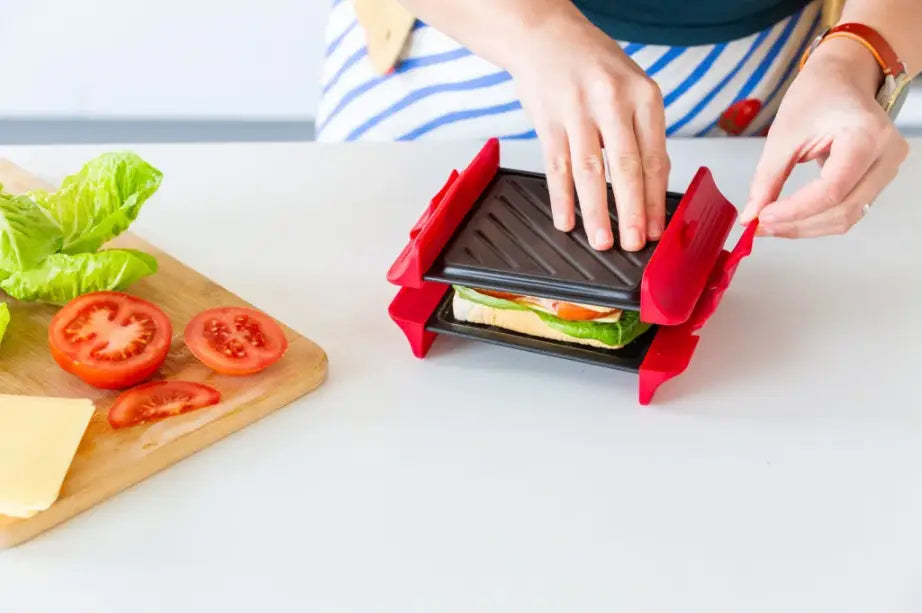
If you’re lucky enough to own a model with plates that pop out, cleaning is so much simpler.
-
Let the machine cool down first.
-
Remove the plates using the release buttons or clips.
-
Wash them in warm, soapy water with a sponge.
-
If the manual says dishwasher safe, go ahead, top rack only.
-
Dry thoroughly before clipping them back in.
Honestly, this feature is worth the extra money. If you’re in the market for a new machine, go for one with removable plates. You’ll thank yourself later.
Little Habits That Make Cleaning Easier.
Here’s the thing: if you do a couple of small things up front, cleaning becomes a two-minute job instead of a half-hour battle.
-
Butter the bread. It’s not just for flavour; it helps prevent sticking.
-
Don’t overload the fillings. More cheese might sound good, but it’s also more mess.
-
Use silicone or wooden tools. Metal forks or knives will scratch the coating.
-
Wipe straight away. The longer you leave it, the harder it gets.
-
Try baking paper. I’ve seen people put their sandwich between sheets of baking paper. The toastie still browns, and the plates stay spotless.
What Not to Do
It’s worth saying again because I’ve seen people wreck their machines this way:
-
Don’t dunk the whole sandwich maker in water. Ever.
-
Don’t scrub with steel wool.
-
Don’t spray harsh chemicals on the plates.
-
Don’t pack it away damp.
Those are the four fast tracks to a broken, rusty, or useless machine.
Why Cleaning Matters (Even If You’re Tired)
I get it, sometimes you just want to eat your sandwich and collapse on the couch. But here’s why it’s worth the effort:
-
Old crumbs burn and mess with the taste of your next toastie.
-
Layers of grease shorten the life of the non-stick coating.
-
Hygiene matters; leftover food can attract bacteria.
-
And honestly? The smell. Nothing worse than plugging in a dirty machine and filling the house with burnt cheese stink.
A Quick Story
Back when I was living in a share house, we had a cheap sandwich maker that no one cleaned properly. Within weeks, it looked like a biohazard. Every new toastie stuck, and the machine smoked every time we turned it on. We ended up tossing it in the bin and ordering pizza instead.
Fast-forward a few years: I bought one with removable plates, and this time I actually cleaned it after each use. Guess what? It still works like new, years later. That’s when it hit me, the five minutes you spend cleaning saves you from buying a new one every six months.
Final Thoughts: How to Clean and Is It Washable?
So, here’s the bottom line:
-
If you’ve got fixed plates, wipe them while warm with a damp cloth, use steam to soften stuck bits, and dry them properly.
-
If you’ve got removable plates, treat them like normal cookware, just wash, dry, and reattach.
-
And the big question is, is the sandwich maker washable? The whole thing, no. The removable parts, yes (sometimes even in the dishwasher).
A sandwich maker isn’t high-maintenance. It just wants a bit of care. Clean it properly, and it’ll last you for years, serving up golden toasties without the lingering smell of last week’s cheese.