

I bought my first mini rice cooker because I was sick of babysitting rice on the stove. Half the time it boiled over, the other half it burned at the bottom, and I’d end up scraping pots instead of eating dinner. The box said “perfect rice every time”, which sounded foolproof. Spoiler: my first few tries were not perfect.
That’s why I’m writing this. If you’ve just unpacked one and you’re scratching your head about mini rice cooker instructions, how do you cook rice in a mini rice cooker without ruining it, and how much water for mini rice cooker recipes is actually right, I’ve been there. Here’s the messy truth and what finally worked for me.

First Lesson: Mini Rice Cooker Instructions Are Too Short
The little booklet inside the box told me: “Add rice. Add water. Press Cook.” That was it. No mention of rinsing, no tips about resting, nothing about different rice types. It felt like instructions written by someone who’d never actually cooked with the thing.
Here’s what I figured out after wrecking two batches:
-
Use the weird little cup they give you. It’s not a full cup, and that matters.
-
Always rinse the rice. Otherwise, it foams up and sticks like glue.
-
Check that the pot is dry on the outside. I once dropped a wet pot in and heard it sizzle on the heating plate. Not good.
-
Don’t panic when it clicks to “Warm.” That means it’s done cooking, but the rice still needs a few minutes.
Those are the real mini rice cooker instructions. Not glamorous, but they’ll save you a lot of frustration.
How Do You Cook Rice in a Mini Rice Cooker Without Messing Up?
At this point, I’ve got it down to a habit. It looks like this:
-
Scoop rice with the cooker’s cup.
-
Rinse until the water’s no longer cloudy.
-
Put it back in the pot and add the right amount of water (I’ll get into the ratios soon).
-
Press the button.
-
Walk away and don’t lift the lid.
-
When it clicks to “Warm,” I set a timer for another 10 minutes before opening.
That last step was the game-changer. At first, I’d scoop rice out the second it finished, and the top was wet while the bottom felt a little chewy. Letting it sit and steam balances it all out. So, how do you cook rice in a mini rice cooker? You let the machine work, but you also give it that extra pause at the end.
How Much Water for Mini Rice Cooker Rice?
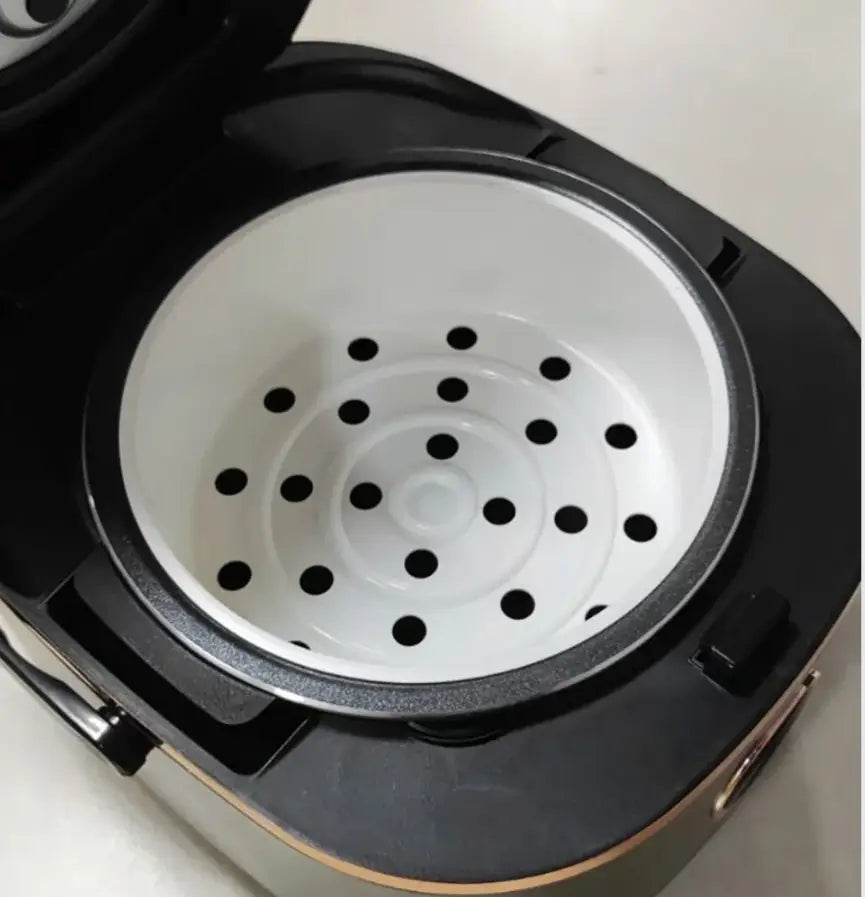
This part confused me the most. I kept asking myself if there was some secret measurement system. The truth? Different rice types really do need different amounts. Here’s what works for me:
-
White rice (jasmine, basmati, long grain): 1 cup rice to 1 cup water. Sometimes I splash in an extra tablespoon if I want it softer.
-
Brown rice: Tougher grains, so 1 cup rice to 1 ½ cups water.
-
Sushi or short-grain rice: About 1 cup rice to 1 ¼ cups water.
-
Wild rice or fancy blends: Closer to 1 cup rice to 2 cups water.
And if you ever forget the ratios, here’s the low-tech hack: put your rinsed rice in the pot, rest your finger on top, and fill water until it hits your first knuckle. Sounds odd, but I’ve tested it dozens of times, and it works.
So, if someone asks how much water for mini rice cooker recipes, my answer is: start with 1:1 for white rice, adjust up for others, and don’t be afraid of the knuckle trick.
Things I Learned the Hard Way
-
Don’t overfill it. Mini rice cookers aren’t built for parties. Two cups uncooked (three at most) is usually the max. I tried stuffing four cups in once, and it overflowed like a science experiment gone wrong.
-
Season the water. A pinch of salt or a drizzle of oil before pressing “Cook” makes a huge difference in flavour.
-
Broth is magic. Swapping water for chicken or veggie broth turns plain rice into a proper side dish.
-
Be gentle when fluffing. Use the plastic paddle or a wooden spoon. I scratched my first pot with a metal fork. Lesson learned.
Mistakes I Made (So You Don’t Have To)
-
Using a regular kitchen cup. Ratios ended up way off.
-
Not rinsing. Foamy mess everywhere.
-
Opening the lid early. Curiosity killed the rice.
-
Skipping the rest time. Rice looked fine on top, undercooked on the bottom.
Mini Rice Cooker: Not Just for Rice
Once I got comfortable, I started experimenting. A few surprises:
-
Oatmeal: Works the same way as rice. Oats plus water or milk, press cook, done.
-
Quinoa: 1 cup quinoa, 2 cups water. Fluffy every time.
-
Vegetables: If your model has a steam tray, you can cook veggies on top while the rice cooks below.
-
Soups and stews: Smaller cookers handle broth-based dishes surprisingly well.
Suddenly, my “rice cooker” became my everything cooker.
Why a Mini Cooker Beats the Stovetop (For Me, Anyway)
Space was a big reason I bought one. I live in a small apartment with limited counter space, and a mini cooker barely takes up more room than a kettle. It’s also idiot-proof once you know the basics. I don’t have to watch the pot or set timers; the machine handles it.
The biggest win? No more scorched pots. Anyone who’s scrubbed burned rice off stainless steel knows that’s a pain you don’t want to repeat.
Wrapping It Up
So let’s circle back to the three big questions:
-
Mini rice cooker instructions? Use the included cup, rinse the rice, add the right water, and let it rest after cooking.
-
How do you cook rice in a mini rice cooker? Keep it simple: measure, rinse, press cook, wait for the click, and let it steam before serving.
-
How much water for mini rice cooker recipes? Usually 1:1 for white rice, 1:1.5 for brown, and minor tweaks for sushi or wild rice.
It took me a few messy bowls to get it right, but once I did, the mini rice cooker turned into one of the most reliable tools in my kitchen. It’s not fancy, but it makes rice exactly the way I want it, and I don’t have to hover over the stove anymore.
If you’re just starting out, don’t stress if your first batch isn’t perfect. Stick to the basics, remember the water ratios, and give it that extra resting time. Soon enough, you’ll be scooping fluffy rice without even thinking about it.


