

A few summers back, I decided to build a simple wooden fence. My bright idea was to grab a shovel and start digging. After just two holes, my arms were on fire, the dirt kept sliding back in, and I wondered what I had gotten myself into. That’s when a friend loaned me his post hole digger. Suddenly, the holes were neat, the job went quicker, and I realised there’s a reason people buy these tools instead of wrestling with shovels.
If you're at that stage of research where you're asking how much a hole digger costs, how much a post hole digger weighs, or how many types of post diggers are available, you're in the right place. Let me break down what I learned, in plain talk, from using both cheap and pricey versions on Australian soil.
How Much Is a Hole Digger in Real Life?
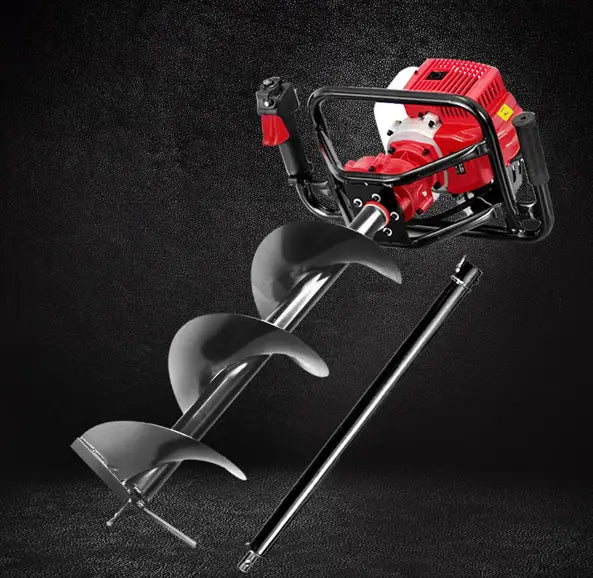
The first surprise was that “hole digger” covers a huge range of tools.
-
Manual diggers: These are the classic clamshell tools with two long handles. They cost about $30 to $80. They’re reliable, cheap, and last a long time if you don’t leave them rusting outside. But they make you work for every inch of soil.
-
Gas-powered augers: Think of these as giant drills that spin into the ground. Most homeowner versions cost between $200 and $700. I borrowed one for my fence project, and it turned a back-breaking weekend into a few hours of steady work.
-
Hydraulic or tractor-mounted models: These start near $1,000 and can climb to $3,000 or more. Unless you’re farming or doing construction, they’re far more than you’ll ever need.
So, when someone asks how much a hole digger costs, the answer can be anywhere from thirty bucks to a few thousand dollars.
How Much Post Hole Digger Should You Budget?
This depends on the size of your project more than anything.
-
One or two posts (like a mailbox): A $50 manual digger is fine.
-
A full backyard fence: Expect to budget $300–$500 for a gas auger. Worth it for the time and back pain you’ll save.
-
Farming or vineyard work: Here, you’re looking at $1,500+ for hydraulic equipment, because nothing else will keep up.
So, how many post hole diggers should you plan for? Enough to match the job size, not more, not less.
How Much does a Post Hole Digger Weigh?
Weight really matters once you’ve carried one around for a while.
-
Manual digger: 8–15 pounds. Easy to carry with one hand.
-
Gas auger (single-person): 20–40 pounds. Manageable, though your arms will feel it after ten holes.
-
Two-person gas auger: 50–70 pounds. Definitely a two-person job.
-
Hydraulic/tractor diggers: 150 pounds or more, but the machine handles the weight.
So if you’ve been wondering how much a post hole digger weighs, most consumer options fall between 10 and 70 pounds.
How Much Are Post Diggers on Average?
After browsing stores and online catalogues, I noticed prices settle into clear brackets:
-
Manual post diggers: about $50.
-
One-person gas augers: $300–$500.
-
Two-person augers: $500–$700.
-
Tractor or hydraulic attachments: $1,500–$3,000+.
So, how many post diggers are there overall? For most homeowners, $50 to $500 is the realistic window.
How Much Is a Hole Digger Rental?
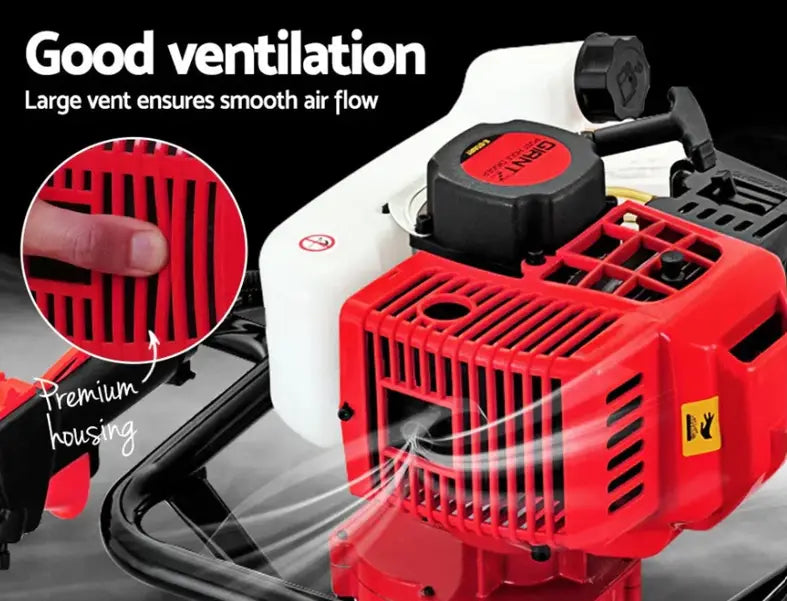
If you’re only tackling one project, renting often makes more sense.
-
Gas augers usually rent for $40–$70 per day.
-
Two-person augers: $80–$150 per day.
-
Hydraulic gear varies by location, but expect more.
So, how much is a hole digger rental? Around $50–$100 for a weekend. That’s cheaper than buying a tool you’ll never touch again.
Costs That Sneak Up on You
The tool’s price isn’t the whole story. I learned the hard way that there are extras:
-
Fuel and oil for powered models.
-
Replacement blades, because rocks and roots wear them out.
-
Storage space, especially if you choose a bulky auger.
When calculating how much a hole digger costs, remember these side expenses.
Manual vs Powered: Which Should You Choose?
Here’s my take from using both:
-
Manual diggers are dependable and cheap. Good for light soil and a handful of holes. But once you hit clay or rocky ground, you’ll regret not going powered.
-
Gas augers cost more but save enormous time and energy. They chew through tough soil like it’s nothing.
-
Hydraulic diggers are in a class of their own. Unless you’re a contractor or farmer, you won’t need one.
So if you’re asking yourself how much a hole digger is worth, the real answer is: how much is your time and your back worth?
Quick Checklist Before Buying
If you’re stuck between choices, here’s a simple way to decide:
-
Count the holes. A few? Manual. Dozens? Powered.
-
Check your soil. Sandy = manual works fine. Clay or rocks = auger needed.
-
Think ahead. If you’ll only use it once, rent instead of buying.
-
Weigh cost vs energy. Spending $300 can feel heavy on the wallet, but lighter on your shoulders.
Final Thoughts
Let’s revisit those key questions:
-
How much is a hole digger? Anywhere from $30 to $3,000.
-
How much should you budget for a post-hole digger? $50 for small jobs, $300–$500 for fences, $1,500+ for farms.
-
How much does a post hole digger weigh? Most weigh 10–70 pounds.
-
How much are post diggers overall? Around $50–$500 for homeowners.
-
How much is a hole digger rental? Roughly $50–$100 for a weekend.
The bottom line: the right choice isn’t about spending the least, but about matching the tool to the job. A $50 clamshell digger works fine for a single mailbox post. A $300 auger is a game-changer when you’ve got a whole fence line to dig. And for farms? The heavy equipment pays for itself.
So next time you ask how much a hole digger costs, don’t just think in dollars. Think about sweat, hours saved, and whether you want to finish the day satisfied or worn out