
Cycling is one of those hobbies that blends fitness, travel, and freedom. But while heading out for a local ride is easy, many of us across Australia want to take our bikes further afield—to coastal paths, mountain trails, or new city routes. That's where the practical problem begins: how do you actually get your bikes from your garage to the trailhead without turning the journey into a headache?
Tow bar and tow ball bike racks have become some of the most popular answers to that question. They sit at the back of your car, carry multiple bikes with ease, and are far easier to load than roof racks. But people new to them often ask the same things: how do tow bar bike racks work? How does a tow ball bike rack work? How do you attach one properly? And, if your car doesn’t have a hitch, how do you transport bikes without one at all?
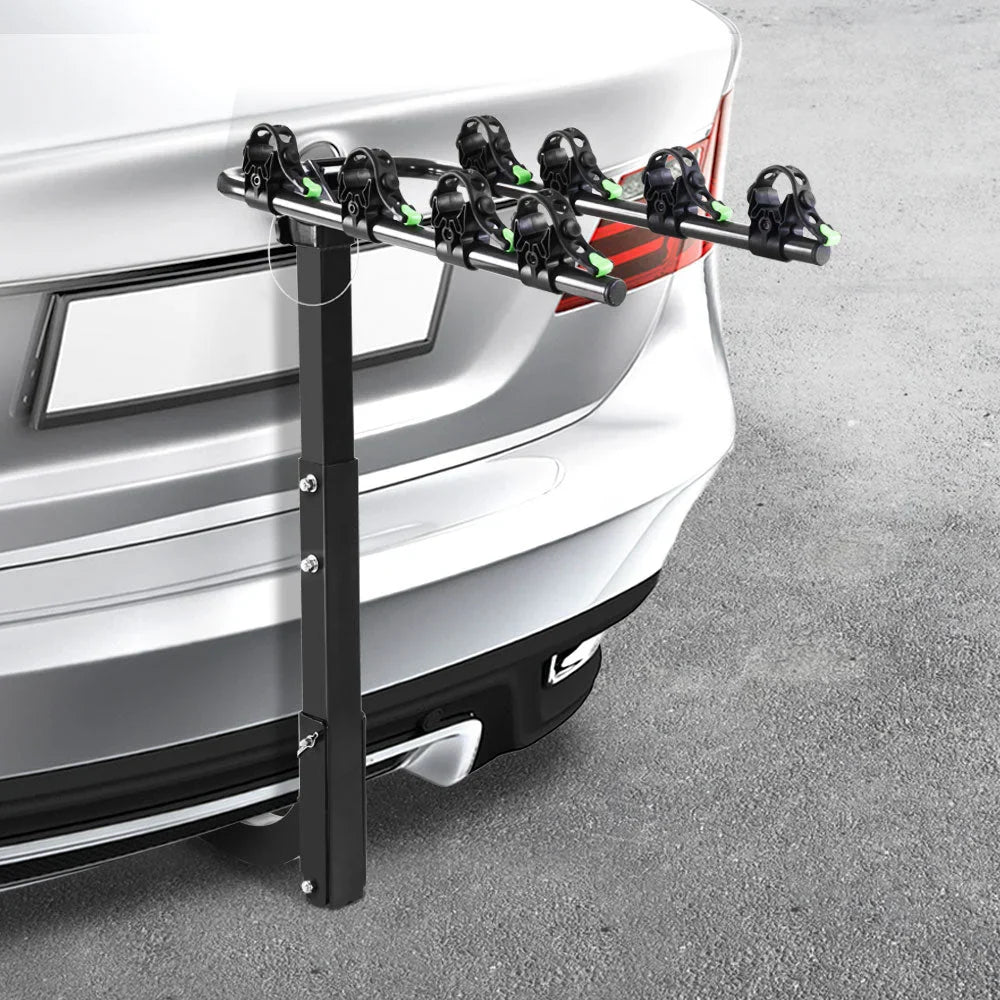
How Do Tow Bar Bike Racks Work?
The principle is straightforward. A tow bar bike rack uses the tow bar of your car , the same steel bar designed to tow trailers , as its mounting point. Because the tow bar is bolted securely to the car’s frame, it’s one of the strongest parts of the vehicle, and that strength makes it an ideal base for carrying bikes.
Once the rack is fitted, it either provides a platform where bikes can sit in wheel trays or arms where bikes hang. Each bike is then secured with clamps or straps so they don’t move while you’re driving. The advantage here is stability: compared with strap-on boot racks, a tow bar system has very little wobble, even on long trips at motorway speeds.
How Does a Tow Ball Bike Rack Work?
A tow ball rack is a slightly different design. Instead of clamping onto the whole tow bar, it couples directly with the rounded steel tow ball at the end of the bar. Think of it like how a trailer hitches on , but in this case, the rack locks onto the ball and becomes the carrying system for your bikes.
Most models have a lever or locking system: you place the rack over the tow ball, close the mechanism until it clicks or tightens, and then double-check that it doesn’t move side-to-side. After that, bikes are loaded in the same way as a tow bar rack , either onto wheel trays or support arms , and strapped securely.
One of the benefits of tow ball racks is convenience. Many have tilt functions that let you lower the rack forward so you can still open your boot without taking the bikes off. For families loading up for a day out, this small feature makes a big difference.
How to Attach a Bike Rack to a Tow Ball
The process sounds intimidating if you’ve never done it, but in reality, it’s quick. You line up the coupling of the rack with the tow ball, place it on, and engage the locking system. Modern racks are designed so that when they’re secure, you’ll hear or feel a distinct “click.” A good habit is to give the rack a firm shake before loading bikes. If it shifts, something isn’t tightened properly.
Then comes loading: place each bike in position, secure the frame with clamps, and tighten the wheel straps. On longer journeys, it’s worth double-checking everything after the first few miles. Just like you’d check luggage straps on a roof box, it’s smart to check bike straps after hitting bumps or corners.
How to Transport Bikes Without a Hitch
Of course, not every car has a tow bar or tow ball fitted. If that’s you, there are still options.
-
Roof racks are one. Bikes are mounted on top of the car, standing upright. They’re stable and don’t block your boot, but they require lifting heavy bikes overhead, which isn’t practical for everyone.
-
Boot-mounted racks use straps and hooks that attach to the boot or hatchback. They’re cheaper and removable, but they can shift around and sometimes scuff paintwork if not set up perfectly.
-
Inside the car is the last resort. If you can fold the rear seats down, you can lay a bike inside, though you’ll need to remove the front wheel and cover the interior to avoid mud and scratches.
These methods work fine, but compared with tow bar or tow ball racks, they’re either less convenient or less secure. That’s why so many cyclists eventually add a tow bar to their vehicle if they ride regularly.
Why Tow Bar and Tow Ball Bike Racks Are Popular
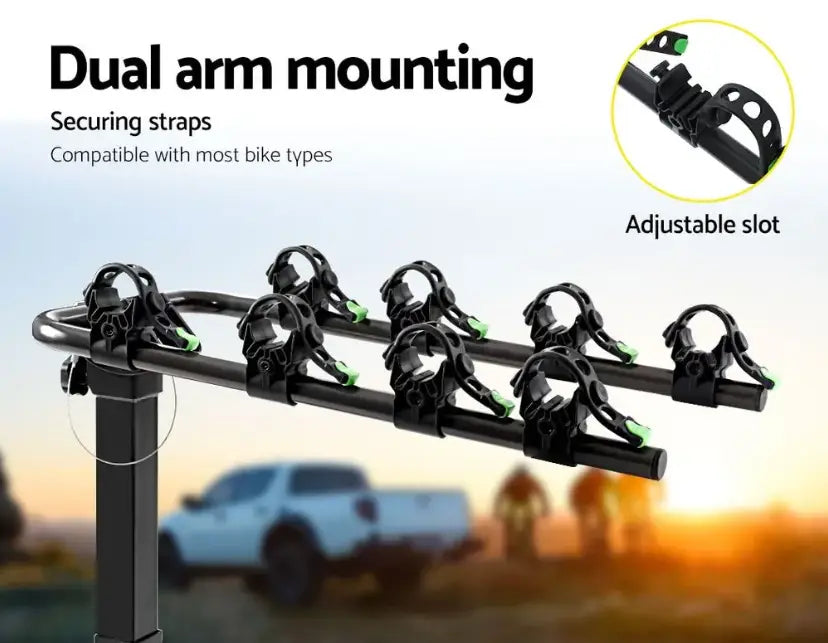 There’s a reason people choose them. First, they’re easier to load. You don’t need to wrestle a bike overhead; you simply lift it a short distance onto the rack. Second, they handle heavier loads, which is essential for e-bikes. And third, they’re stable. The strength of the tow bar or tow ball connection means less swaying at speed, giving you more confidence on the road.
For families, being able to carry three or four bikes at once without struggling is a game-changer. For solo riders, the convenience of clipping the rack on, loading one bike, and heading off is just as appealing.
Safety Tips to Keep in Mind
Like anything, the system is only as safe as how it’s used. A few reminders make a big difference:
-
Respect the rack’s weight limit and your car’s tow bar rating.
-
Secure each bike properly , frames and wheels , with all the straps provided.
-
Check visibility: if bikes block your number plate or rear lights, use a light board.
-
Drive with awareness of the added length at the back of the car.
-
Give the rack a quick inspection at fuel stops on longer trips.
These small habits turn a good rack into a completely safe setup.
Why We Recommend Them at HomeMyGarden
At HomeMyGarden, we see tow bar and tow ball racks as the most practical solution for most cyclists. We select models that balance strength, ease of use, and safety features like tilt mechanisms and secure clamps. For everyday riders, families, and e-bike owners alike, they make transporting bikes simpler and safer than other options.
Final Thoughts
So, to recap: how do tow bar bike racks work? By clamping securely to your tow bar and using it as a stable foundation to carry bikes. How does a tow ball bike rack work? By locking directly onto the tow ball with a secure coupling system. How do you attach a rack to a tow ball? Place it over, lock it tight, check for wobble, then load and strap in your bikes. And finally, how do you transport bikes without a hitch? With roof racks, boot racks, or in-car setups, though none are as simple or stable as a tow bar or tow ball rack.
The best choice always depends on your car and how often you travel with bikes. But one thing is certain: with the right rack, transporting bikes stops being a problem and starts being part of the adventure. And at HomeMyGarden, we’re here to help you choose the system that fits your lifestyle so the road to your ride is just as smooth as the ride itself.